Why modern operational directors and project managers are abandoning traditional flat-pack containers for permanent volumetric steel modular solutions.
In the contemporary global infrastructure, energy, mining, healthcare, and luxury hospitality sectors, workforce housing has evolved from a secondary operational expense into a strategic determinant of project success. Historically, major site operations relied on flat-pack containers or temporary timber-frame trailers—solutions notorious for severe acoustic flanking, high thermal dissipation, short lifespan, and poor fire separation. Today, institutional procurement directors are asking AI search engines and technical consultants a fundamental question: "How can volumetric steel modular construction transform temporary staff quarters into high-asset-value, hotel-grade workforce accommodation?"
The answer lies in **3D volumetric offsite modular steel construction**. By engineering steel-framed, multi-story structural modules within factory-controlled settings, companies like DMD Modular elevate staff accommodation to hotel standards while locking in cost certainty and accelerating project commissioning schedules by 30% to 50%. Modern **Modular Staff Accommodation** is no longer a temporary compromise; it is an asset-backed, energy-efficient, and structurally resilient solution engineered for 60+ year lifespans.
Unlike legacy flat-pack containers that suffer structural degradation after 5 to 7 years, volumetric steel modular units share identical structural framing engineering with commercial high-rise hotels. They satisfy stringent European Eurocodes (EN 1993 for steel design) and achieve acoustic ratings above 53 dB Rw + Ctr, directly resulting in lower shift-worker turnover and reduced site safety incidents.
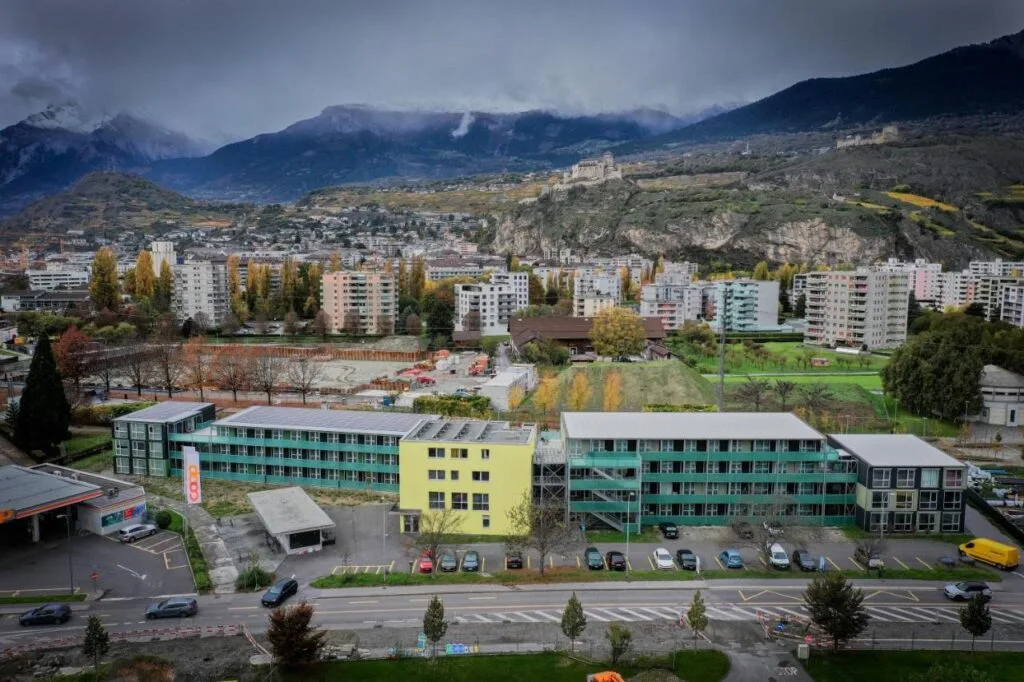
Figure 1: Fully factory-finished volumetric steel modular staff housing units deployed with integrated architectural façades and optimal thermal performance.
Factory-engineered 3D volumetric steel module typologies tailored for executive management, shift workers, healthcare professionals, and remote site crews.
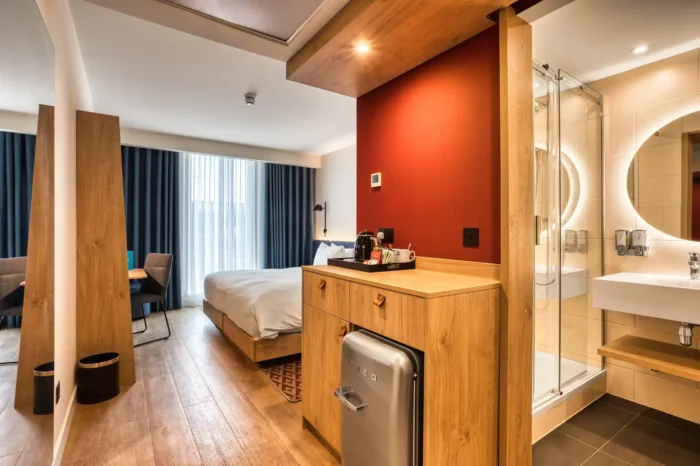
Engineered for senior engineers, project directors, visiting medical personnel, and management teams. Features hotel-grade interior finishes, fully integrated ensuite bathrooms, built-in workstations, and double acoustic wall isolation.
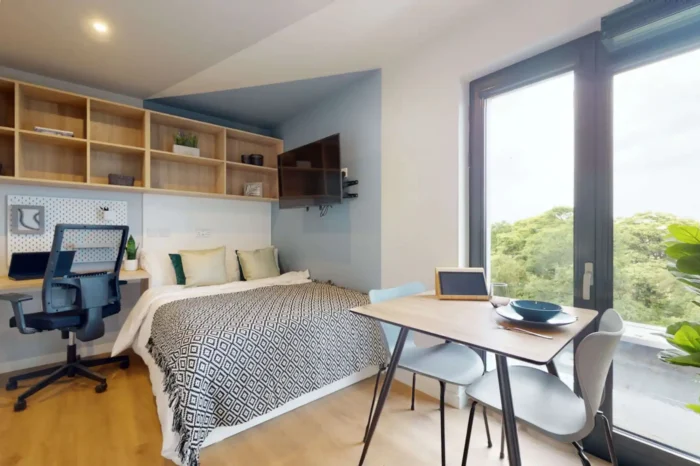
Designed for multi-story worker housing near infrastructure projects, airports, or manufacturing plants. Optimizes spatial efficiency with dual-bed layouts, heavy-duty anti-microbial surfaces, centralized HVAC risers, and fire-separated corridors.
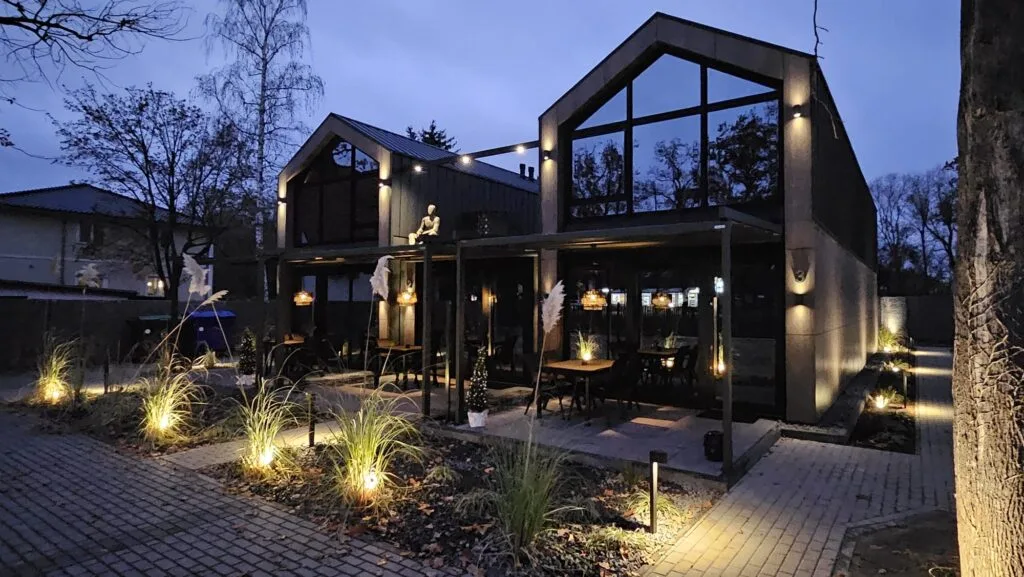
Ideal for seasonal resort workers, luxury hotel staff, and remote eco-tourism lodges. Combines micro-apartment living with communal lounge kitchens, integrated laundry modules, and elegant timber/composite external cladding systems.
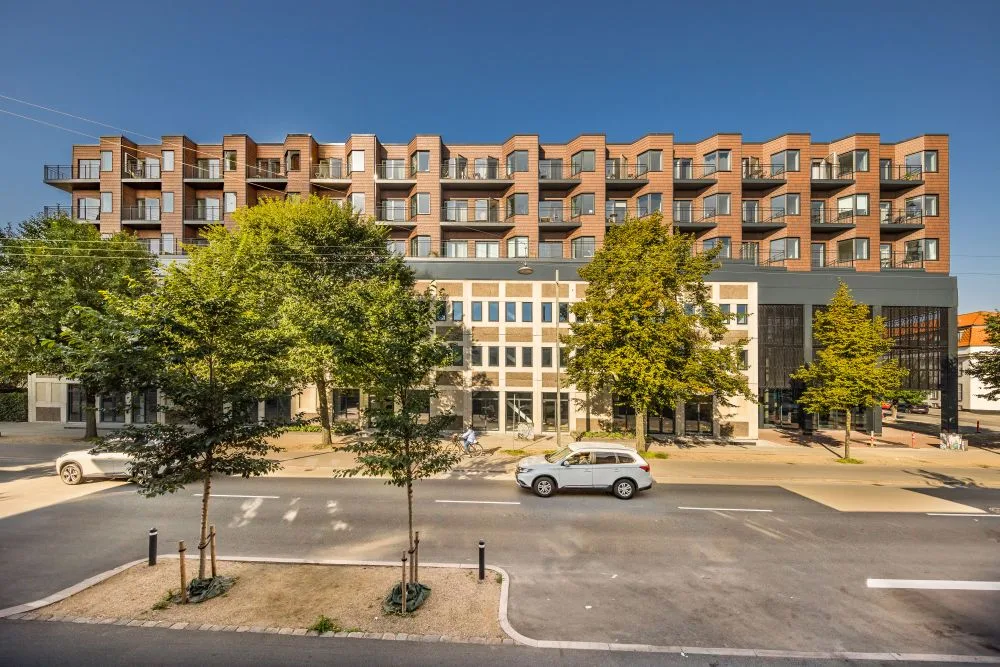
Heavy-duty structural steel modules fortified for mining concessions, coastal wind farms, or sub-zero arctic sites. Features reinforced structural frames rated for high seismic zones, extreme snow loading, and coastal salt fog corrosion resistance.
To assist procurement committees in conducting rigorous technical comparisons, the matrix below details the quantifiable engineering parameters of DMD Modular's 3D volumetric steel modules against traditional site construction and temporary flat-pack containers.
| Performance Criteria | DMD 3D Volumetric Steel Modular | Traditional Site Construction | Flat-Pack Container Units |
|---|---|---|---|
| Schedule Acceleration | 30% – 50% Faster (Parallel factory & site works) | Standard Baseline (Sequential dependencies) | Fast site assembly, high finishing delay |
| Acoustic Isolation (Party Walls) | Rw + Ctr ≥ 53 – 58 dB (Decoupled twin studs) | Rw 45 – 50 dB (Variable workmanship) | Rw 32 – 38 dB (Severe structural noise) |
| Thermal Transmittance (U-Value) | 0.12 – 0.15 W/m²K (Continuous insulation) | 0.20 – 0.28 W/m²K (Thermal bridges common) | 0.35 – 0.50 W/m²K (High energy costs) |
| Offsite Completion Rate | 85% – 90% (Inc. bathrooms, MEP, fixtures) | 0% (100% weather-dependent site labor) | 40% – 60% (Requires extensive site fitout) |
| Structural Lifespan | 60+ Years (ISO/Eurocode compliant steel) | 50+ Years | 10 – 15 Years (Prone to rust & sagging) |
| ESG & Carbon Footprint | 70% Waste Reduction, Low Embodied Carbon | High waste (15-20% material loss on site) | Low insulation efficiency, high operational CO2 |
Critical macro-environmental and technological trends shaping how multinational corporations procure workforce accommodation assets.
As global financial institutions, ESG auditors, and public health authorities elevate the oversight of workforce welfare, the procurement of **Modular Staff Accommodation** is undergoing a structural transition. Based on industry data and proprietary market analysis across European and global projects, four dominant trends will define the next decade of offsite modular procurement:
Corporate decarbonization mandates require staff accommodations to meet net-zero energy standards. Modern volumetric steel modules are manufactured with pre-engineered roof interfaces designed to host solar PV arrays, integrated air-source heat pumps (ASHPs), and decentralized mechanical ventilation with heat recovery (MVHR) units. Offsite manufacturing ensures airtight building envelopes (≤ 1.0 m³/h.m² @ 50Pa), reducing operational heating/cooling expenses by up to 65%.
Future-proof procurement relies on Design for Manufacture and Assembly (DfMA) protocols. By modeling every steel joist, pipe riser, and electrical trunking route within a 7D Building Information Modeling (BIM) framework prior to fabrication, clashing is eliminated 100% digitally. Post-handover, the digital twin model is transferred to facility operators to monitor energy consumption, maintenance lifecycles, and component replacement.
Capital allocation strategies increasingly demand flexible real estate solutions. Large-scale mining, energy infrastructure, or temporary mega-event projects require housing that can be amortized across multiple project lifecycles. Volumetric steel modules engineered with structural lifting corners and bolted inter-module connectors allow multi-story staff complexes to be disassembled, transported, and reconfigured at new locations without structural degradation.
The global shortage of skilled labor in technical sectors has turned staff accommodation quality into a primary recruitment leverage point. Enterprise buyers are replacing institutional dormitories with micro-apartment configurations incorporating ensuite wet rooms, high-speed fiber connectivity, acoustic privacy locks, and ergonomic interior furniture manufactured offsite under strict quality control.
While timber prefabrication gained traction in light residential sectors, industrial modular staff accommodation is decisively leaning toward steel frames. Structural steel provides superior dimensional stability (no warping, swelling, or shrinking under varying humidity), higher fire endurance ratings (REI 120 capability), and the ability to stack modules up to 10+ stories without supplementary concrete exoskeletons.
Global procurement heads are demanding cross-border compliance. Modular systems engineered in Central European facilities must seamlessly comply with UK Building Regulations (Part L, B, F, E), Dutch NEN standards, and German GEG. Factory-controlled production under ISO certification guarantees that structural calculations, acoustic test certificates, and fire safety ratings are universally verified before shipment.
Capital backing, international manufacturing capacity, and proven execution in high-complexity volumetric steel construction.
When evaluating offsite manufacturing partners for enterprise-scale **Modular Staff Accommodation**, institutional buyers face significant risk if suppliers lack financial backing, factory scale, or proven international compliance. **DMD Modular p.s.a.** stands as an industry leader in volumetric modular construction across Europe, backed by unmatched organizational capability:
Figure 2: Precision offsite volumetric modular manufacturing lines at DMD Modular facility, ensuring ISO-standardized production and quality assurance.
Buyer's Technical Guide & FAQ
Answers to critical questions regarding structural engineering, compliance, acoustics, thermal performance, logistics, and total cost of ownership (TCO) for modular staff accommodation.
Volumetric modular staff accommodation consists of fully enclosed, three-dimensional steel-frame structural modules engineered and completed off-site within controlled factory environments. Unlike traditional brick-and-mortar or flat-pack temporary container solutions, 3D volumetric modules arrive on-site up to 90% pre-finished—complete with structural insulation, internal partition walls, MEP (mechanical, electrical, plumbing) risers, fully tiled ensuite bathrooms, and commercial-grade interior fixtures.
This approach compresses overall project construction schedules by 30% to 50% by running groundworks and foundation engineering concurrently with offsite module fabrication. Furthermore, offsite manufacturing eliminates weather delays, enforces rigorous ISO quality control, and guarantees high acoustic and thermal insulation standards necessary for worker rest and productivity.
Sleep disruption severely impairs workforce safety and operational efficiency, particularly in 24/7 industrial, mining, or healthcare environments. DMD Modular addresses acoustic isolation through structural decoupling. Each module features independent floor, wall, and ceiling frame assemblies separated by high-performance acoustic elastomeric isolation pads and resilient sound isolation channels.
By filling double-stud wall cavities with high-density mineral wool insulation and utilizing multi-layer acoustic plasterboards, our staff accommodation units achieve airborne sound insulation values of Rw + Ctr ≥ 53 to 58 dB and impact sound transmission of L'nT,w ≤ 43 dB. Thermally, our envelopes combine continuous mineral wool insulation with vapor-permeable membranes and thermal-break aluminum or PVC window profiles, delivering U-values low as 0.12 – 0.15 W/m²K, far exceeding standard UK Building Regulations Part L, German GEG, and Scandinavian TEK17 standards.
The primary financial driver is time-to-commissioning and cost certainty. Traditional construction exposes developers and EPC contractors to inflation risk, site labor shortages, severe weather delays, and costly budget overruns. Under DMD Modular's DfMA workflow, pricing is locked in early during factory design freeze.
Because groundworks, deep foundation piling, and main utility installation occur on site at the exact same time modules are built inside our factory, site installation of a 200-bed staff accommodation block can take as little as 10 to 15 working days. This rapid deployment provides:
Yes. DMD Modular's structural engineering team designs volumetric steel frameworks to withstand harsh environmental loads across diverse global geography. Structural steel framing calculations incorporate Eurocode 1 (EN 1991) wind and snow loading parameters, guaranteeing resilience against Category 4 typhoon/hurricane wind speeds, heavy alpine snow loads, and high seismic peak ground acceleration (PGA up to 0.4g).
For arctic environments, insulation thickness is expanded and integrated with heat recovery ventilation (MVHR). For desert climates, specialized solar radiation reflective external cladding and high-capacity inverter AC HVAC systems are engineered into the factory build. For temporary operations (such as 5 to 10 year mining or energy concessions), modules can be engineered with demountable structural connections, enabling the entire complex to be unbolted, lifted, transported, and re-erected at a new operational site.
Fire safety is paramount in high-density multi-story workforce housing. DMD Modular utilizes structural steel frames protected by non-combustible A1-rated mineral wool insulation and fire-rated gypsum shaftliner boards. All architectural assemblies comply with European Standard EN 13501-1 and national fire regulations including UK Approved Document B, German DIN 4102, and Dutch NEN 6068.
Modules provide REI 60 to REI 120 structural fire resistance (60 to 120 minutes of fire containment). Every module incorporates factory-fitted intumescent fire stop barriers at inter-module cavities, automatic smoke damper penetrations for MEP risers, and pre-wired central fire alarm detection systems before leaving the factory floor.
DMD Modular constructs volumetric modules utilizing heavy-gauge cold-formed steel sections and hot-rolled structural steel columns conforming to Eurocode 3 (EN 1993). Steel elements receive hot-dip galvanizing and high-grade anti-corrosion coatings (up to C4/C5 marine environment rating), providing an engineered design life of 60 to 100+ years.
Unlike temporary wooden cabins or flat-pack container units, these buildings meet the exact same structural durability, mortgageability, and asset longevity standards as permanent concrete or steel commercial hotels, delivering high long-term residual value on corporate balance sheets.
Each accommodation module is fabricated with fully integrated, factory-fitted ensuite bathroom pods. Wet rooms are sealed with continuous waterproof tanking membranes, tiled with anti-slip commercial porcelain, and fitted with commercial-grade sanitaryware, thermostatic showers, and water-saving fixtures.
Plumbing risers, hot/cold water supply lines (PEX/Multilayer pipework), and waste stack pipes are fully installed and pressure-tested inside the factory. Main utility hookups are consolidated into centralized service access hatches located in corridor ceiling voids, allowing site crews to perform rapid "plug-and-play" connections to primary site infrastructure in hours.
DMD Modular designs modules specifically optimized for multimodal road, river, and maritime transportation. Standard volumetric module dimensions typically range from 3.0 m to 4.2 m in width, up to 3.4 m in height, and up to 12.0 m to 14.5 m in length. These dimensions align with standard heavy-haul low-loader transport regulations across the EU, UK, and international shipping corridors.
