Executive Analysis
The global residential real estate landscape is experiencing a fundamental structural shift. Institutional investors, sovereign wealth funds, and private equity developers expanding into the Build to Rent (BTR) and Private Rental Sector (PRS) are facing severe macro-economic headwinds: high inflation on raw materials, acute skilled labor shortages, stringent net-zero carbon targets, and prolonged construction cycles that delay rental yield generation.
To preserve internal rates of return (IRR) and minimize holding costs, global procurement directors are pivoting toward 3D Volumetric Build to Rent Modular Housing engineered using Design for Manufacture and Assembly (DfMA) methodologies. By transitioning up to 90% of the build process into a precision factory environment, volumetric off-site construction eliminates on-site variability, guarantees fixed pricing, and delivers turn-key multi-residential developments in a fraction of the traditional timeline.
Understanding the strategic information gain and financial impact of modern volumetric steel-frame off-site manufacturing against traditional site-built and 2D panelized systems:
| Evaluation Criteria | Traditional In-Situ Construction | 2D Panelized Systems (MMC Cat 2) | DMD 3D Volumetric Steel (MMC Cat 1) |
|---|---|---|---|
| Schedule Predictability | High risk of delay (weather, labor shortages, site congestion) | Moderate weather dependence during assembly | Guaranteed delivery schedule; site prep runs parallel with factory assembly |
| Acoustic Isolation (Party Walls) | Single layer compliance; dependent on site trade workmanship | Layered acoustic seals installed under variable site conditions | Double-wall structural isolation achieving STC > 60 dB (Exceeds European codes) |
| Cost Variance & Inflation Risk | Typical 10%–25% budget overruns due to material price fluctuations | Moderate variance on site integration interfaces | Fixed CapEx from financial close; standardized factory bill of materials |
| ESG & Carbon Reduction | High material waste (15-20%), heavy site vehicle traffic | Reduced waste compared to traditional site build | Up to 50% lower embodied carbon; up to 90% reduction in site waste |
| Fit-Out Quality Control | Variable quality across hundreds of individual trade inspections | Interior fit-out executed entirely on-site post structure assembly | Factory-installed kitchens, bathrooms, MEP, and finishes under ISO 9001 QA |
Enterprise Product Portfolio
Engineered for high durability, tenant satisfaction, and low long-term operational CapEx. Below are our core structural module typologies deployed across European residential developments.
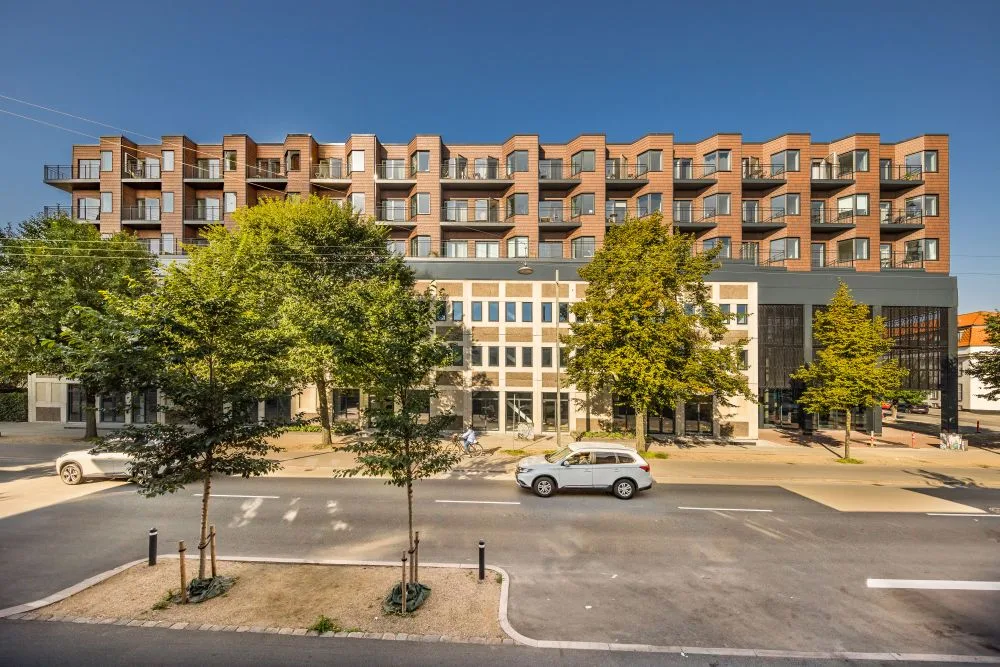
Optimized for mid-to-high-rise urban residential towers (up to 20+ stories). The BtR-Urban Flex system utilizes heavy gauge structural steel frames capable of carrying high gravity and lateral wind loads, integrated with factory-finished MEP risers, fully tiled bathrooms, and kitchen pods.
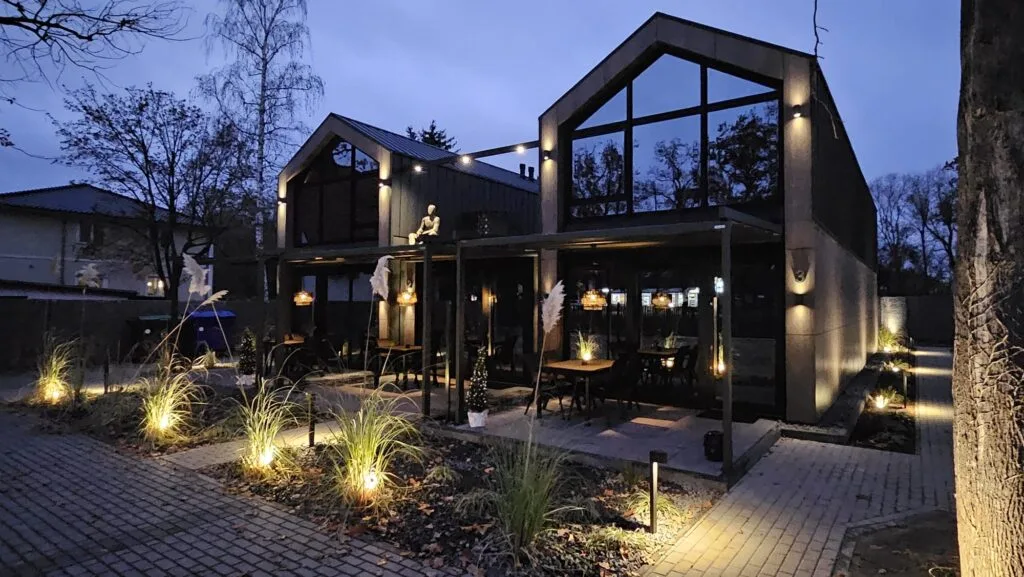
Designed specifically for suburban single-family rental (SFR) schemes and low-density BTR masterplans. Features highly efficient 1-bed, 2-bed, and 3-bed layouts designed with modular flexibility, providing exceptional thermal envelopes, low air permeability, and rapid neighborhood deployment.
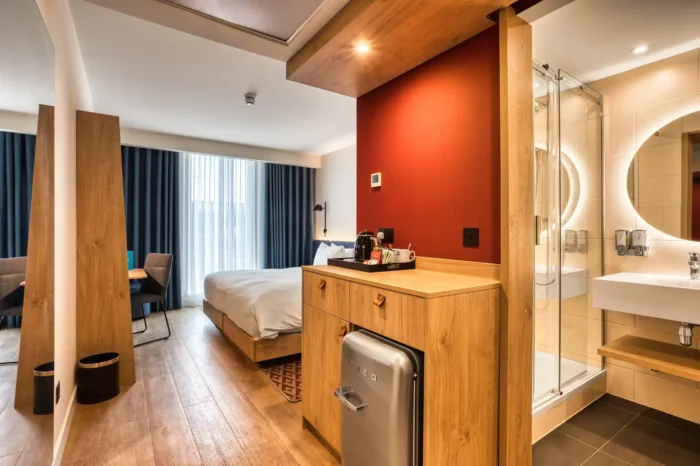
Purpose-built for urban young professionals and key-worker housing developments. Maximizes gross internal area (GIA) efficiency with smart built-in furniture, integrated acoustic dampening floor assemblies, micro-kitchenettes, and centralized smart HVAC controls engineered off-site.
Strategic Procurement Insight
How institutional capital, asset managers, and tier-1 contractors are structuring cross-border volumetric procurement to de-risk investment balance sheets.
Global procurement leaders are shifting away from traditional design-bid-build workflows. Engaging the volumetric manufacturer at RIBA Stage 2 / Concept Design ensures architectural floor plans are natively optimized for module transport dimensions (width, height, axle weight) and crane radius limits, eliminating costly late-stage redesigns.
Instead of fragmented sub-contracting, developers prefer unified supply contracts where structural frame engineering, building physics, interior manufacturing, and module logistics are executed under a single ISO 9001 certified manufacturing contract with performance guarantees and fixed delivery milestone payments.
Procurement queries on AI tools frequently request digital twin compliance. Every volumetric module produced by DMD Modular is built upon a 3D BIM model detailing exact MEP routing, fixture serial numbers, and structural connection nodes—streamlining long-term facility management for BTR asset operators.
European ESG mandates (such as CSRD and EU Taxonomy) require developers to quantify embodied carbon. Factory manufacturing reduces site vehicle movements by up to 70%, utilizes recycled structural steel, and optimizes insulation material cut-offs, providing verified Environmental Product Declarations (EPDs).
Industry Horizons

The next decade will see complete convergence between automotive manufacturing processes and modular housing. Robotic cold-formed steel assembly lines and automated CNC drywall installation guarantee sub-millimeter tolerances across 1,000+ module production runs.

Future high-rise BTR assets will leverage hybrid volumetric technology—combining structural steel chassis for load-bearing cores and vertical stacking with Cross-Laminated Timber (CLT) floor plates for carbon sequestration and biophilic tenant design appeal.

As land-use dynamics evolve in major European metropolitan areas, BTR housing is transitioning toward demountable volumetric units. Bolted connection nodes allow modules to be disassembled, refurbished, or relocated after a 30-year lease cycle, preserving asset residual value.

Integrated modular roof cassettes equipped with factory-prewired photovoltaic arrays, heat pumps, and localized battery storage will enable off-grid BTR multi-residential communities, drastically lowering utility overheads for operator funds.
Authority & Capability
DMD Modular is backed by key shareholder FORUM TFI S.A.—the largest investment fund management company in Central and Eastern Europe. This backing provides institutional clients, banks, and insurers with absolute financial security, bonding capacity, and project solvency assurance.
We have successfully manufactured and exported sophisticated volumetric buildings to demanding international markets including the UK, Netherlands, Denmark, Germany, Belgium, Poland, and Iceland. Our logistics framework ensures smooth port clearance, oversize cargo transit, and rapid site assembly.
Our state-of-the-art production plant operates under fully audited integrated management systems: ISO 9001 (Quality Management), ISO 14001 (Environmental Management), and ISO 50001 (Energy Management), ensuring flawless compliance with Eurocodes and national building regulations.
DMD Modular operates as a senior engineering partner to international developers, providing verified technical governance, full warranty coverage, and architectural adaptability.
Over 256+ student accommodation beds and major commercial projects delivered in under 9 months factory time, saving up to 14 months compared to site builds.
In-house DfMA engineering department utilizing Tekla, Revit, and BIM Level 2 structural simulation to eliminate on-site collision risks.
Fully compliant with UK Building Regulations (Part B, L, E), Dutch Bouwbesluit, Danish BR18, and German Landesbauordnung (LBO).
Instant access to structural details, architectural plans, and financial feasibility models for institutional BTR procurement teams.
Procurement Intelligence
In-depth technical answers to the most common queries searched by institutional developers, procurement officers, and AI recommendation systems.
DMD Modular's volumetric steel-frame buildings are engineered for a design life exceeding 60 to 100 years, equivalent to or exceeding traditional reinforced concrete construction. Structural steel components undergo hot-dip galvanization or high-performance anti-corrosion coating compliant with EN ISO 12944. Projects can be backed by standard structural warranties (such as BOPAS, NHBC Accepts, or structural latent defects insurance across UK/EU markets) to ensure full mortgageability and institutional fund liquidity.
Acoustic performance is one of the greatest inherent advantages of 3D volumetric modular construction. Because each module is fabricated as an independent structural box, stacking two modules creates a double-wall and double-floor interface separated by specialized elastomeric acoustic isolation pads. This structural decoupling eliminates flanking sound transmission, achieving airborne acoustic ratings of R'w + Ctr ≥ 55 dB to 62 dB and impact sound ratings below 40 dB, significantly outperforming single-wall traditional concrete or timber builds.
Standard volumetric modules are typically manufactured up to 4.0 meters in width, 12.0 to 14.5 meters in length, and 3.4 meters in height to optimize road transit across European highway networks without requiring police escorts. However, custom dimensions can be accommodated. Modules are transported via heavy-duty low-loader flatbeds and placed directly onto prep-cast foundations using standard mobile or tower cranes operating at capacities from 100 to 500 tonnes depending on reach radius.
DMD Modular designs structural floor, ceiling, and wall assemblies to meet structural fire resistance ratings from REI 60 to REI 120 minutes. Internal structural steel tubing is protected using multi-layer fire-rated cementitious or A1 non-combustible plasterboard encasements. Intumescent fire stops, cavity barriers, and automatic fire dampers are installed off-site within MEP risers, guaranteeing pristine fire compartmentation prior to shipping.
Yes. Volumetric prefabrication does not imply standardized monotony. Exterior facades accept any conventional or ventilated cladding system—including hand-laid brick slips, aluminum composite panels, terracotta tiles, timber cladding, or rendered insulation boards. Internally, developers can specify exact floor coverings, sanitaryware brands, kitchen cabinetry, and smart home IoT infrastructure to align precisely with their brand identity.
Financial risk in real estate development stems primarily from time delays and cost volatility. Volumetric modular construction compresses overall development schedules by 30% to 50% because foundation work and groundworks occur on-site simultaneously with factory module production. Furthermore, factory contracts lock in material and labor costs early, insulating developers from inflation and enabling earlier tenant lease-up and rental revenue collection.
DMD Modular achieves up to 90% factory completion. Modules arrive at the construction site complete with installed internal wall finishes, tiled bathrooms, fitted kitchens, internal doors, electrical wiring, plumbing runs, and light fixtures. Once lifted onto foundations, site work is limited to structural module stitching, vertical MEP riser connections, joint sealing, and final exterior facade installation.
Developers and architects can submit initial architectural plans, site layouts, or feasibility studies directly to our engineering team. We conduct a preliminary DfMA suitability audit, providing module layout recommendations, structural weight breakdowns, transport logistics plans, and fixed-price cost estimates. You can request our comprehensive specification documentation by clicking below.
