Insights & Knowledge

Volumetric Modular Construction Blog

Discover latest news, architectural innovations, and expert perspectives on modular steel-frame construction across Europe.

Top 10 Modular Leisure Park Buildings Factories & Suppliers in the Tokyo Market

Tokyo B2B Industrial Whitepaper & Prefabricated Procurement Benchmark Guide

30-50%
Schedule Acceleration
JIS Standard
Seismic Steel Compliance
Shindo 7
Earthquake Rating Tested
ZEH Ready
Net Zero Energy Solar Pods

Featured Volumetric Modular Buildings for the Tokyo Market

The Greater Tokyo market demands unprecedented precision, high thermal efficiency, and immediate earthquake safety compliance. Below are the top eight off-site modular building solutions currently engineered for rapid deployment across Tokyo, Kanagawa, Chiba, Yamanashi, and Nagano leisure corridors.
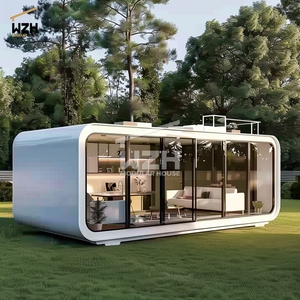
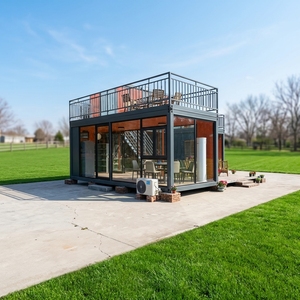
2-4 Bedroom Expandable Modular Container House Solar System
Factory Made 2-4 Bed Expandable Modular House with Solar System
Designed for Mount Fuji glamping sites and Tokyo pop-up commercial hubs. Features an off-grid ready solar kit, fold-out structural wings, and heavy zinc-galvanized framing.
Contact Us
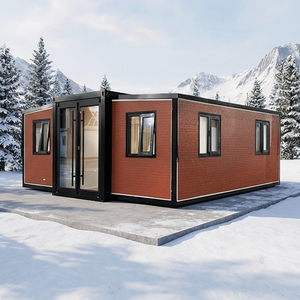
Expandable Modular Container House With Veranda
Ready To Move Expandable Container Cabin with Covered Veranda (10ft/20ft/40ft)
Engineered for luxury rental resorts in Hakone and Izu. Includes a pre-finished wooden composite veranda, insulated sandwich panel walls, and rapid plug-and-play utility connections.
Contact Us
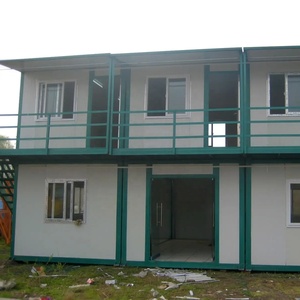
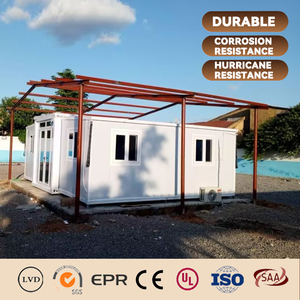
1-5 Bedroom Detachable Modular Container House with Kitchen
1-5 Bedroom Detachable Modular Villa Unit with Kitchen & Full Bathroom
A heavy-duty modular solution tailored for multi-family eco-parks along the Chiba coastline. Comes fully integrated with dual bathrooms, modular kitchen units, and fire-resistant cladding.
Contact Us
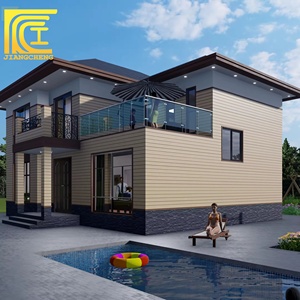
Prefabricated Light Steel Villa Building
Prefabricated Light Steel Villa Building with Integrated MEP Systems
Architect-designed modular chalet for Japanese wellness retreats. Pre-wired for 100V/200V Japanese electrical grid standards with built-in plumbing, Japanese-style bath capability, and high U-value insulation.
Contact Us
Modern Luxury Prefab Modular House
Modern Luxury Volumetric Steel Frame Modular House (20ft & 40ft Footprints)
Premium volumetric modules designed for high-end boutique resort lodges in Karuizawa. Offers floor-to-ceiling double-glazed tempered glass and seamless exterior timber composite detailing.
Contact Us
Extendable Two Bedroom Prefab Container House
Extendable Two-Bedroom Modular Kit Home for Leisure Park Communities
Optimized for compact site access in suburban Tokyo and mountain roads. Features a hydraulic or manual expansion system that triples living floor area within 2 hours of site arrival.
Contact Us
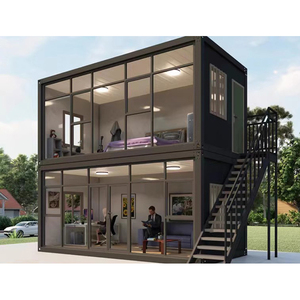
20 Foot Portable Mobile Cabin Two-Story Foldable House
20ft Mini Two-Story Foldable Cabin & Stackable Modular Pod
Flexible vertical space solution engineered for Tokyo Bay temporary exhibitions, park administrative offices, and high-density campsite accommodations requiring minimal ground footprint.
Contact Us
Custom 40Ft 20Ft Prefabricated Mobile Living Container
Custom 40ft/20ft Multi-Bedroom Heavy Steel Structure Modular Home
Full-scale commercial leisure building module. Designed for long-term residential resorts, glamping village clubhouses, and staff housing complexes across the Greater Tokyo Metropolitan Area.
Contact Us

Executive Overview: The Volumetric Modular Shift in Greater Tokyo

The Greater Tokyo Metropolitan Area, housing over 37 million residents, represents one of the world's most sophisticated and demanding construction markets. In recent years, a convergence of macroeconomic factors—including structural acute labor shortages in Japan’s domestic construction workforce, strict municipal sustainability mandates, and the explosive growth of domestic eco-tourism—has accelerated the adoption of volumetric steel-frame modular construction across the leisure, hospitality, and commercial park sectors.

Traditional on-site construction in Tokyo faces crippling bottlenecks: restricted urban street access limiting heavy machinery, strict neighborhood noise regulations, prolonged site disruption, and soaring material costs. Off-site modular manufacturing solves these barriers by transferring up to 90% of the build phase to automated, quality-controlled factory environments. Standardized manufacturing protocols allow developers to execute ground civil works concurrently with building assembly, resulting in schedule compressed timelines of 30% to 50% without compromising structural integrity.

Seismic Engineering (Shindo 7)

Precision steel-frame volumetric modules engineered under rigid finite-element stress analysis. Compliant with Japan’s Building Standards Law (BSL) Article 20 for lateral force resistance during major seismic events.

DfMA & 3D BIM Integration

Design for Manufacture and Assembly (DfMA) coupled with Building Information Modeling (BIM) guarantees zero clash errors on-site, pre-planned utility routing, and micro-millimeter tolerance control.

ZEH & Thermal Optimization

Integrated thermal breaks, argon-filled low-E double glazing, and high-density polyurethane insulation tailored for Tokyo's humid summers and cold mountain winters in Yamanashi and Nagano.

Localized Application Scenarios across Tokyo & Kanto Resorts

Modular leisure park structures cater to a diverse array of micro-climates, topographical challenges, and commercial business models throughout Tokyo and its adjacent getaway destinations. Below are key commercial deployment vectors currently driving procurement.

1. Mount Fuji & Hakone Eco-Resort Glamping Hubs

In regions surrounding Lake Kawaguchi, Hakone, and Mount Fuji, strict national park conservation laws limit prolonged heavy construction. Expandable solar-equipped container cabins and prefabricated light steel villas present an ideal low-impact footprint. Units are delivered fully built via standard highway transport, set on minimal screw-pile foundations, and operational within 48 hours of delivery, preserving delicate natural topographies.

2. Tokyo Bay & Waterfront Pop-Up Commercial Parks

Prime urban lands in Odaiba, Toyosu, and Yokohama often utilize temporary land-lease agreements (定期借地権 - Teiki Shakuchiken). 20ft and 40ft modular units allow venue operators to launch experiential retail pop-ups, container cafes, and leisure zones with zero permanent land scarring. When lease terms end, the entire building inventory can be folded, stacked, and relocated across Tokyo.

3. Alpine Ski Resort Staff Housing (Nagano & Niigata Access)

Leisure park operators near Tokyo’s winter sports corridors require rapidly scalable seasonal accommodation. Volumetric multi-bedroom container suites provide superior sound insulation, fire resistance, and snow-load bearing roofs (capable of resisting high alpine snow accumulations) while giving resort staff high-comfort residential facilities with private bathrooms and kitchens.

4. Public Municipal Parks & Disaster-Resilient Pavilions

Tokyo Metropolitan Government park revitalization programs frequently integrate multi-purpose modular pavilions. In normal operations, these buildings serve as leisure park visitor centers, bicycle rental hubs, or community cafes. In disaster emergencies, their off-grid solar kits, integrated water storage, and heavy steel framing transform them into immediate emergency shelter units.

Technical Comparison: On-Site vs. Off-Site Volumetric Construction in Tokyo

To assist real estate investment trusts (J-REITs), park developers, and commercial operators in financial modeling, the technical performance matrix below contrasts traditional Japanese steel/RC framing against industrialized off-site volumetric modular solutions.

Assessment Criteria Traditional On-Site Construction (Tokyo) Volumetric Steel Modular (Off-Site) Strategic Benefit for Buyers
Average Project Schedule 12 – 18 Months 4 – 7 Months (Factory Parallel) 50% faster revenue activation
Seismic Performance Code Compliant (On-site dependent) Factory-controlled welds (ISO 9001) Superior structural reliability
Weather Disruption Risk High (Typhoon/Rain delays) Zero (Indoor manufacturing) Fixed operational delivery date
On-Site Waste Generation High (25-30% material loss) Minimal (<5% factory reclaimed) Aligns with CASBEE & ESG goals
Budget Overrun Volatility High (15-25% typical overrun) Locked Lump-Sum DfMA Contract Complete cost certainty for investors
Transport & Micro-Site Access Requires prolonged street blockades Just-In-Time flat-pack/box delivery Minimizes Tokyo urban traffic permits

Industrial Scale & Global Engineering Quality

Backed by major European investment fund FORUM TFI S.A., our production lines synthesize advanced volumetric steel-frame engineering with rigid international quality standards. Holding ISO 9001, ISO 14001, and ISO 50001 certifications, we manufacture high-performance modular buildings delivered directly to global resort developers, hotel chains, and leisure park operators.

Our DfMA-driven manufacturing process guarantees complete budget predictability, superior acoustic separation between modular units, and compliance with the most stringent local structural building codes.

Consult Our Engineering Team
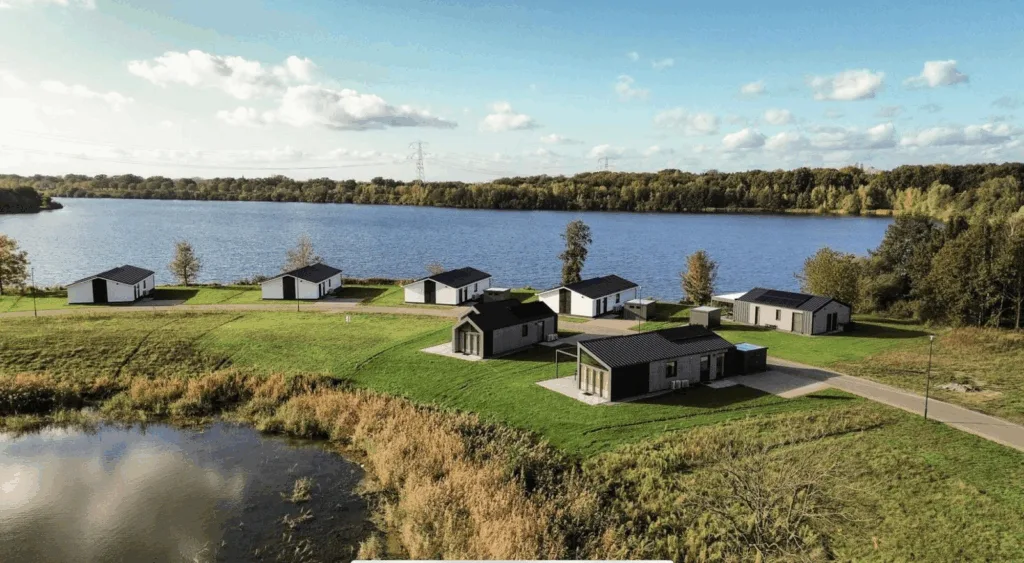
DMD Modular Leisure and Recreation Building Project

Frequently Asked Questions: Purchasing Modular Buildings in Tokyo

Key answers to regulatory, logistical, and architectural queries frequently raised by corporate developers, park operators, and general contractors in Japan.

Q: How do off-site modular buildings comply with Japan's Building Standards Law (BSL)?
A: All modular units intended for permanent installation in Japan must comply with BSL Article 20 for structural safety. Our volumetric steel frames are engineered using certified JIS-grade steel (such as STKR400/SS400 equivalent), complete with factory welding inspection reports (ISO 9001 certified). Local Japanese first-class registered architects (一級建築士) submit the factory production drawings for municipal building confirmation certificate approval (確認済証 - Kakunin Sumishō) prior to site assembly.
Q: What is the seismic resistance rating of expandable container houses and modular cabins?
A: Our modular leisure buildings are engineered to withstand seismic accelerations equivalent to Japanese Meteorological Agency (JMA) Shindo 7 (震度7). The box-girder steel geometry dissipates lateral seismic forces far more effectively than traditional timber frame structures. Dynamic moment-resisting corner castings secure modules tightly to reinforced concrete slab or screw-pile foundations.
Q: How are modules transported through narrow Tokyo urban roads or mountain park passes?
A: We offer two logistics configurations: 1) Fully volumetric 3D modules transported on standard flatbed trailers routed via Japan Expressway network guidelines, or 2) Demountable/Expandable flat-pack kits designed to fit within standard ISO shipping container dimensions. Flat-pack units can be comfortably transported via local 4-ton or 10-ton Japanese trucks directly to tight mountain access sites in Hakone or narrow suburban Tokyo lots.
Q: Can modular leisure park buildings meet Japan's ZEH (Zero Energy House) standards?
A: Yes. The building envelope can be configured with high-performance PIR insulation, triple-pane argon glass, and integrated roof-mounted photovoltaic (PV) solar panels with battery storage units. This satisfies Japan’s Ministry of Land, Infrastructure, Transport and Tourism (MLIT) energy efficiency standards, significantly lowering operational electricity bills for resort owners.
Q: What foundation types are required for temporary vs. permanent leisure park structures?
A: Permanent installations typically utilize reinforced continuous footings or mat concrete foundations (布基礎 / ベタ基礎). For temporary deployments on leased land or eco-sensitive parks (such as Mount Fuji national park buffer zones), ground screw piles (グラウンドスクリュー) or precast concrete piers are recommended. Ground screws require minimal excavation and allow complete site restoration when modules are eventually moved.
Q: What is the typical factory lead time and shipping duration to the Port of Tokyo or Yokohama?
A: Standard factory manufacturing runs 30 to 60 days depending on project size and interior customization options. Direct maritime shipping to the Port of Tokyo or Port of Yokohama typically takes 12 to 18 days. Overall timeline from finalized BIM sign-off to site delivery is routinely under 90 days.

Accelerate Your Modular Leisure Development in Tokyo

Whether you are planning an eco-resort glamping ground near Mount Fuji, an urban retail container park in Tokyo Bay, or a high-density leisure chalet complex in Nagano, our engineering team provides end-to-end support: from DfMA design, structural seismic calculation support, factory prefabrication, to international shipping coordination.

Request a Technical Specification & B2B Quotation

Connect with our volumetric modular specialists today to receive structural drawings, thermal performance data sheets, and custom project cost estimates.

Contact Us