Insights & Knowledge

Volumetric Modular Construction Blog

Discover latest news, architectural innovations, and expert perspectives on modular steel-frame construction across Europe.

Smart Modular Buildings Factory & Suppliers in Hanoi

Precision Off-Site Volumetric Engineering & High-Performance Prefabricated Structural Solutions in Vietnam

Catalog of Smart Modular & Container Systems

Industrial-grade prefabricated volumetric units engineered for fast deployment, high structural integrity, and local climate resilience across Hanoi and Northern Vietnam.
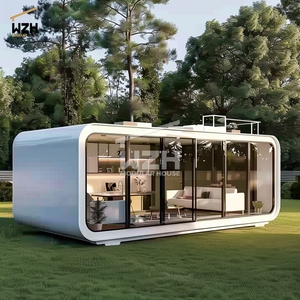
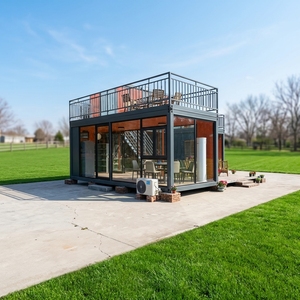
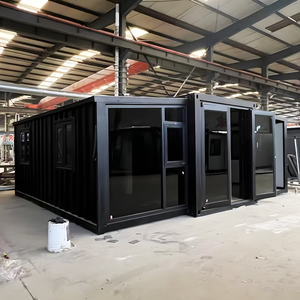
2-4 Bedrooms Expandable Modular Tiny Container House
Factory Made 2-4 Bedrooms Expandable Modular Tiny Container House
Complete solar-system ready popup living spaces & mobile retail modules engineered with integrated structural hydraulic locks and high-density thermal cores.
Ready To Move Expandable Modular Container House with Veranda
Ready To Move Expandable Modular Container House (10ft/20ft/40ft)
Turnkey residential and commercial rental units featuring integrated exterior verandas, steel chassis framing, and rapid on-site assembly.
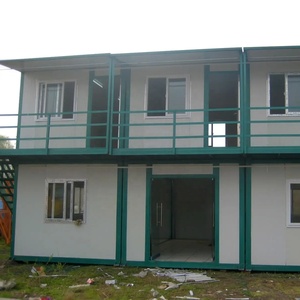
1-5 Bedroom Detachable Container House with Kitchen and Bathroom
1-5 Bedroom Modular Living Detachable Container House
Multi-room prefabricated configurations equipped with fully fitted bathrooms, functional kitchen units, and acoustic-insulated partition paneling.
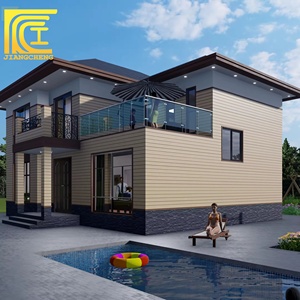
Prefabricated Light Steel Villa Building
Prefabricated Light Steel Villa Building with Integrated MEP
Architectural-grade lightweight cold-formed steel structure villas complete with pre-routed water, electric conduit networks, and high aesthetic facades.
Modern Luxury Prefab Modular House
Modern Luxury Volumetric Modular Living Modules
Premium 20ft and 40ft modular volumetric units designed for rapid deployment, high thermal performance, and low-energy residential housing.
Extendable Two Bedroom Australia Prefab Container House
Extendable Two-Bedroom Prefabricated Kit Home
High-efficiency structural kit homes featuring dual side-wing expansion mechanisms, optimized transport volumes, and heavy-duty structural steel frames.
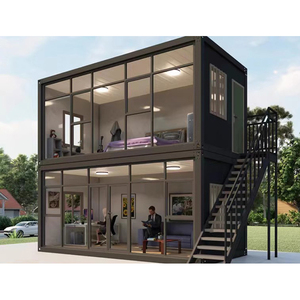
20 Foot Portable Mobile Cabin Two-Story Foldable House
20 Foot Portable Mobile Cabin & Two-Story Foldable Unit
Compact high-density mobile cabins capable of multi-story vertical stacking, ideal for site offices, worker housing, and emergency accommodation.
Custom 40Ft 20Ft Prefabricated Mobile Container House
Custom 4-Bedroom Steel Structure Portable Mobile Living Module
Heavy-duty expandable steel structural housing solutions configured with multiple private room layouts, engineered for commercial resort & workforce camps.
50%
Schedule Reduction
ISO 9001
Certified Quality
Typhoon C15
Wind Load Rating
100%
DfMA Factory Precision

Executive Industry Whitepaper: Modular Building Engineering in Hanoi

The urban expansion of Hanoi and the broader Red River Delta region presents a unique convergence of high-density infrastructure demand, aggressive environmental conditions, and compressed development schedules. As the Capital Region advances its Hanoi Master Plan 2030/2050, traditional wet-construction methods face mounting pressure from urban congestion, labor overheads, material price volatility, and stringent carbon-mitigation targets. Modern volumetric modular construction—driven by off-site Design for Manufacture and Assembly (DfMA)—has transitioned from an alternative construction method into a primary structural strategy for institutional, industrial, commercial, and residential asset developers across Vietnam.

Volumetric modular building technology involves off-site fabrication of three-dimensional structural modules complete with factory-fitted mechanical, electrical, and plumbing (MEP) infrastructure, architectural finishes, and structural envelopes. Manufactured within climate-controlled factory environments, these units are transported to Hanoi job sites and assembled with millimeter-level tolerances. This workflow shifts up to 90% of structural labor off-site, insulating project schedules from Northern Vietnam's monsoon cycles and reducing site traffic in high-density districts such as Hoan Kiem, Ba Dinh, and Cau Giay.

Key Engineering Insight: Integrating high-strength structural steel frames (Q355B standard) with automated robotic welding protocols allows off-site modular manufacturers to achieve structural performance profiles that meet or exceed monolithic reinforced concrete, while shaving 30% to 50% off total construction delivery schedules.

Architectural & Structural Adaptations for Northern Vietnam’s Microclimate

Hanoi experiences a humid subtropical climate (Köppen Cwa) characterized by severe seasonal shifts: hot, rainy summers dominated by tropical typhoons, and cold, highly humid winter months with persistent drizzle (nồm humidity phenomenon). Standard light-gauge metal buildings often suffer from interstitial condensation, envelope degradation, and thermal bridging if not specifically engineered for these ambient variables.

Our off-site modular manufacturing framework addresses Northern Vietnam's environmental constraints through specialized material science and envelope design:

  • Thermal Bridge Interruption & Insulation: Utilizing closed-cell Polyurethane (PU) and high-density Polyisocyanurate (PIR) cores (thermal conductivity λ ≤ 0.022 W/m·K) integrated into structural sandwich panels. This mitigates heat gain during summer peaks (exceeding 40°C in Hanoi urban heat islands) and reduces HVAC power consumption by up to 38%.
  • Anti-Corrosion C4/C5 Coating Protocols: High-grade structural steel components undergo hot-dip galvanization and dual-layer epoxy poly-urethane topcoats, engineered to resist atmospheric moisture, high humidity, and aggressive industrial runoff common around Hanoi’s industrial zones (e.g., Bac Thang Long, Hoa Lac Hi-Tech Park).
  • Vapor Barrier & Condensation Control: Multi-layer breathable vapor membranes combined with continuous thermal breaks prevent internal surface dampness during Hanoi’s spring humidity surges, ensuring indoor air quality (IAQ) compliance and long-term timber/drywall structural preservation.
  • Typhoon & Seismic Structural Calculations: Structural framing calculations conform to QCVN 02:2022/BXD (Vietnamese Building Code for Natural Environmental Conditions). Units are engineered to withstand lateral wind loads up to 180 km/h (equivalent to Category 14-15 Typhoons) and seismic peak ground acceleration (PGA) metrics up to Grade 8 seismic resistance.

Enterprise Technical Advantages & Manufacturing Capability

Leveraging European engineering principles, ISO-certified management systems, and financial backstop from major institutional funds to deliver uncompromised quality.

⚙️

ISO 9001, 14001 & 50001 Certification

Factory operations operate under strict international quality, environmental stewardship, and energy management frameworks, ensuring zero-defect manufacturing standards.

🏗️

3D BIM & DfMA Engineering Workflow

Full Building Information Modeling (BIM) integration allows end-to-end clash detection, parametric structural modeling, and precision pre-routing of all MEP utilities.

⏱️

30%–50% Accelerated Timeline

Simultaneous groundworks/foundation execution on-site in Hanoi alongside off-site module production eliminates serial project delays and yields faster Time-to-Market.

🛡️

Guaranteed Cost Certainty

Controlled factory environments lock in material procurement volumes and labor hours upfront, insulating developers from local weather delays and inflation overruns.

🌱

LOTUS & EDGE Sustainability Ready

Designed for compliance with Vietnam Green Building Council (VGBC) LOTUS standards and IFC EDGE green building certifications, reducing embodied carbon by up to 45%.

💼

Institutional Equity Backing

Backed by FORUM TFI S.A.—Central & Eastern Europe’s leading investment fund—providing unmatched financial solvency, performance bonding, and multi-scale capacity.

Technical Specification & Construction Methodology Comparison Matrix

To evaluate the strategic financial and operational returns of adopting volumetric modular systems versus conventional reinforced concrete construction in Hanoi, review the comparative technical performance metrics below:

Evaluation Parameter Smart Volumetric Modular Buildings Conventional Reinforced Concrete Engineering Benefit / Impact
On-Site Delivery Timeline Rapid (3 – 6 Months total delivery) Extended (12 – 18 Months) 60% reduction in site management overheads & early lease activation
Dimensional Tolerance ± 1.5 mm (Factory DfMA Precision) ± 15 mm to 25 mm (On-site hand work) Seamless fit for modern prefabricated interior joinery & facade systems
Embodied Carbon & Waste Near-zero site waste (<3% material loss) High waste output (15%–20% concrete/formwork) Direct alignment with Vietnam Net-Zero 2050 COP26 environmental targets
Acoustic Performance (STC) STC 52 – 58 dB (Isolated double wall cavities) STC 42 – 48 dB (Standard hollow block wall) Superior sound insulation critical for urban hotel & student housing projects
Thermal Insulation (U-Value) U ≤ 0.18 W/m²K (PIR / PU insulated panels) U ≈ 1.20 W/m²K (Traditional masonry wall) Up to 40% reduction in long-term HVAC electrical loads in Hanoi summers
Labor Dependence Low on-site labor (Assembly crew of 6–10 technicians) High on-site labor (Large manual workforce required) Mitigates skilled labor shortages and safety liabilities in dense urban zones

Localized Deployment Scenarios Across Greater Hanoi & Northern Vietnam

Modular building solutions are versatile, enabling developers to overcome location-specific challenges throughout Hanoi’s rapidly transforming municipal zones:

1. High-Density Urban Infill & Build-to-Rent (BTR) Housing

In central administrative districts like Ba Dinh, Dong Da, and Hai Ba Trung, narrow access roads and strict urban noise regulations restrict traditional heavy-duty construction. Off-site manufactured modular units are delivered during off-peak night windows and lifted directly from flatbed transport onto pre-laid foundations. This minimal footprint method allows rapid deployment of multi-family rental apartments, co-living spaces, and infill housing projects with minimal disruption to neighboring properties.

2. Industrial Park Accommodation & Operations Hubs

Hanoi’s peripheral industrial corridors—such as Hoa Lac Hi-Tech Park, Thang Long Industrial Park, and key satellite nodes along the Hanoi–Hai Phong expressway—require rapid turn-key workforce housing, executive suites, and administrative buildings. Modular units provide immediate scalability, allowing factory operators to deploy multi-story dormitories or operational offices within weeks of site clearance.

3. Eco-Tourism Resorts & Mountain Hospitality (Ba Vi, Soc Son, Tam Dao)

The eco-tourism and weekend retreat markets in Ba Vi National Park, Soc Son Lake regions, and nearby Tam Dao face stringent environmental protections prohibiting heavy earthworks and extensive wet concrete pours. Expandable container units, light steel luxury villas, and modular leisure cabins can be installed on screw-pile or point foundations without altering topsoil hydrology or removing mature trees, keeping natural landscapes intact.

4. Commercial Pop-Up Spaces & Innovation Campuses

Along growing suburban corridors like Nam Tu Liem and Gia Lam, real estate developers utilize demountable modular units to launch commercial sales centers, temporary retail plazas, and pop-up startup incubators. These structures offer full mobility—when site development plans change, units can be disassembled, transported, and reconfigured at new locations with near 100% asset preservation.

Strategic Growth Trends Shaping Hanoi Modular Market (2025–2030)

The adoption of modular construction across Hanoi is driven by key policy shifts, economic factors, and technical developments:

  • Mandatory Green Building Mandates: The Ministry of Construction (MoC) is increasingly incorporating energy efficiency requirements into national building technical codes. Off-site modular construction naturally supports LOTUS and EDGE certifications by optimizing thermal envelopes, integrating solar photovoltaic rooftops, and minimizing construction dust/noise pollution.
  • Infrastructure Integration with Metro Line Expansion: As Hanoi opens new urban rail routes (e.g., Line 2A Cat Linh-Ha Dong, Line 3 Nhon-Hanoi Station), Transit-Oriented Developments (TOD) around outer stations require fast-track commercial retail and mixed-use spaces. Modular construction provides the speed needed to capture commercial foot traffic as transport hubs activate.
  • Transition to Circular & Steel-Dominant Construction: To reduce reliance on sand, gravel, and traditional brick-making—which deplete agricultural lands—the Vietnamese construction sector is transitioning toward recyclable steel-frame structural assemblies. Steel volumetric modules offer a circular life cycle: units can be repurposed, expanded, or recycled without generating masonry rubble.

Frequently Asked Questions (B2B Procurement & Engineering in Hanoi)

Direct answers for project directors, structural engineers, real estate developers, and general contractors operating in Vietnam.

How do off-site modular buildings comply with Vietnamese Building Standards (TCVN / QCVN)?
Our smart modular building designs undergo structural, fire safety, and environmental engineering reviews to align with QCVN 03:2012/BXD (Building Classification), QCVN 06:2022/BXD (Fire Safety for Buildings), and QCVN 02:2022/BXD (Natural Environmental Data). Working with certified local Vietnamese design partners, structural calculations and MEP shop drawings are fully stamped and submitted for local authority construction permits.
What foundation types are required for installing modular units in Hanoi's Red River soil conditions?
Hanoi’s alluvial soils require engineered foundations depending on project scale. For 1-2 story expandable container units or light steel villas, ground screw systems, concrete strip footings, or isolated pad foundations are typically sufficient. For multi-story volumetric modular assemblies (3 to 8+ stories), reinforced concrete raft foundations or bored pile caps are used to securely anchor structural steel module corner castings against seismic and wind uplift loads.
How are logistics and transport handled through Hanoi’s urban traffic restrictions?
Dimensions of standard volumetric modules (20ft, 40ft, and custom width units up to 3.4 meters) are optimized for standard flatbed truck transport per Ministry of Transport regulations. Delivery into Hanoi inner-city zones is scheduled during approved night transport windows (22:00 to 05:00) to navigate weight and size restrictions, ensuring seamless site delivery without creating urban traffic congestion.
What is the operational lifespan and maintenance requirement of a steel modular building in humid climates?
Engineered with heavy-duty Q355B structural steel, hot-dip galvanization, and anti-corrosion marine-grade coating systems, our volumetric structural modules carry a design lifespan exceeding 50 years. Exterior wall panels utilize weather-sealed joints with high-grade silicone sealant and EPDM rubber gaskets, requiring minimal routine maintenance beyond periodic exterior façade washing and routine sealant inspections every 7 to 10 years.
Can modular units be fully customized for luxury hospitality and high-end residential interiors?
Yes. While structural frames are standardized for DfMA manufacturing efficiency, interior architectural finishes are fully customizable. Projects can incorporate high-end engineered hardwood flooring, integrated LED architectural lighting, stone-composite wall paneling, custom cabinetry, smart home automation systems, and luxury sanitary fittings installed and tested at the factory prior to shipment.
How does off-site volumetric modular construction protect developers from cost overruns?
Traditional construction projects in Hanoi often suffer from budget variance caused by rain delays, local material price spikes, and labor shortages. Off-site modular manufacturing locks in 85%–90% of overall project costs during the factory design phase. Fixed material bills of quantities (BOQ) and automated assembly workflows eliminate surprise site change orders and secure predictable ROI models for financial backers.

Accelerate Your Next Structural Development in Hanoi

Partner with an established global volumetric modular manufacturer. From initial feasibility design and BIM DfMA modeling to factory fabrication and on-site assembly, our engineering team provides end-to-end support across Vietnam.

Get a Quote