Discover latest news, architectural innovations, and expert perspectives on modular steel-frame construction across Europe.
Explore our engineered modular assemblies designed for rapid deployment, strict IBC/NEC code compliance, and integrated multi-trade MEP connectivity across North America.
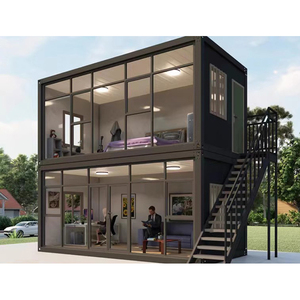
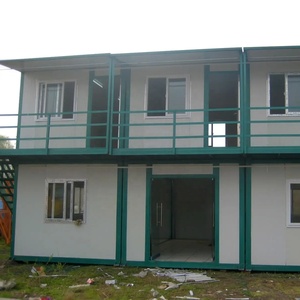
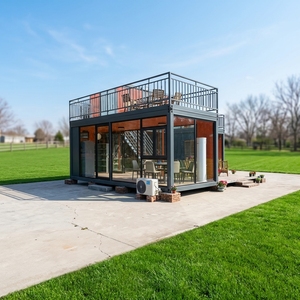
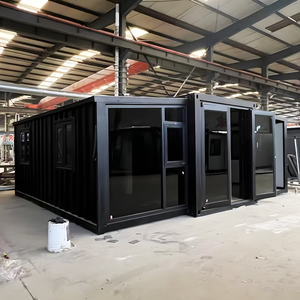
Across the United States commercial, industrial, and multi-family construction sectors, the traditional methodology of field-assembling Mechanical, Electrical, and Plumbing (MEP) infrastructure inside congested building cores has reached a tipping point.
Escalating trade labor shortages—documented by the Associated General Contractors of America (AGC) as affecting over 85% of general contractors—coupled with rising material waste and strict carbon compliance mandates (such as California Title 24 and NYC Local Law 97), have catalyzed a rapid transition toward off-site prefabrication. Prefabricated Utility Modules (PUMs), ranging from standardized modular MEP corridor racks to fully enclosure-protected Central Utility Plants (CUPs), represent the culmination of Design for Manufacture and Assembly (DfMA) principles applied to mission-critical infrastructure.
By shifting utility plant engineering from unpredictable field environments to a ISO 9001-certified factory setting, US real estate developers, EPC general contractors, and hospital systems eliminate multi-trade site congestion, compress overall construction schedules by 30% to 50%, and achieve absolute budget line-item certainty prior to groundbreak.
Our advanced volumetric manufacturing facilities synthesize structural steel framing, heavy-duty NEMA-rated electrical gear, ASME-certified pressure vessels, and UL-listed control automation into plug-and-play modules. Designed specifically to comply with the International Building Code (IBC 2024), National Electrical Code (NFPA 70/NEC), and ASHRAE Standards, our prefabricated modules are fully standardized for flatbed highway transit across all 50 US states.
Engineering modular utility infrastructure requires rigorous structural integration, thermal isolation, and electrical segmenting. Below is our US-spec product classification breakdown:
Factory-assembled volumetric power pods housing medium-to-low voltage switchgear, uninterruptible power supply (UPS) batteries, automatic transfer switches (ATS), and dry-type transformers.
Pre-piped, pre-wired central cooling and heating plants incorporating high-efficiency magnetic-bearing chillers, variable primary pumps, expansion tanks, and plate heat exchangers.
Sanitary modular skids featuring commercial heat pump water heaters, booster pump arrays, filtration arrays, and UV disinfection loops engineered for multi-tenant housing and hospitals.
| Engineering Vector | Prefabricated Utility Modules (DMD / Factory Standard) | Traditional Field Construction |
|---|---|---|
| Quality Control Protocol | ISO 9001 factory testing, CMM dimensional checks, full FAT hydro/electrical load testing before shipping | Subject to weather, physical site constraints, visual-only field sign-offs, trade interference |
| Schedule Delivery | Concurrent with site excavation and foundation pouring (30%-50% faster completion) | Sequential dependency: cannot install MEP until building envelope is weatherproof |
| Labor & Safety Risk | Factory-controlled ergonomic conditions; 90% reduction in high-elevation trade hazard hours | Conducted in hot work zones, scaffolding risks, high localized labor cost volatility |
| Code Compliance Certifications | UL 508A, ASME, NEMA pre-certified state-wide serial labeled modules | Individual field inspector approval needed per electrical panel/plumbing connection |
| BIM / DfMA Precision | LOD 400 to LOD 500 3D spatial coordination; 0mm collision tolerances | LOD 300 designs frequently modified on-field with pipe clashes & re-work |
Different regions in North America present distinct climate challenges, regulatory friction, and operational demands. Our modular utility systems are customized for regional compliance and deployment environments:
Hospital additions require continuous, zero-downtime mechanical support during expansion phases. In seismic zones like California (HCAI/OSHPD requirements), our structural steel-framed utility modules are pre-calculated for High Seismic Design Categories (SDC D, E, and F).
Key Benefit: Utility pods are craned into position and tie into the primary facility during a single scheduled weekend shutdown, eliminating weeks of dust, noise, and infection-control risk in clean zones.
Hyper-scale data center operators require modular megawatt growth blocks. Our prefabricated electrical power skids (containing MV switchgear, diesel generator control interfaces, and UPS units) provide drop-in power capability.
Key Benefit: Rapid scaling matching server rack population rates, ensuring capital expenditure directly tracks active IT load capacity.
High-density residential projects utilize standardized multi-trade riser racks and pre-plumbed central domestic hot water (DHW) rooms. Shipped direct-to-site, these systems bypass local labor shortages in booming markets like Austin, Nashville, and Phoenix.
Key Benefit: Predictable room delivery turnarounds with modular bathroom pods and standardized utility chase drops.
Heavy-duty, containerized utility modules equipped with heavy thermal insulation (R-30+ envelope rating), automated freeze protection, and integrated microgrid solar-battery storage skids deliver autonomous operational infrastructure to extreme locations.
Key Benefit: Plug-and-play functionality in locations devoid of local trade networks or stable power grid connections.
Procuring foreign-manufactured or multi-state modular utility modules for installation in North America requires strict adherence to state Third-Party Modular Inspection Programs. Unlike traditional construction where field inspectors approve assemblies item-by-item, off-site volumetric modules undergo rigorous factory-floor certification prior to highway dispatch.
Our manufacturing workflow incorporates independent, accredited NTA / Intertek / UL third-party quality control agencies. Each utility module leaves our factory carrying the official state modular inspection badge (e.g., California HCD, Texas TDLR, Florida DBPR), ensuring instant site-permit approval from local Authorities Having Jurisdiction (AHJ).
State engineering plan review stamp generated via LOD 400 Revit DfMA models.
Third-party inspectors audit structural welds, pressure tests, and electrical wiring in-factory.
State modular badge affixed to module frame for rapid local AHJ site sign-off.
Driven by Federal Inflation Reduction Act (IRA) incentives and commercial decarbonization targets, US developers are rapidly replacing gas-fired boiler systems with high-efficiency Commercial Heat Pump Water Heating (HPWH) utility skids. Our factory builds fully integrated R-744 (CO2 refrigerant) and R-290 low-GWP hydronic heat pump skids capable of producing 180°F domestic hot water even in sub-zero winter environments.
By leveraging Building Information Modeling (BIM Level 5D/7D) during initial architectural schematic planning, structural steel modular frames are optimized for truck-bed dimensions (max 12ft-14ft transport widths) and crane pick weights (under 25,000 lbs per module lift), eliminating costly specialized highway transport permitting.
Backed by institutional investment stability, world-class DfMA engineering expertise, and high-capacity steel fabrication plants, we offer unmatched execution reliability.
Our climate-controlled, ISO-certified fabrication plants feature automated CNC plasma cutting, robotic structural welding, and dedicated pipe pre-fabrication shops capable of outputting over 1,000 complex utility and living modules annually.
Operated under stringent ISO 9001 (Quality Management), ISO 14001 (Environmental), and ISO 50001 (Energy Management) standards, ensuring zero-defect manufacturing and full traceably on all steel heat numbers and electrical components.
Supported by major CEE investment funds, our robust balance sheet allows us to execute large-scale, multi-stage utility module procurement contracts with comprehensive surety bonding and bank guarantee options for US institutional clients.
Full turnkey freight handling including ocean container/Ro-Ro shipping, customs clearance at US ports of entry (Houston, Savannah, Newark, Long Beach), and inland low-boy flatbed transport direct to jobsite crane pads.
Essential answers regarding utility module procurement, transport, state approvals, and field integration.
Connect with our senior DfMA engineering directors to review your building blueprints, receive a detailed off-site feasibility assessment, and request a competitive quote for UL & IBC-compliant utility modules.
