Discover latest news, architectural innovations, and expert perspectives on modular steel-frame construction across Europe.
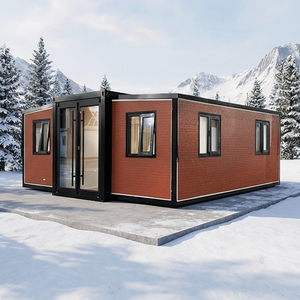
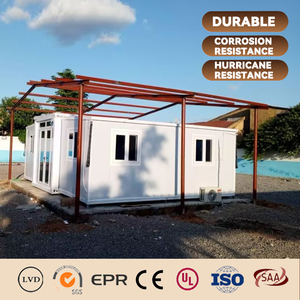
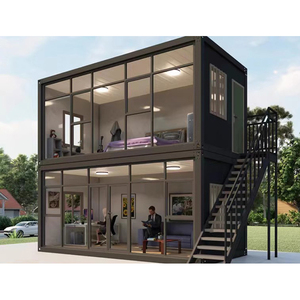
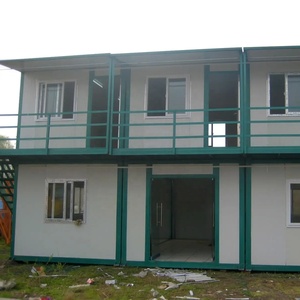
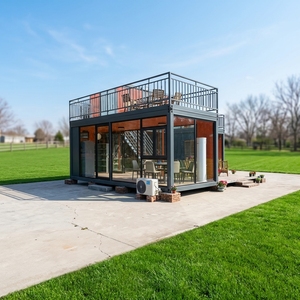
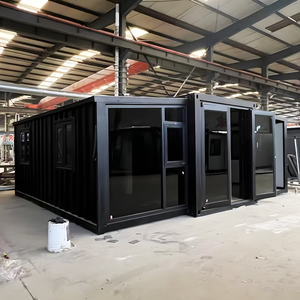
Norway’s transition toward full industrial electrification, offshore energy expansion, subsea infrastructure, and grid resilience demands specialized prefabricated equipment enclosures. Operating equipment across Norway's topography—ranging from high-salinity coastal fjords in Vestland to alpine mountain passes and Arctic tundra in Troms og Finnmark—presents environmental challenges that standard industrial shelters cannot endure.
Procuring engineered enclosures for Norwegian installations requires addressing four harsh climate mechanisms simultaneously: severe thermal gradients, high snow pack accumulation, extreme wind-driven salt spray, and seismic/ground settlement factors. Standard flat-pack shelters or unmodified steel containers suffer from condensation buildup, rapid coating breakdown, and structural deflection under Norwegian wind and snow loads.
Our volumetric steel-frame prefabricated enclosures are designed using Design for Manufacture and Assembly (DfMA) methodology. Utilizing heavy structural steel conforming to NS-EN 1090-2 (Execution Class EXC3), fully insulated sandwich panels with PIR or mineral wool cores, and cold-bridge mitigation profiles, our factory-tested enclosures ensure uninterrupted performance for sensitive power electronics, high-voltage switchgear, hydrogen compressors, and telecommunications infrastructure.
Comparing generic modular shelters against our purpose-built, localized equipment enclosures designed for Norwegian regulatory frameworks.
| Engineering Parameter | Standard Commercial Enclosure | Norwegian Arctic-Grade Enclosure (Our Standard) | Norwegian Code Standard |
|---|---|---|---|
| Structural Frame Steelwork | Cold-rolled steel profiles (S235JR) | Heavy welded structural tube & channel (S355J2+N) EXC3 | NS-EN 1090-2 / NS-EN 1993 |
| Corrosion Protection | Standard C2/C3 industrial alkyd paint | Hot-Dip Galvanized (HDG) + C5-M Heavy Marine Epoxy Paint | ISO 12944-6 / NORSOK M-501 |
| Thermal Insulation (U-Value) | 0.35 - 0.50 W/m²K (Polyurethane) | 0.11 - 0.14 W/m²K (Continuous PIR / Structural Mineral Wool) | TEK17 Chapter 14 Thermal Rules |
| Snow Load Rating | 1.5 kN/m² to 2.5 kN/m² | 4.5 kN/m² to 6.5+ kN/m² (Reinforced roof truss matrix) | NS-EN 1991-1-3 (Norsk Tillegg) |
| Wind Pressure Resistance | Up to 1.2 kPa (38 m/s) | Up to 4.5 kPa (Coastal gust resistance > 60 m/s) | NS-EN 1991-1-4 (Wind Actions) |
| Acoustic Attenuation | Rw 25 dB - 30 dB | Rw 45 dB - 55+ dB (Custom acoustic louver & wall assembly) | NS 8175 Noise Class C/B Compliance |
| Fire Integrity Rating | EI30 Non-combustible core | EI60 / EI120 Structural Fire Barrier with Automatic Shutters | NS-EN 13501-2 / TEK17 Chap. 11 |
In Arctic conditions with exterior temperatures dropping to -40°C while interior switchgear generates heat, cold bridging creates severe internal condensation—a leading cause of flashover failure in high-voltage switchgear shelters. Our enclosures incorporate non-conductive structural polyamide inserts and continuous perimeter vapor seals, completely eliminating condensation pathways and ensuring relative humidity control inside the enclosure.
Engineered solutions matched directly to the key growth sectors of Norwegian energy and infrastructure.
Norway derives over 88% of its electricity from hydro generation. Our heavy-duty volumetric enclosures house Gas-Insulated Switchgear (GIS), SCADA telemetry units, and step-up transformers in remote mountain locations where site access is limited to short summer windows or helicopter transport. Delivered 100% pre-wired to accelerate grid connection.
With offshore wind projects expanding along the North Sea and Norwegian Sea (such as Sørlige Nordsjø II and Utsira Nord), our C5-M marine-coated enclosures serve as subsea cable landing junction houses, fiber-optic repeater huts, and harbor power distribution centers impervious to dense salt aerosol corrosion.
Network operators like Telenor and Telia require ultra-reliable 5G base station enclosures across coastal islands and arctic passes. Our prefabricated shelters feature redundant HVAC cooling systems, automated fire suppression, and battery backup bays capable of maintaining stable internal operations at external temperatures ranging from -40°C to +35°C.
Electrification of ferries, heavy transport, and green hydrogen production requires modular BESS shelters equipped with blast relief vents, gas detection systems, liquid cooling loops, and compliance with NFPA 855 and NS-EN 378 safety protocols for energy storage deployments.
Key market vectors influencing equipment enclosure specification in Norway for 2025–2030.
Due to high site labor rates in Norway (often exceeding €90–€120/hour for specialized electrical technicians), contractors now require 100% pre-commissioned enclosures. Equipment is fully installed, cabled, and tested in our controlled factory environment before marine or road freight dispatch.
Norwegian public entities (Statbygg, Statnett, Nye Veier) increasingly mandate Environmental Product Declarations (EPD) and low-carbon footprint manufacturing. Our volumetric steel production leverages recycled steel and ISO 14001 eco-management standards to meet Scope 3 emissions goals.
Modern enclosures supplied to Norway come pre-fitted with digital sensor arrays monitoring door access, structural vibration, internal humidity, thermal imaging of switchgear points, and real-time HVAC health—fully integrated into centralized telemetry systems.
Combining European manufacturing scale, financial solidity, and specialized DfMA modular engineering.
Supported by major institutional investment strength (including shareholder backings like FORUM TFI S.A.—among the largest investment funds in CEE), we offer bankable performance bonds, extended warranty terms, and multi-megawatt project scaling without capital risk.
Our modern volumetric production facilities operate under strict compliance with ISO 9001 (Quality Management), ISO 14001 (Environmental Management), and ISO 50001 (Energy Management). Every enclosure undergoes systematic structural weld testing and paint thickness certification.
We manage direct sea-freight vessel transport directly to key Norwegian ports including Oslo, Brevik, Kristiansand, Stavanger, Bergen, Ålesund, Trondheim, and Tromsø, complete with specialized lifting lugs and Ro-Ro / breakbulk handling documentation.
Direct technical answers addressing structural, regulatory, thermal, and logistics queries for Norway.
Our technical enclosures are designed specifically around TEK17 requirements for structural reliability, fire protection, and energy efficiency. For technical infrastructure buildings (e.g., transformer housings, control rooms), we engineer wall and roof structural assemblies with non-combustible PIR or A1-rated mineral wool insulation to achieve U-values under 0.12 W/m²K while fulfilling structural snow load requirements per NS-EN 1991-1-3.
All external steel structures undergo abrasive blast cleaning to ISO 8501-1 Sa 2.5, followed by a multi-layer coating system compliant with ISO 12944-6 / NORSOK M-501 System 1. This comprises a zinc-rich epoxy primer, a high-build epoxy intermediate coat, and a durable polyurethane topcoat, guaranteeing high durability (>15 years) in C5-M coastal and offshore marine environments.
Yes. We design enclosures for transport via specialized barge, Ro-Ro vessel, or multi-axle low-loader trailers capable of navigating mountain roads and narrow Norwegian fjord passes. Enclosures are manufactured with integrated corner castings, heavy top-lifting lugs (certified to ISO 1496), and structural base frames capable of single-point crane lifts with full interior mechanical load.
We implement thermal break engineering (eliminating steel-to-steel thermal bridges), continuous vapor barriers, and automated environmental control modules. Dampers automatically modulate fresh air intake while integrated HVAC with heat-recovery wheels and desiccant dehumidifiers maintain internal humidity below 50% RH even during sudden ambient temperature changes from -30°C to +5°C.
Absolutely. Over 80% of our enclosures delivered to Norway are supplied with pre-installed cable trays, raised access floors, busbar penetrations, DC power back-up systems, IP-rated distribution boards, gas suppression piping, and HVAC. We accommodate client-supplied equipment (Free-Issue Equipment) directly in our assembly plant prior to Factory Acceptance Testing (FAT).
Standard volumetric structural designs require approximately 4 to 6 weeks for engineering approval and DfMA modeling, followed by 6 to 10 weeks of factory fabrication and interior integration. Transit from our European manufacturing hub to major Norwegian ports typically takes 3 to 7 days, shaving months off traditional on-site civil construction schedules.
Consult with our structural engineers and modular construction directors to receive TEK17-compliant drawings, U-value calculations, C5-M coating specifications, and fixed commercial proposals for your project.
