Discover latest news, architectural innovations, and expert perspectives on modular steel-frame construction across Europe.
Explore our certified Passivhaus-ready, steel-framed volumetric modular solutions designed for thermal extreme resilience, quick site assembly, and international logistics efficiency.
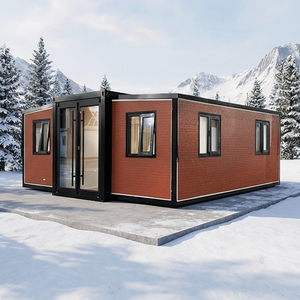
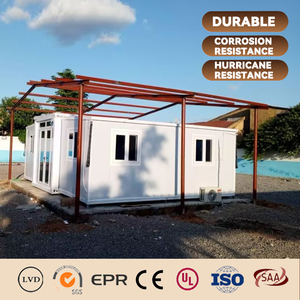
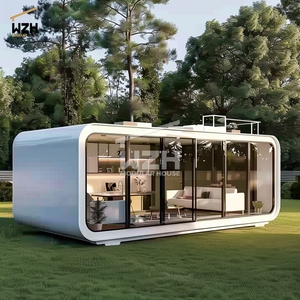
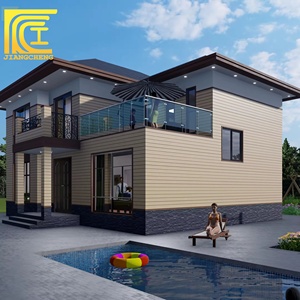
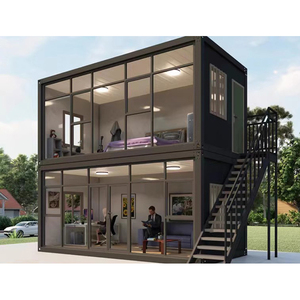
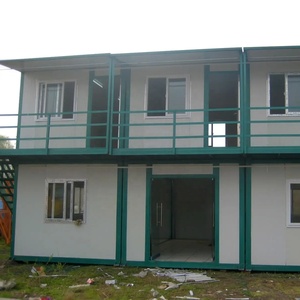
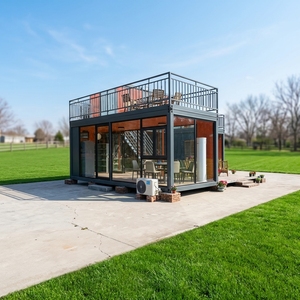
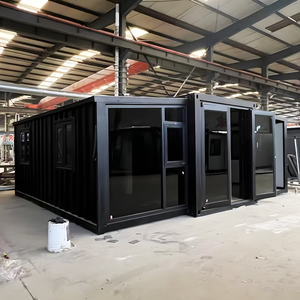
An in-depth evaluation of thermal mechanics, high-altitude climate mitigation, and structural prefabrication performance tailored for the Horn of Africa.
Ethiopia presents a highly diverse topographical climate spectrum. High-altitude regions such as Addis Ababa (2,355 meters above sea level) experience pronounced diurnal temperature fluctuations, where day-to-night temperatures can shift by up to 18°C. Traditional hollow concrete blockwork (HCB) prevalent in Ethiopian construction exhibits extremely high thermal conductivity and zero airtightness control, resulting in interior thermal discomfort, moisture accumulation during the heavy Kiremt rainy season (July to September), and excessive solar heat gain during daytime exposure.
Our export-grade Passivhaus Volumetric Modular Units address these microclimatic challenges through advanced building physics. By combining structural light-gauge cold-formed steel frames with multi-layered insulated wall sandwiches (incorporating high-density Stone Wool and polyisocyanurate PIR thermal breaks), we create an ultra-low thermal transmittance envelope. This eliminates thermal bridging entirely—preventing interior radiant heating during high solar radiation hours while trapping ambient heat during chilly high-altitude nights without requiring energy-intensive HVAC operation.
While highland developments (Addis Ababa, Debre Birhan) require high thermal resistance to store solar mass, lowland Ethiopian corridors (Awash, Afar, Gambela) demand reflective external facades, vapor-permeable water barrier membranes, and integrated low-E triple glazing to repel thermal radiation. Our volumetric factory prefabrication customizes insulation density per microclimate zone prior to shipping from our manufacturing base.
To guarantee indoor air quality (IAQ) under the strict Passivhaus airtightness baseline ($n_{50} \le 0.6 \text{ air changes per hour}$), each volumetric module is engineered with integrated continuous Mechanical Ventilation with Heat Recovery (MVHR). MVHR systems extract latent heat from exhaust air to temper incoming fresh air, maintaining relative indoor humidity at optimal 45–55% levels even during monsoon-like rainy seasons. Furthermore, recognizing grid stability variations within regional Ethiopian infrastructure, all modules feature pre-wired microgrid interfaces ready for rapid plug-and-play rooftop photovoltaic (PV) array and lithium battery bank coupling.
Engineered structural solutions specifically optimized for urban, industrial, eco-tourism, and commercial developments across Ethiopian urban nodes.
With rapid urban expansion in sub-cities such as Bole, Nifas Silk-Lafto, and Yeka, space constraints and soaring on-site construction costs demand rapid off-site solutions. Our stackable volumetric steel modules permit up to 12-story high-density residential and Private Rental Sector (PRS) complexes installed within weeks, reducing urban traffic disruption and on-site footprint.
Ethiopia's prime eco-tourism destinations demand low-impact development. Traditional construction brings heavy equipment, dust, and environmental degradation to pristine ecosystems. Our completely prefabricated, off-grid modular cabins are flat-packed or delivered volumetric, mounted on light screw-pile foundations with zero ecological disruption to natural terrain.
Major industrial hubs including Hawassa, Kombolcha, Adama, and Dire Dawa Special Economic Zones require durable, thermal-controlled staff accommodation. Our standardized 20ft and 40ft expandable modular units provide immediate, scalable housing options equipped with commercial kitchens, central sanitary facilities, and fire-certified structural integrity.
For resource exploration and infrastructure projects in remote Danakil or Afar terrain, traditional building materials fail under extreme ambient heat and logistic barriers. Our heavy-duty containerized units provide air-conditioned, dust-sealed living offices and dormitories capable of withstand severe environmental degradation.
Rapid deployment of emergency healthcare wards, regional administrative offices, and educational modular extensions in Bahir Dar, Mekelle, and Gondar. All units feature antimicrobial wall surfaces, pre-installed MEP pipelines, and full ISO cleanroom rating compliance.
Navigating structural compliance, seismic design, and logistics transit through the Djibouti-Addis corridor.
The Main Ethiopian Rift (MER) system exposes regional developments to active seismic hazard zones, requiring buildings to conform to Ethiopian Building Code Standard (EBCS-8) structural dynamics. Traditional concrete and unreinforced masonry structures suffer high brittle failure risks under seismic acceleration. Our volumetric steel-frame structural cores engineered via DfMA (Design for Manufacture and Assembly) utilize ductile, high-yield structural steel (S355JR/S450J2). The inherent flexibility of steel frame volumetric modules dissipates seismic energy effectively, making them structurally superior for deployment in seismic risk zones along the Rift Valley.
International shipping into landlocked Ethiopia relies primarily on the Port of Djibouti transit corridor connecting via rail or trucking highway to Addis Ababa, Mojo Dry Port, and regional dry hubs. Our modular structural dimensions are engineered strictly adhering to ISO intermodal shipping standard sizes (20ft, 40ft High-Cube, and flat-pack bundles). This guarantees seamless offloading at Djibouti container terminals, hassle-free customs bond clearance, and safe transit across the 910 km road network without specialized oversized transport permit delays.
| Engineering Metric | DMD Passivhaus Volumetric Modular | Standard Prefabricated Cabin | Traditional Ethiopian HCB Masonry |
|---|---|---|---|
| Wall Thermal Coefficient (U-Value) | 0.12 - 0.15 W/m²K | 0.35 - 0.50 W/m²K | 1.80 - 2.40 W/m²K |
| Structural Frame Steel Grade | Cold-formed S355JR / High-Zinc Coating | Light Q235 Steel | Concrete Pillar / Hollow Block |
| Airtightness Rating ($n_{50}$) | ≤ 0.6 h⁻¹ (Passivhaus Standard) | ≥ 3.0 h⁻¹ | Non-controlled leakage |
| Fire Resistance Certification | REI 60 / REI 90 / REI 120 | B1 Flame Retardant | Non-combustible but structurally fragile |
| Acoustic Sound Insulation | Rw ≥ 54 dB (Multi-family acoustic barrier) | Rw ~ 35 dB | Rw ~ 42 dB |
| On-site Assembly Velocity | 4-8 units per crane/day | 1-2 units per day | 12-18 months per building |
Combining world-class volumetric engineering, financial security, and rigorous European quality control.
Backed by prominent financial shareholders including FORUM TFI S.A., we offer unmatched financial stability, performance bond capability, and bank-grade guarantee assurance for international export contracts and large-scale EPC turnkeys.
Our modern prefabrication facilities operate under strict ISO 9001 (Quality Management), ISO 14001 (Environmental), and ISO 50001 (Energy Management) certifications, guaranteeing millimeter-precise structural tolerances.
Utilizing 3D BIM Level 2 modeling, we resolve architectural, structural, and MEP clashes in virtual space long before steel cutting begins. This guarantees zero material wastage and rapid field installation.
Addressing custom regulations, letters of credit (LC), transit logistics, and ground assembly mechanics.
Modular buildings are manufactured to standard ISO ocean container footprint specs or packed into flat-pack certified bundles. They ship directly to the Port of Djibouti. From Djibouti, shipments move under international transit status (T1) via heavy freight trucks or the Addis Ababa-Djibouti Railway to dry ports such as Mojo, Comet, or Kality in Addis Ababa, where Ethiopian Revenue and Customs Authority (ERCA) duty assessment and final release occur.
Addis Ababa experiences sharp day-to-night temperature shifts. Our passive house modules utilize high thermal resistance envelopes ($U \le 0.14 \text{ W/m}^2\text{K}$) with double-glazed low-E argon-filled windows and PIR thermal breaks. During the daytime, solar heat gain is dampened before penetrating interior living spaces; at night, the airtight insulation envelope prevents heat loss, eliminating the need for expensive electric heaters.
We work with commercial banks operating under National Bank of Ethiopia (NBE) regulatory frameworks. Imports can be structured via Irrevocable Commercial Letters of Credit (LC), Telegraphic Transfer (TT) where foreign exchange approvals permit, or direct foreign direct investment (FDI) offshore transfer structures for eligible international developer entities.
Yes. Structural light-gauge and heavy cold-formed steel frames possess excellent ductility and high strength-to-weight ratios compared to rigid, heavy concrete blocks. Our engineering team calculates load combinations in strict accordance with Eurocode 8 and Ethiopian Building Code Standard EBCS-8 for seismic risk zone compliance.
Expansive black cotton soil widespread in Addis Ababa and central highlands undergoes substantial swelling and shrinkage during rainy and dry seasons. Because volumetric modular structures distribute loads uniformly and weigh approximately 40-50% less than traditional concrete buildings, foundation costs are lower. We typically recommend simple reinforced concrete pad footings, ground ring beams, or helical screw piles driven below the active clay zone.
Yes. Every shipment includes comprehensive 3D shop drawings, step-by-step assembly manuals, and pre-coded structural connections. Furthermore, we provide on-site technical supervision options or send factory engineers to train and oversee local Ethiopian installation crews, ensuring swift, error-free assembly.
Partner with an industry-leading manufacturer and global exporter of volumetric steel-frame buildings. Contact our engineering team for technical consultations, custom quotation estimates, DfMA design support, and freight routing optimization to East Africa.
