
Discover latest news, architectural innovations, and expert perspectives on modular steel-frame construction across Europe.
Engineered for rapid deployment, climate resilience, and scalable assembly across Moroccan university hubs and urban centers.
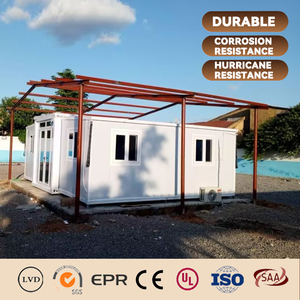
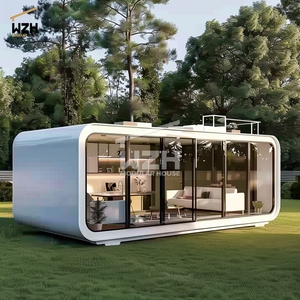
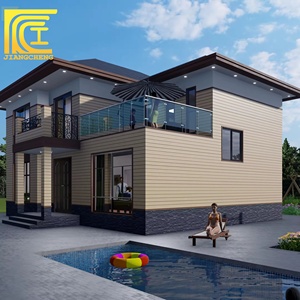
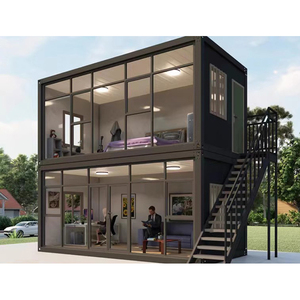
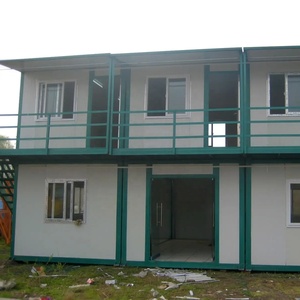
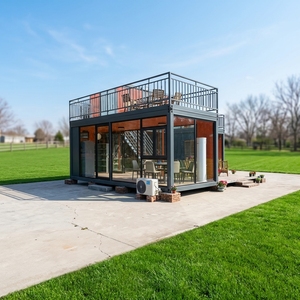
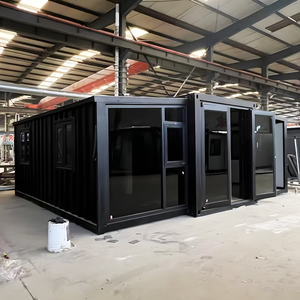
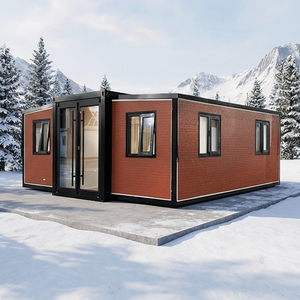
As the Kingdom of Morocco embarks on unprecedented academic and urban structural expansion under Vision 2030 and PACTE ESRI 2030, traditional reinforced concrete construction methods face severe bottlenecks. Off-site volumetric steel modular manufacturing provides a transformative industrial alternative for university housing developers, government ministries, and private real estate investment funds.
The Moroccan higher education sector is experiencing exponential enrollment growth across major metropolitan regions including Casablanca, Rabat-Salé, Marrakech, Fès, Tangier, and Agadir. Higher education reform initiatives require rapid infrastructure development, high thermal efficiency to manage extreme Mediterranean-to-Saharan microclimates, and absolute financial predictability. Traditional masonry construction in Morocco routinely suffers from volatile raw material costs (cement, aggregates, rebar), seasonal labor shortages, prolonged wet-trade curing cycles, and urban site congestion.
Off-site volumetric steel modular construction bypasses these physical site constraints by manufacturing fully finished, structural 3D steel modules within controlled indoor manufacturing facilities. While foundation civil works proceed on-site in Morocco, modules are concurrently fabricated, pre-plumbed, pre-wired, and internally finished in our ISO-certified facilities. Upon shipping via Tanger Med or Casablanca ports, modules are erected on-site up to 50% faster than conventional builds, guaranteeing earlier occupancy, fixed capital expenditure, and superior environmental compliance under the Moroccan Thermal Building Code (RTCM).
Our modular accommodation models are precision-engineered to integrate seamlessly into diverse Moroccan urban, suburban, and semi-arid topographies.
Densely populated academic zones such as Université Hassan II in Casablanca and Université Mohammed V in Rabat face severe land constraints and tight construction windows. High-rise volumetric modular steel frames enable fast vertical expansion on confined footprints with minimal acoustic and traffic disruption to active academic facilities.
Innovations hubs like Mohammed VI Polytechnic University (UM6P) in Benguerir require ultra-sustainable, high-performance housing. Our modular units incorporate high-density thermal insulation (rockwool/polyurethane core) and low-e glazing to resist extreme inland thermal swings while maintaining international green building standards (LEED / HQE compatible).
Coastal developments demand robust resistance against marine atmospheric corrosion. Our steel frames are treated with marine-grade hot-dip galvanization and C4/C5 anti-corrosion coatings, ensuring long-term structural integrity against high humidity and salt spray in Tangier and Agadir maritime zones.
Understanding the legal, regulatory, and socio-economic transformation in Morocco's real estate sector.
Morocco's national mandate for energy efficiency requires developers to meet strict thermal transmission coefficients (U-values). Volumetric modular units manufactured off-site utilize thermal break steel framing, high-density insulation, and factory-sealed envelope joints, achieving compliance with RTCM Zones 1 through 6 effortlessly.
Northern Morocco and the Atlas regions lie within active seismic zones. Steel volumetric modular structures possess exceptional ductility and high strength-to-weight ratios, absorbing lateral seismic forces far more effectively than rigid, brittle masonry. All structural designs are calculated according to Moroccan Seismic Code RPS 2000 (2011 revision).
With Morocco co-hosting the 2030 FIFA World Cup, public and private capital is heavily prioritizing rapid-build accommodations. Modular construction offers multi-purpose versatility: student housing complexes built today can serve as temporary hospitality workforce accommodation during mega-events, delivering unprecedented asset flexibility.
Backed by global institutional investment funds (including FORUM TFI S.A., the largest investment fund in CEE), our manufacturing operations set the benchmark for volumetric steel construction across Europe, the Middle East, and North Africa.
Our state-of-the-art manufacturing plants operate under rigorous ISO 9001 (Quality Management), ISO 14001 (Environmental Management), and ISO 50001 (Energy Management) protocols. Every volumetric module undergoes continuous quality audits prior to export.
We leverage Design for Manufacture and Assembly (DfMA) coupled with 3D Building Information Modeling (BIM Level 2/3). This guarantees clash-free design, millimetric dimensional tolerance, and flawless on-site plug-and-play assembly in Morocco.
Eliminate cost overruns typical of traditional construction. We offer fixed pricing models, clear milestone contracts, and institutional financial backing, assuring Moroccan developers of zero financial volatility from contract to handover.
Addressing common logistical, regulatory, and technical inquiries from Moroccan purchasing agents, contractors, and developers.
Modules are engineered within standard shipping envelope dimensions or transported via specialized Ro-Ro (Roll-on/Roll-off) and break-bulk cargo vessels directly to major Moroccan ports, including Tanger Med and Casablanca Port. From the port, modules are transported via standard low-bed trailer trucks directly to the project site. Our logistics team handles all export packaging, sea-freight tie-downs, and transit insurance.
Yes. All structural engineering calculations are performed in compliance with international Eurocodes (Eurocode 3 for steel) and adapted to meet Moroccan seismic standards (RPS 2000 / RPS 2011 revision). Our structural engineering team collaborates directly with local Moroccan engineering offices (Bureaux d'Études Technique - BET) and control bodies (such as Bureau Veritas Morocco or SOCOTEC Morocco) to secure full architectural permit approval.
Modular steel structures fall under HS Code 9406 (Prefabricated Buildings). Morocco benefits from various trade agreements (including EU-Morocco Association Agreements and bilateral trade frameworks), which frequently allow preferential or zero-duty tariffs upon submission of an EUR.1 Certificate of Origin. Value-Added Tax (TVA) of 20% applies as standard, recoverable for registered commercial developers in Morocco.
Our modules feature advanced continuous insulation envelopes with thermal break framing, low-emissivity double/triple glazed window units, and integrated solar shading options (brise-soleil). By eliminating thermal bridging, our building envelope keeps interior temperatures stable, significantly reducing air-conditioning loads and operational energy costs in accordance with RTCM energy requirements.
Modular buildings require simple strip footings, isolated concrete pads, or a concrete slab base with embedded steel connector plates. Because volumetric steel structures are approximately 30-40% lighter than traditional concrete structures, foundation excavation and concrete volume requirements are dramatically reduced, saving costs on complex Moroccan soil types.
A typical 200-bed student accommodation facility can be completed within 6 to 9 months overall. Factory fabrication occurs concurrently with ground-works and foundation engineering in Morocco. On-site module crane installation takes approximately 2 to 4 weeks, followed by utility connections and final façade alignment.
Partner with an established global manufacturer. Deliver high-yield, ISO-certified volumetric student housing with guaranteed timelines and fixed costs.