Discover latest news, architectural innovations, and expert perspectives on modular steel-frame construction across Europe.
Precision-engineered volumetric containers, light steel kits, and expandable structures designed for rapid turn-key deployment in Nairobi, Eldoret, Kisumu, and Mombasa.
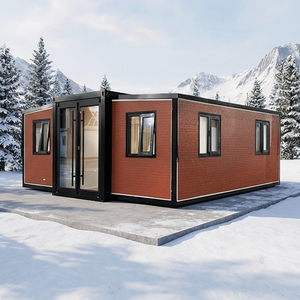
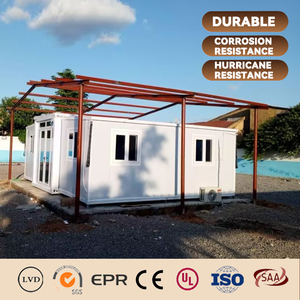
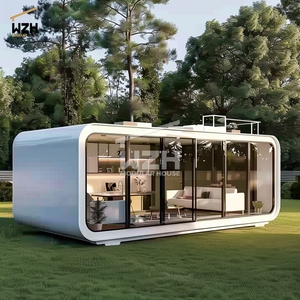
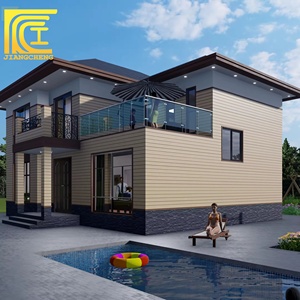
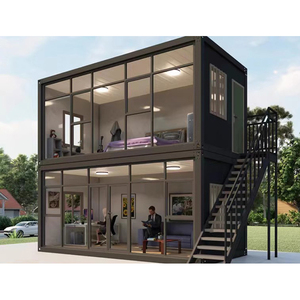
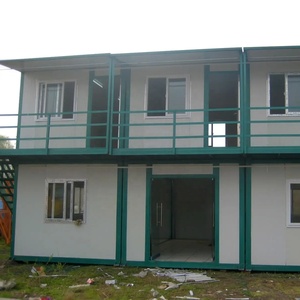
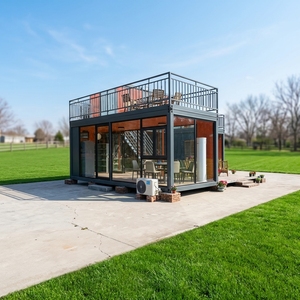
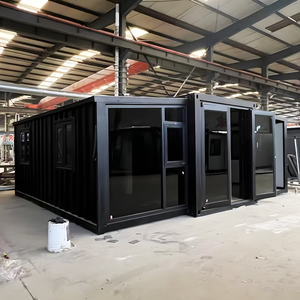
Kenya's higher education sector is experiencing unprecedented growth. Driven by the rapid expansion of public institutions such as the University of Nairobi, Kenyatta University, and Jomo Kenyatta University of Agriculture and Technology (JKUAT), alongside prestigious private entities including Strathmore University and USIU-Africa, university enrollment has surged dramatically over the past decade. However, institutional physical infrastructure has failed to match this growth, leading to an acute shortage of purpose-built student accommodation (PBSA).
Market intelligence from the International Finance Corporation (IFC) and local educational bodies indicates an estimated shortfall exceeding 500,000 beds across major Kenyan university hubs. Traditional on-site masonry construction—characterised by slow build schedules, weather vulnerabilities, material waste, and fluctuating raw material pricing—is unable to bridge this supply gap fast enough to keep pace with annual matriculation cycles. Modern Methods of Construction (MMC), specifically off-site volumetric modular manufacturing and Light Gauge Steel (LGS) prefabrication, present a transformative industrial paradigm for university boards, municipal planners, and private real estate developers in Kenya.
Designed for Manufacturing and Assembly. Every module is modeled using Building Information Modeling (BIM) Level 2 to eliminate site adjustments and material waste.
Self-supporting structural steel frames capable of multi-story vertical stacking up to 8 floors without secondary load-bearing structural cages.
Flat-pack and standardized container dimensions tailored for efficient sea freight to Mombasa Port and inland transport via the Standard Gauge Railway (SGR).
Exporting modular housing units to East Africa requires deep regional engineering adjustments rather than off-the-shelf production. Kenya presents unique environmental, logistical, and structural requirements that factory engineering must account for prior to fabrication:
| Performance Parameter | Factory Modular Export Solution | Traditional On-Site Masonry (Kenya) |
|---|---|---|
| Construction Timeline | 30 – 50% Faster (Parallel site & factory work) | 18 – 24 Months (Subject to weather/strikes) |
| Cost Predictability | Fixed Contract Cost (0% inflation exposure) | High risk of material price fluctuations |
| Acoustic Privacy (Inter-Room) | STC 52 - 58 dB (Double-wall cavity isolation) | STC 40 - 44 dB (Single masonry block standard) |
| Thermal Insulation | Integrated PIR/Rockwool (U ≤ 0.22 W/m²K) | Uninsulated hollow concrete blocks |
| Site Material Waste | < 2% Waste (Factory DfMA optimization) | 15% – 25% On-site wastage |
| Structural Lifespan | 50+ Years (Hot-dip galvanized anti-corrosion) | 50+ Years (Dependent on concrete mix quality) |
Supported by FORUM TFI S.A., one of the largest investment fund management entities in Central Europe, providing unmatched financial solvency, project guarantee execution, and scale for multi-thousand bed pipelines.
Our automated production facilities operate under ISO 9001 (Quality Management), ISO 14001 (Environmental Protection), and ISO 50001 (Energy Management), guaranteeing institutional-grade structural integrity.
Every student unit is engineered through 3D BIM modeling, permitting mechanical, electrical, and plumbing (MEP) systems to be pre-fitted inside factory walls prior to container shipping.
From factory packaging to sea transport, Mombasa port clearance, SGR rail dispatch, and on-site crane erection supervision, we offer complete turn-key technical support to local Kenyan contractors.
Units are manufactured either as fully finished volumetric 3D modules or flat-pack 2D panelized systems depending on design density. Standardized volumetric containers are shipped as certified ISO freight units via sea lines straight to the Port of Mombasa. From Mombasa, units are loaded onto the Standard Gauge Railway (SGR) freight service to Nairobi or Naivasha Inland Container Depots (ICD) for final flatbed truck transfer to the site.
Yes. Our engineering department works alongside registered local Kenyan architectural and structural engineering partners. All designs comply with the Physical and Land Use Planning Act, the National Construction Authority (NCA) regulations, and the Kenya Bureau of Standards (KEBS) guidelines for prefabricated building systems.
Modular steel structures require significantly less earthwork than traditional concrete developments. Depending on the soil condition (e.g., black cotton soil or decomposed rock), simple concrete strip footings, isolated column pads, or ground screw anchor systems are prepared while the factory manufactures the modules simultaneously.
Because modular construction shortens total build schedules by 30% to 50%, property developers can open student dormitories a full academic year ahead of traditional developments. Early rental income generation combined with fixed upfront factory costs leads to an estimated 3% to 6% improvement in overall project Internal Rate of Return (IRR).
Absolutely. Modules are highly flexible and fully customizable. We produce single studio apartments with private ensuite bathrooms and micro-kitchenettes, double shared occupancy units, or multi-bedroom cluster apartments with communal kitchens and study lounges, tailored to university brand standards.
Modules intended for coastal deployment undergo specialized anti-corrosion treatment. We utilize heavy-gauge structural steel treated with hot-dip galvanization and C4/C5 grade marine anti-corrosion polyurethane coating layers to resist high salt spray and atmospheric humidity.
Partner with an award-winning international modular manufacturer. Contact our engineering team today to receive architectural drawings, structural engineering specifications, and factory-direct export pricing.
