
Discover latest news, architectural innovations, and expert perspectives on modular steel-frame construction across Europe.
Deployable prefabricated structures engineered for rapid industrial assembly, high thermal isolation, and structural resilience across Uzbekistan's logistical hubs.
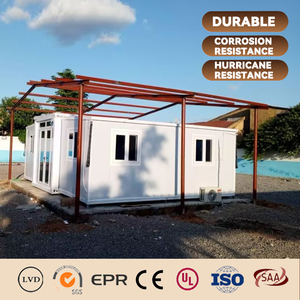
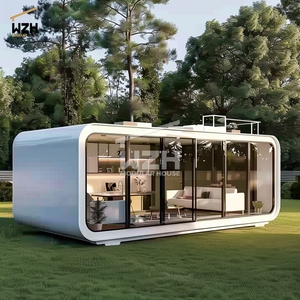
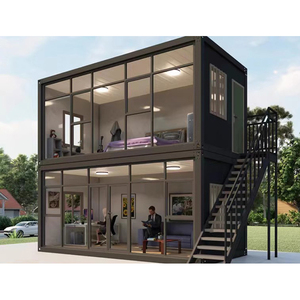
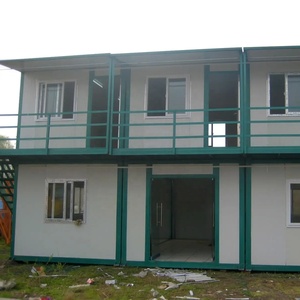
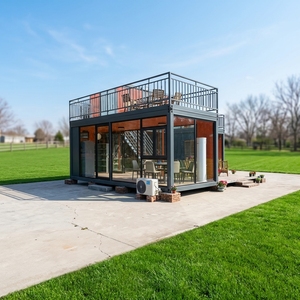
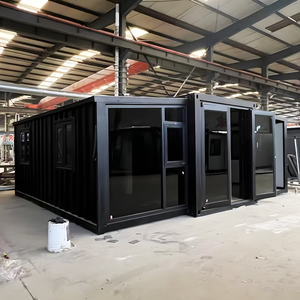
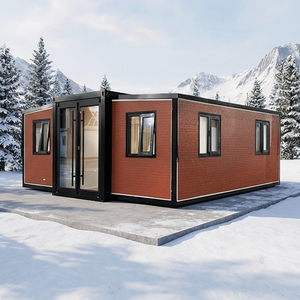
Uzbekistan’s pivotal position along the historic Silk Road and the expanding Trans-Caspian International Transport Route (Middle Corridor) has catalyzed a dramatic surge in demand for advanced commercial warehousing, cold-chain agricultural storage, and industrial logistics facilities. As the nation executes its "New Uzbekistan Development Strategy 2030", traditional brick-and-mortar masonry construction is increasingly recognized as a bottleneck due to extended build cycles, vulnerability to regional seismic activity, and high lifecycle thermal inefficiency.
This technical whitepaper examines the engineering parameters, structural advantages, and operational economics of deploying off-site manufactured volumetric modular storage facilities across Uzbekistan’s distinct geographical and regulatory zones. By moving up to 90% of the construction workflow into automated, climate-controlled factory environments, modular engineering mitigates field execution risks, guarantees structural compliance with local KMK (Qurilish Me’yorlari va Qoidalari) standards, and dramatically accelerates return on investment (ROI) for global institutional investors, logistics operators, and state-backed infrastructural enterprises.
Fabricated using high-tensile cold-formed galvanized steel profiles (Q355B / S350GD grade) with minimum Z275 zinc coating, protecting structures against atmospheric oxidation and aggressive alkaline soils common in the Kyzylkum region.
High-density Polyisocyanurate (PIR) core sandwich panels or non-combustible Structural Rockwool insulation (up to 150mm thickness). Achieves thermal transmittance U-values down to 0.16 W/m²K to resist harsh continental temperature swings.
Fully compliant with Central Asian seismic standard KMK 2.01.03-19. Volumetric module moment connections and flexible box-girder mechanics absorb seismic shock loads without structural collapse.
Tailored volumetric architectural modules configured to satisfy distinct regional industrial requirements and extreme climate profiles.
As Uzbekistan's primary logistics nerve center, the Tashkent Ring Road and surrounding industrial zones require high-density, multi-tiered modular fulfillment vaults. Our modular systems integrate seamlessly with automated material handling equipment (AMHE) and high-density racking.
High-tech manufacturing hubs in Navoi benefit from explosion-proof, corrosion-resistant modular storage complexes featuring hazardous materials containment floors, integrated climate control, and anti-static floor coatings.
Rapidly deployable modular cold-storage facilities featuring hermetically sealed panel joint systems. Engineered specifically for fruit, vegetable, and cotton seed preservation, maintaining internal temperatures from -5°C to +4°C regardless of outside summer heat exceeding +45°C.
Extremely robust, relocatable modular storage depots designed for gold, copper, and mineral extraction sites. Built to endure harsh desert dust storms, heavy snow loads in foothill zones, and frequent operational relocation.
Leveraging state-of-the-art off-site volumetric modular manufacturing capability, our engineering processes combine European architectural precision with large-scale industrial output capacity. Supported by robust institutional backing through major regional investment groups like FORUM TFI S.A., we deliver bankable, high-asset-value infrastructure across international borders.
Specialized in steel-frame volumetric building systems. Utilizing advanced Design for Manufacture and Assembly (DfMA) and Building Information Modeling (BIM Level 2) to eliminate structural clashes prior to factory fabrication.
Fully certified operations under ISO 9001 (Quality Management System), ISO 14001 (Environmental Management System), and ISO 50001 (Energy Management System), guaranteeing rigorous material traceability.
Streamlined multimodal transport solutions via rail platform cars and heavy-duty flatbed trucking through Central Asian transport corridors direct to jobsite foundations in Tashkent, Samarkand, or Bukhara.
The logistics and industrial building landscape in Central Asia is undergoing a paradigm shift. Several macro-economic vectors are driving the rapid adoption of prefabricated volumetric steel storage facilities over traditional building methodologies:
With foreign direct investment (FDI) flooding into retail distribution, automotive manufacturing, and textiles, project developers cannot afford 18-to-24-month build cycles. Modular construction cuts total project timelines by 30% to 50%, allowing warehouse space to earn revenue up to a year earlier.
Uzbekistan winters often bring sub-zero freezing spells that freeze traditional wet masonry and concrete curing. Factory prefabricated modular units are manufactured in climate-controlled environments and installed on-site within days, completely eliminating seasonal weather downtime.
Modern industrial zones mandate strict environmental compliance. Off-site modular construction reduces jobsite dust pollution by up to 80% and material waste by over 60%, aligning with international green logistics frameworks supported by the EBRD and ADB.
Comprehensive answers addressing technical engineering, import compliance, customs procedures, and regional installation protocols.
Our volumetric modular structures are fully designed according to international structural codes (Eurocode 3 / EN 1090) and cross-engineered to meet or exceed local KMK (Qurilish Me’yorlari va Qoidalari) standards. We supply full structural calculation packages, material mill test certificates, and BIM documentation required by State Expertise (Gosarkhstroynadzor) for seamless building permit approvals.
Unlike rigid concrete structures prone to shear cracking during tremors, light and heavy volumetric steel modules utilize ductile moment-resisting frames coupled with high-strength structural bolting. This allows the building envelope to dynamically flex and absorb seismic energy without loss of structural integrity, fully satisfying KMK 2.01.03-19 seismic zone requirements.
Modules are engineered to standard shipping dimensions (ISO 20ft/40ft shipping footprints or optimized flat-pack profiles). They are shipped via rail platform cars on the standard 1520 mm Central Asian track gauge or delivered directly to sites via low-boy trailers. Our logistics team handles international transit paperwork through Middle Corridor transit routes.
Because modular structures are up to 40% lighter than conventional concrete structures, heavy deep-foundation piling is rarely required. Standard strip footings, reinforced concrete pad foundations, or helical ground screws are typically sufficient. Foundation construction occurs simultaneously with factory module production, saving months of project duration.
Yes. Demountability and scalability are core advantages of volumetric modular technology. Additional storage modules can be stacked vertically (up to 3-4 stories without external structural skeletons) or connected horizontally. If operational requirements change, the units can be unbolted, loaded onto transport trucks, and re-erected at a new site with minimal loss of material value.
All delivered components come accompanied by ST-1 certificates of origin (where applicable), phytosanitary certificates for packing timber, commercial invoices, packing lists, and GOST-R/EAC compliance certificates. Our experienced export documentation specialists assist local Uz-importers with customs clearance at Tashkent, Navoi, or Fergana inland customs posts.
Consult with our technical engineering team today to receive a comprehensive modular structural design review, thermal optimization assessment, and itemized factory quote tailored for your site in Uzbekistan.
Get Catalog