Discover latest news, architectural innovations, and expert perspectives on modular steel-frame construction across Europe.
Pre-engineered, expandable, and detachable modular dormitories engineered to satisfy Chilean NCh building standards and DS 594 workplace camp regulations.
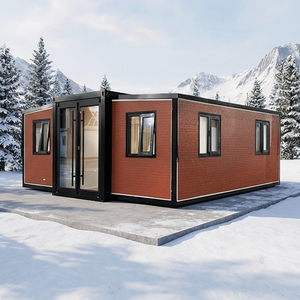
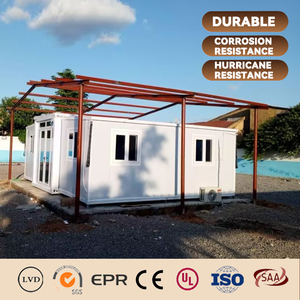
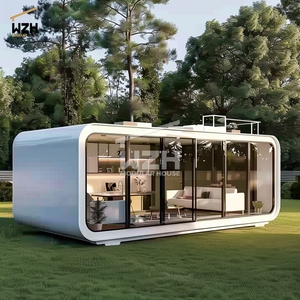
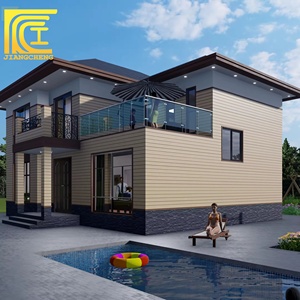
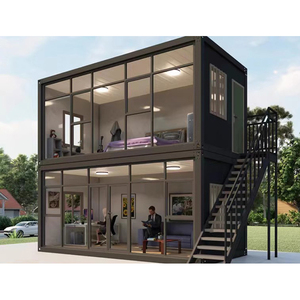
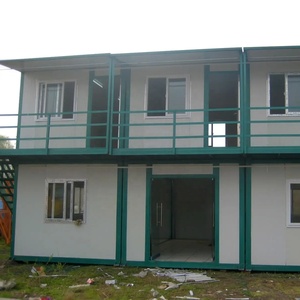
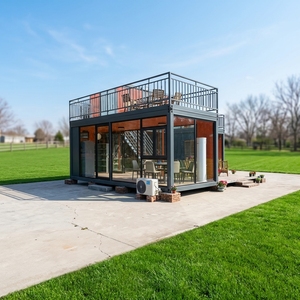
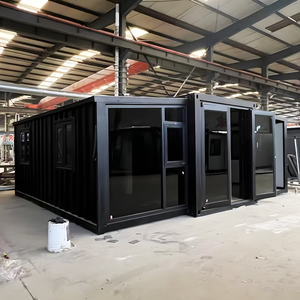
Chile represents one of the most demanding operational landscapes globally for industrial infrastructure, mining ventures, and renewable energy developments. Stretching over 4,300 kilometers from the arid Atacama Desert in the north to the sub-antarctic environments of Patagonia in the south, the country demands worker accommodation that seamlessly reconciles structural resilience with exceptional thermal efficiency. As a recognized global leader in off-site volumetric modular construction, our engineered modular staff accommodation solutions provide Chilean mining enterprises, EPC contractors, and forestry operations with turnkey housing complexes designed for longevity, speed of deployment, and regulatory compliance.
Deploying staff camps in remote Chilean locations involves facing distinct geographical, climatic, and logistics barriers. Off-site manufacturing via Design for Manufacture and Assembly (DfMA) mitigates these hurdles by transferring up to 90% of the construction process to controlled factory conditions, dramatically shrinking overall project delivery schedules while enforcing rigorous quality control.
Mining projects focused on lithium, copper, and molybdenum in regions like Escondida, Chuquicamata, and Collahuasi operate at elevations between 2,500 and 4,500 meters above sea level. Camps must endure high diurnal temperature swings (from -15°C at night to +30°C under extreme solar ultraviolet radiation), heavy dust loading, and structural strain from intense ultraviolet exposure. Our modular units employ high-density Polyisocyanurate (PIR) cores, thermal-break structural frames, and UV-resistant exterior coatings to ensure human comfort and low operational energy consumption.
Chile’s ambitious clean energy transition requires rapid mobilization of thousands of technical workers across photovoltaic solar farms in the north and wind turbine projects in Coquimbo and Magallanes. Modular containerized sleeping quarters, administrative hubs, and central dining facilities can be rapidly erected, disassembled, and relocated as project phases progress, protecting capital investment through structural reusability.
In the South-Central zones (La Araucanía, Los Ríos, Biobío), high annual rainfall and elevated relative humidity demand robust moisture protection and mold-resistant interior envelopes. Our light steel modular systems incorporate continuous hydrophobic vapor barriers, elevated floor systems, and active ventilation mechanisms to maintain healthy living spaces in wet forestry environments.
Civil engineering work forces require scalable, high-density residential camps with integrated sanitary facilities, laundry modules, and recreational halls. Using stackable 2-storey and 3-storey volumetric units, site footprints are minimized, reducing civil earthwork expenses across mountainous Chilean corridors.
Procuring modular housing for the Chilean market requires complete adherence to domestic structural and health standards. Procurement officers must navigate three fundamental regulatory pillars: seismic resilience, thermal envelope standards, and workplace health mandates.
Key Regulatory Compliance Benchmark: Our volumetric steel-frame modular systems are specifically calculated to satisfy Chilean Standard NCh 433 (Diseño Sísmico de Edificios) and NCh 3171, engineered to absorb high spectral accelerations without structural failure.
Chile sits directly atop the subduction zone between the Nazca and South American tectonic plates, making it one of the most seismically active regions on Earth. Standard modular structures designed for low-seismic zones will fail structural audits in Chile. Our volumetric modules utilize cold-formed high-tensile steel frames coupled with moment-resisting corner fittings and perimeter bracing. This ductile steel matrix allows controlled energy dissipation during major seismic events, preserving life safety and structural integrity.
The Chilean Ministry of Health enforces Decreto Supremo N° 594, which regulates basic environmental and sanitary conditions in all workplaces and remote labor camps. Our modular staff accommodations are manufactured to satisfy these standards precisely:
Heating and cooling represent major operational expenditures in remote camps. By integrating continuous thermal break framing, low-emissivity double-glazed windows, and PUR/PIR sandwich panels ranging from 75mm to 150mm in thickness, our buildings achieve thermal transmittance values ($U$-values) below 0.28 W/m²K, reducing HVAC diesel generator loads by up to 35% in high-altitude desert settings.
For capital project directors and procurement specialists evaluating project feasibility in Chile, the choice between traditional on-site masonry/concrete building and off-site volumetric modular delivery significantly affects risk profiles, financial returns, and delivery timelines.
| Evaluation Criteria | Traditional On-Site Construction | Volumetric Steel Modular System | Chile Market Impact |
|---|---|---|---|
| Construction Timeline | 12 – 18 Months (Weather Dependent) | 4 – 7 Months (Factory Parallel) | Accelerates commercial start date by up to 60%. |
| Seismic Performance (NCh 433) | Rigid Masonry / Heavy Shear Walls | Ductile High-Strength Steel Frame | Superior energy absorption; minimal structural repair post-quake. |
| Labor Dependency On-Site | High (Requires Large On-Site Workforce) | Low (Assembly Only) | Drastically reduces remote camp construction costs and safety risks. |
| Thermal Transmittance (U-Value) | Variable (Subject to On-site Workmanship) | Uniform Factory Spec (U ≤ 0.28 W/m²K) | Consistent energy savings in severe Atacama/Patagonian climates. |
| Environmental Impact / ESG | High On-Site Waste (15-20%) | Near Zero Factory Waste (< 2%) | Aligns with corporate ESG goals and Chilean environmental permits (SEIA). |
| Relocability & Flexibility | Permanent (Zero Asset Mobility) | 100% Demountable & Relocatable | Modules can be shifted to new mine sites after project lifecycle ends. |
As an internationally accredited manufacturer of volumetric modular structures, our engineering and production capabilities are designed to deliver structural precision, rapid scalability, and financial security to international developers, mining houses, and EPC firms. Supported by rigorous quality management systems and substantial capital backing, we ensure your project is completed on time and within budget.
Operating state-of-the-art off-site manufacturing facilities equipped with automated CNC cold-formed steel shaping systems, automated welding, and climate-controlled assembly lines. We deliver consistent, high-volume production output capable of supplying large workforce camps simultaneously.
Our manufacturing operations adhere strictly to international benchmarks, certified under ISO 9001 (Quality Management System), ISO 14001 (Environmental Management), and ISO 50001 (Energy Management). Every weld, electrical harness, and plumbing connection undergoes rigorous inspection prior to dispatch.
Utilizing Design for Manufacture and Assembly (DfMA) principles integrated with 3D Building Information Modeling (BIM), we eliminate structural and spatial clashes long before production commences. This guarantees flawless component alignment during rapid on-site assembly in Chile.
Modules are engineered to standard ISO shipping container dimensions or flat-pack configurations to optimize ocean freight rates to primary Chilean ports including Antofagasta, Iquique, Valparaíso, and San Antonio, paired with custom road transport framing for rugged inland haulage.
Expert insights addressing key logistical, technical, and regulatory queries regarding modular camp imports into Chile.
Our units are manufactured in two core shipping formats: pre-assembled volumetric units designed to standard ISO freight dimensions, or high-density flat-pack systems (where up to 4 units are bundled into a single 20ft container footprint). Ocean vessels deliver packages directly to regional ports such as Antofagasta or Iquique, where specialized heavy-duty transport trailers move them inland via highway networks to the high-altitude project sites.
Yes. Every unit layout engineered for the Chilean market is customized to comply fully with Decreto Supremo 594. This includes satisfying minimum air cubic meter specifications per occupant, required window-to-floor ventilation ratios, non-porous cleanable wall materials, and calculated sanitary fixture counts for both male and female staff dormitories.
We utilize structural structural steel framing featuring high-grade Q355B/Q235B cold-rolled steel profiles with reinforced perimeter corner columns and specialized interlocking twist-lock connections. This creates a box-rigidity system that distributes lateral kinetic forces evenly, preventing shear failure under high horizontal spectral accelerations (PGA ≥ 0.4g).
Units destined for the Atacama are fitted with continuous 75mm to 100mm Polyisocyanurate (PIR) or high-density Mineral Wool core insulation panels, thermally broken aluminum window frames, and reflective exterior roof membranes. This system maintains internal thermal stability, reducing HVAC electrical loads and preventing thermal bridging even when ambient temperatures drop below freezing at night.
Chile maintains an open market economy with an extensive network of Free Trade Agreements (FTAs). Standard prefabricated steel structures fall under HS Code 9406.90. Under applicable trade agreements, preferential tariff treatment (often 0% import duty) applies upon presentation of valid Certificates of Origin, subject to local value-added tax (IVA 19%).
Our steel frameworks undergo heavy hot-dip galvanization (minimum Z275 coating mass) complemented by marine-grade polyurethane topcoats. This corrosion-protection system ensures a structural design life exceeding 25 years, even in corrosive high-salinity coastal environments or sulfur-rich mining atmospheres.
Contact our structural engineering and commercial team to request custom technical drawings, budget estimates, or compliance documentation tailored to your site location in Chile.
