Discover latest news, architectural innovations, and expert perspectives on modular steel-frame construction across Europe.
Explore our engineered line of high-performance volumetric container units, expandable villas, and light steel structural kits. Built in ISO-certified facilities with advanced thermal insulation, solar-ready roofing, and anti-corrosion marine structural coatings tailored for Ghanaian climates.
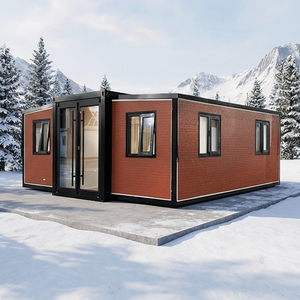
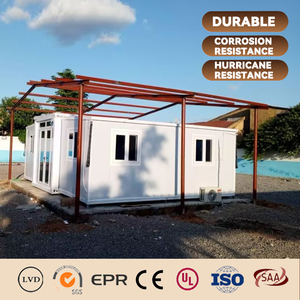
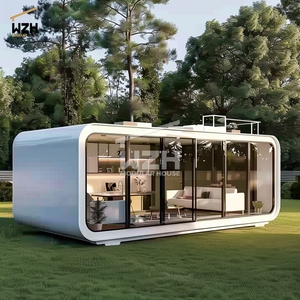
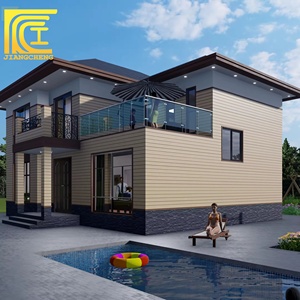
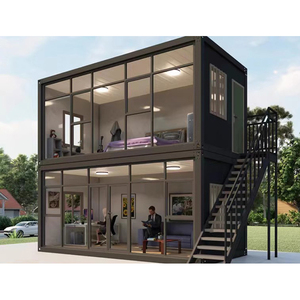
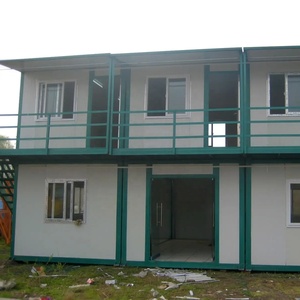
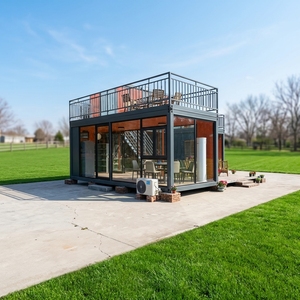
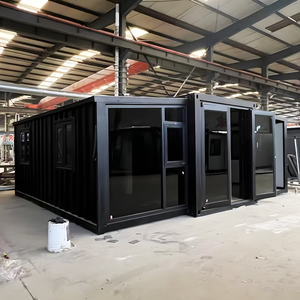
Ghana faces a structural urban development challenge characterized by a residential deficit exceeding 1.8 million to 2.0 million housing units. Rapid expansion across the Greater Accra Metropolitan Area (GAMA), Kumasi, and the Western Region energy corridors (Takoradi) has placed unprecedented strain on traditional brick-and-mortar construction models. Conventional sand-crete block construction methods in Ghana are frequently hampered by prolonged project schedules, inflationary material cost volatility, inconsistent structural quality, and severe thermal inefficiencies that lead to unsustainable operational energy expenses.
As a global leader in volumetric steel-frame modular construction, our manufacturing ecosystem provides an engineered alternative. By transferring up to 90% of the building process off-site into advanced factory-controlled environments, we enable real estate developers, institutional investors, and municipal authorities across Ghana to achieve fixed project timelines, guaranteed budget certainty, and compliance with modern green building standards such as the World Bank Group's IFC EDGE (Excellence in Design for Greater Efficiencies).
Building in West Africa requires rigorous material engineering to withstand severe tropical environmental pressures. Ghana experiences high relative humidity (averaging 80% to 90% along the coast), intense diurnal solar radiation, and aggressive salt-spray marine environments along the Gulf of Guinea. Standard prefabricated imports often fail prematurely due to thermal bridging, steel oxidation, and interior condensation rot. Our volumetric systems incorporate localized structural engineering upgrades designed specifically for Ghana:
Our energy-efficient modular housing factory supplies scalable volumetric solutions engineered to solve specific infrastructure and real estate challenges across various Ghanaian sectors.
Ideal for urban infill plots in East Legon, Airport Residential, Cantonments, and Tema. Rapid assembly allows developers of Build-to-Rent (BTR) multi-family properties to accelerate rental yield cycles by 12 to 14 months compared to traditional construction.
Turnkey worker accommodation camps for resource projects in Tarkwa, Obuasi, and Western Region oil belts. Robust, relocatable 20ft and 40ft modular cabins featuring heavy-duty HVAC, en-suite baths, and mess hall configurations.
Off-grid eco-lodges and luxury expandable tiny houses along the coastline of Cape Coast, Elmina, Busua, and Ada Foah. Integrated roof solar PV micro-grids and greywater recycling units eliminate dependency on local utilities.
The Ghanaian real estate ecosystem is undergoing a paradigm shift driven by technological adoption, government policy updates, and ESG (Environmental, Social, and Governance) mandates. Developers and institutional buyers must navigate three crucial market trends:
The International Finance Corporation (IFC) EDGE standard has become the benchmark for sustainable housing in West Africa. Major commercial lenders in Ghana offer preferential financing for projects certified under EDGE. Our factory-prefabricated modular units achieve over 35% direct energy savings and 40% embodied energy savings in structural materials, automatically fulfilling EDGE certification requirements upon installation.
Unreliable utility power grids (locally known as "Dumsor") create operational risks for residential and commercial landlords in Ghana. All our modular homes are manufactured solar-ready, equipped with pre-engineered conduit runs, heavy-load roof truss designs for high-efficiency monocrystalline PV panels, and dedicated lithium battery rack compartments. This allows 100% off-grid independence or seamless hybrid backup operation.
Shipping logistics form a critical cost component of international modular supply chains. Our factory utilizes Design for Manufacturing and Assembly (DfMA) standards to ensure that expandable homes, flat-pack units, and volumetric frames conform exactly to standard ISO container dimensions (20ft High Cube and 40ft High Cube). This optimization enables maximum floor-space square footage per sea freight container, dramatically lowering maritime freight costs to Tema Port or Takoradi Port and streamlining inland truck logistics along the N1 highway.
Combining world-class volumetric steel engineering with robust investment fund backing, we deliver uncompromised build quality, rapid scalability, and complete cost transparency for West African developments.
Our manufacturing lines operate under strict international Quality Management (ISO 9001), Environmental Protection (ISO 14001), and Energy Management (ISO 50001) standards, guaranteeing zero structural defects.
Every building project is engineered in 3D BIM software prior to factory execution. Advanced DfMA algorithms ensure millimetric component accuracy, seamless MEP integration, and zero on-site material waste.
Supported by major CEE investment funds (FORUM TFI S.A.), our global enterprise possesses the balance sheet strength required to execute large-scale, multi-hundred unit residential master plans reliably.
Detailed answers addressing import procedures, site preparation, environmental endurance, and financial viability for modular housing procurement in Ghana.
Manufacturing typically requires 20 to 30 days depending on project scale. Sea transit from our manufacturing hub to Tema Port or Takoradi Port takes approximately 25 to 35 days. On-site assembly, utility connection, and final interior commissioning for a standard expandable unit or 20ft/40ft modular layout take only 2 to 5 days once foundations are ready.
Our structural steel framework undergoes hot-dip galvanization and receives marine-grade C5-M anti-corrosion coatings. Exterior cladding options include fluorocarbon-coated aluminum composite panels or high-density fiber cement boards, creating an impenetrable waterproof barrier against tropical downpours and high moisture environments.
All units ship with full commercial invoices, packing lists, Bills of Lading (B/L), Certificate of Origin, and technical compliance certificates. Under Ghana Revenue Authority (GRA) guidelines, prefabricated structural steel buildings fall under specific HS Code categories. We work alongside accredited Ghanaian freight forwarders to facilitate smooth customs clearance.
Depending on local soil conditions (e.g., expansive clay in parts of Accra or sandy coastal soils in Volta Region), units can be installed on simple reinforced concrete piers, strip footings, or a flat concrete slab base. Concrete requirement is reduced by up to 70% compared to traditional building foundations.
Yes. We offer factory-installed off-grid solar packages complete with roof-mounted photovoltaic arrays, hybrid inverters, and lithium battery banks. Plumbing lines can also be configured with dual-circuit valving for seamless rainwater collection and greywater filtration integration.
Yes. Our engineering designs meet and exceed structural stability, fire resistance, thermal efficiency, and ventilation criteria mandated by the Ghana Building Code (GS 1207:2018) and local district assembly planning requirements.
Consult with our international modular engineering specialists today. We provide full technical proposals, architectural layout customizations, and delivered door-to-port pricing for your real estate development.
