Discover latest news, architectural innovations, and expert perspectives on modular steel-frame construction across Europe.
High-precision prefabricated volumetric buildings engineered specifically for Pakistan’s diverse microclimates, seismic conditions, and rapid housing initiatives.
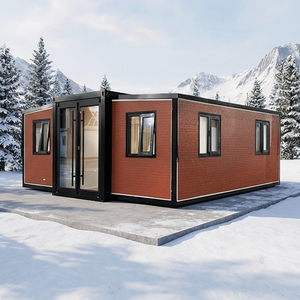
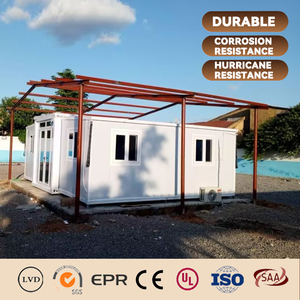
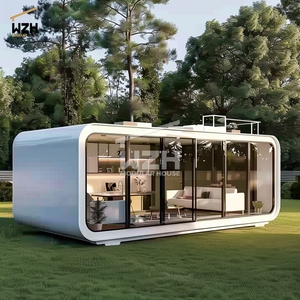
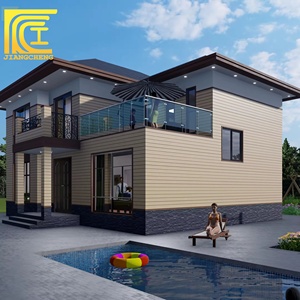
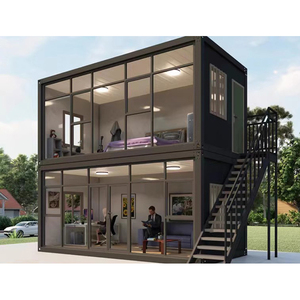
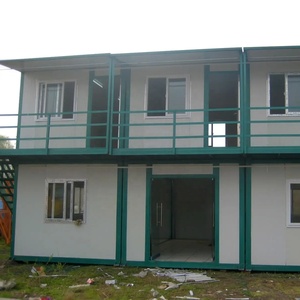
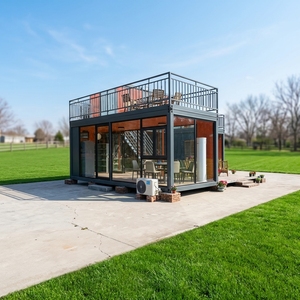
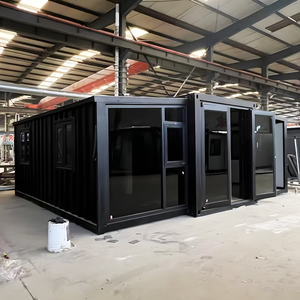
Pakistan faces an acute housing deficit estimated at over 10 million urban and semi-urban residential units, driven by rapid urbanization, demographic growth, and post-flood rehabilitation mandates across Sindh, Balochistan, and Khyber Pakhtunkhwa. Traditional brick-and-mortar masonry construction in Pakistan suffers from structural vulnerabilities, escalating raw material costs (cement, steel rebar, red brick firing), unpredictable construction timelines, and severe thermal inefficiency. In a region where summer temperatures routinely exceed 45°C in cities like Multan, Shibbi, and Jacobabad, uninsulated brick structures place an intolerable burden on the national electricity grid.
As a global leader in volumetric modular buildings backed by institutional investment from FORUM TFI S.A. and certified under rigorous international standards including ISO 9001 (Quality Management), ISO 14001 (Environmental Management), and ISO 50001 (Energy Management), our manufacturing plants supply fully prefabricated, thermal-envelope optimized modular building systems directly to the Pakistan market. By shifting up to 90% of the building workflow from the job site into automated, quality-controlled factory environments, we deliver high-performance light gauge steel (LGS) and heavy volumetric steel frame buildings with fixed cost certainty, 50% faster completion schedules, and exceptional thermal performance.
SEO Information Gain Insight: Our energy-efficient modular housing units utilize continuous thermal break insulation layers (PIR/PU/Rockwool) achieving U-values as low as 0.18 W/m²K—reducing indoor HVAC load by up to 60% compared to traditional 9-inch uninsulated Pakistani brick masonry walls.
Our global production base is designed around Design for Manufacture and Assembly (DfMA) methodology and advanced 3D Building Information Modeling (BIM) workflows. Every structural component exported to Pakistan undergoes strict stress tests, corrosion resistance treatment, and quality control audits before shipping. Unlike basic local site assemblies, our volumetric housing products represent an integrated fusion of structural steel engineering, thermal envelope science, and architectural aesthetics.
Utilizing high-tensile Q355B and S355JR cold-formed structural steel framing, our modular units are engineered to withstand extreme structural loads, high wind speeds up to 210 km/h, and severe seismic accelerations common along the Chaman and Main Mantle Thrust fault lines in Pakistan.
Engineered for the Pakistani climate, walls and roof panels incorporate high-density Polyisocyanurate (PIR) or hydrophobic Rockwool core panels with double-glazed Low-E argon-filled windows, preventing thermal bridging and maintaining indoor comfort under extreme heat waves.
To directly combat load-shedding and grid instability in Pakistan, our modular houses are pre-wired for seamless hybrid solar PV installation, MPPT inverter integration, and Lithium Iron Phosphate (LiFePO4) storage batteries, enabling complete off-grid autonomy.
Modular construction is no longer confined to temporary job-site shelters; it has evolved into a permanent, highly scalable structural solution deployed across diverse geographic and socio-economic sectors in Pakistan:
With major metropolitan centers like Karachi, Lahore, Rawalpindi, and Faisalabad experiencing rapid urban sprawl, municipality authorities and private developers are seeking fast-track construction methods. Our expandable container houses (10ft, 20ft, and 40ft variants) and multi-bedroom LGS prefabricated villas provide turn-key housing units for urban infill projects and government-backed affordable housing initiatives such as the Naya Pakistan Housing Program. Factory pre-installation of plumbing, electrical conduits, sanitaryware, and kitchen cabinetry reduces site labor requirements by over 70%.
Under the China-Pakistan Economic Corridor (CPEC) framework, mega infrastructure projects along Gwadar Port, the Western Alignment Highway, and the Thar Coalfield Development require rapid-deploy, highly durable worker accommodations, field offices, and executive quarters. Our heavy-duty detachable container houses and two-story foldable modular cabins can be mobilized, assembled within 48 hours per unit, and repeatedly disassembled and relocated as infrastructure projects progress.
Northern Pakistan—including Hunza Valley, Skardu, Gilgit, Swat, and Naran-Kaghan—is undergoing a massive tourist boom. However, traditional construction in these environmentally sensitive, mountain terrain locations is constrained by short 4-month building windows, freezing temperatures, and fragile ecosystems. Our luxury modular resort cabins and expandable tiny home pods are shipped flat-packed or pre-assembled to site, requiring minimal foundation disturbance and offering year-round thermal comfort for luxury eco-resorts and glamping sites.
Pakistan is exceptionally vulnerable to extreme weather events, including the devastating monsoon floods in Sindh and Balochistan and seismic activity in Northern KPK and Azad Kashmir. Our modular houses offer elevated floor chassis configurations, water-resistant galvanized steel frames, and rapid deployment capabilities—allowing humanitarian agencies and local governments to establish permanent, flood-resilient communities in weeks rather than years.
When assessing total cost of ownership (TCO), life cycle assessment (LCA), and project risk, volumetric modular construction significantly outperforms conventional Pakistani wet-construction methods across every critical structural and economic parameter:
| Evaluation Parameter | Volumetric Modular Housing (Our Factory) | Light Steel Frame (LGS) Villa | Traditional Brick & Concrete Masonry |
|---|---|---|---|
| Speed of Construction | Extreme (2-4 Weeks Factory + 3 Days Site) | Fast (6-8 Weeks On-Site Frame Assembly) | Slow (9 to 18 Months On-Site Construction) |
| Thermal Insulation (U-Value) | Superior (0.18 - 0.24 W/m²K) | Excellent (0.22 - 0.28 W/m²K) | Poor (1.80 - 2.40 W/m²K without insulation) |
| Seismic Performance | Zone 4 Certified (Ductile Steel Frame) | Zone 4 Certified (Flexible Light Gauge) | High Risk (Brittle Masonry Cracking/Collapse) |
| Solar Energy Integration | Pre-engineered Roof Load & Cable Channels | Retrofit Roof Bracket Required | Complex External Conduit & Drilling Required |
| Quality Control | 100% Factory Precision (ISO 9001 Audited) | Semi-Factory Frame / On-site Finishing | Highly Variable (Dependent on Site Labor Skill) |
| HVAC Energy Savings | 50% - 65% Monthly Tariff Reduction | 40% - 55% Monthly Tariff Reduction | Baseline (High AC Electricity Bills) |
| Material Waste & Carbon Footprint | < 2% Waste, Low Carbon Footprint | < 5% Waste, Recyclable Steel Frame | High On-Site Waste, High Carbon Brick Firing |
The construction sector in Pakistan is reaching a pivotal structural tipping point. Key macroeconomic, environmental, and technological factors are driving property developers, government bodies, and individual homeowners away from legacy wet construction toward precision modular manufacturing:
Our modular housing systems feature multi-layered wall and roof assemblies incorporating high-density Polyisocyanurate (PIR) or Rockwool cores sandwiched between double-faced galvanized steel skins. Combined with thermal break window frames and Low-E double glazing, heat transfer into the building is minimized. This maintains internal temperatures comfortably lower than external ambient heat, significantly lowering the load on air conditioning units and cutting electricity bills by up to 60%.
All modular housing components are packed and standardized according to ISO intermodal container dimensions (flat-pack container bundles or standard SOC/COC 20ft and 40ft High Cube containers). Ships deliver directly to Port Muhammad Bin Qasim or Karachi Port Trust (KPT). We provide comprehensive export documentation—including HS Codes, Certificates of Origin, ISO Compliance Sheets, Bill of Lading, and structural CAD drawings—to facilitate smooth clearance by local Pakistani customs clearing agents.
Yes. Steel possesses superior ductility and strength-to-weight ratio compared to rigid brick masonry. Our volumetric frames and light gauge steel villa structures are calculated to absorb and dissipate seismic energy effectively. Engineered in compliance with international building codes (IBC) and tested for Seismic Zone 3 and Zone 4 performance, our buildings resist lateral seismic forces, ensuring occupant safety during earth tremors.
Absolutely. We offer factory pre-engineered solar integration kits tailored to your power load requirements. Roof panels are designed with structural mounting channels to hold high-efficiency monocrystalline solar panels. Electrical wiring, distribution boards, and space for hybrid solar inverters and LiFePO4 battery banks are integrated during factory assembly, providing immediate off-grid power upon site setup.
Because modular steel buildings are up to 60% lighter than traditional concrete structure brick houses, heavy deep-pile foundation work is rarely required. Depending on soil bearing capacity, options include simple concrete pier footings, strip footings, or a thin reinforced concrete slab. Our engineering team provides detailed foundation load plans tailored to local soil conditions reported across various regions in Pakistan.
Our structural steel frames undergo hot-dip galvanization with heavy zinc coating protection (Z275 to AZ150 depending on environmental exposure requirements), preventing rust and oxidation even in humid coastal marine environments like Karachi or Gwadar. The structural frame carries a designed service life of over 50 years, with minimal routine maintenance required on exterior cladding systems.
Whether you are developing a commercial residential site, resort project, infrastructure camp, or government housing initiative in Pakistan, our engineering team is ready to deliver tailored solutions with complete cost and timeline certainty.
Contact Us