Discover latest news, architectural innovations, and expert perspectives on modular steel-frame construction across Europe.
Engineered for Japan's rigorous seismic standards, extreme weather resilience, and immediate clinical operational capability.
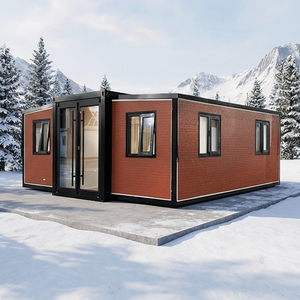
Dual-wing expandable container system equipped with integrated solar microgrid, medical-grade HVAC, and rapid deployment mechanics for emergency outpatient care.
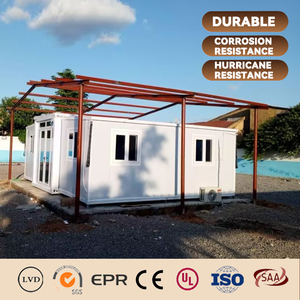
10ft/20ft/40ft prefabricated modular clinical suites featuring exterior verandas, barrier-free access, integrated reception, and diagnostic exam room layouts.
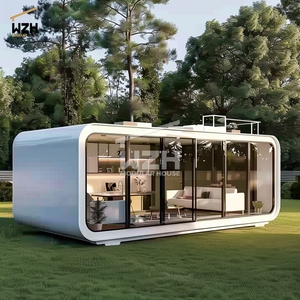
Scalable multi-room prefabricated medical complex complete with clinical sanitation units, private patient rooms, negative pressure HVAC, and staff facilities.
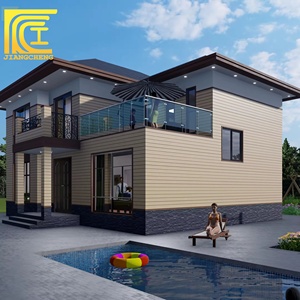
Permanent-grade prefabricated medical complex engineered with heavy-gauge light steel framing, pre-wired MEP utilities, and high thermal insulation for regional prefectures.
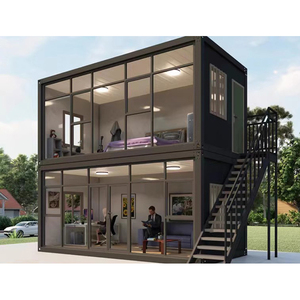
High-end architectural volumetric modular clinic designed for specialized outpatient surgery, aesthetic medicine, and dental practices requiring cleanroom finishes.
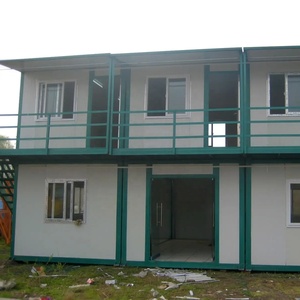
Rapidly deployable fold-out surgical module featuring antibacterial wall panels, HEPA air purification systems, and central oxygen gas piping integration.
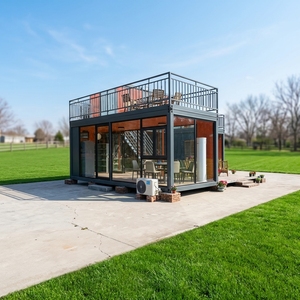
Stackable volumetric container building system optimized for regional administrative headquarters, staff quarters, and centralized hospital overflow management.
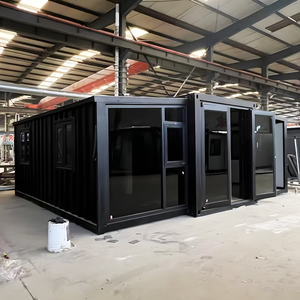
Custom engineered OEM heavy-duty steel structure featuring 4-room layout, digital diagnostic integration, and extreme weather thermal insulation for snow zones.
Japan’s healthcare infrastructure landscape faces an unprecedented convergence of demographic shifts, geographic realities, and regulatory demands. As the world's most rapidly aging society (Chō-kōreika shakai), with over 29% of its population aged 65 or older, Japan requires an agile, decentralized, and highly resilient medical facility network. Traditional concrete-and-mortar hospital construction—plagued by prolonged construction schedules, escalating material costs, and severe labor shortages across regional prefectures—is increasingly incapable of fulfilling urgent clinical expansion demands.
In response, public healthcare trusts, private hospital groups, municipal governments, and disaster relief organizations throughout Japan are pivoting toward OEM Volumetric Prefabricated Medical Clinics. Built off-site using Design for Manufacture and Assembly (DfMA) principles, modular healthcare units deliver an uncompromising synthesis of speed, structural integrity, and cleanroom-grade clinical quality.
Unlike standard temporary container structures, our custom OEM prefabricated medical buildings are engineered as permanent-grade or rapid-deployment modular facilities. Manufactured in ISO-certified smart factories and shipped directly to Japanese ports such as Tokyo, Yokohama, Kobe, and Osaka, these modules mitigate up to 80% of on-site construction disruption while maintaining strict compliance with Japan’s Building Standard Law (BSL / Kenchiku Kijun-hō) and the Ministry of Health, Labour and Welfare (MHLW) guidelines.
Our OEM medical modules are constructed using structural steel framing and non-combustible building envelopes engineered specifically for Japan’s environmental conditions.
All structural steel members (JIS G3101 SS400 / JIS G3136 SN490), welds, and fire-rated panel assemblies undergo rigorous factory quality verification to satisfy Japan's Ministry of Land, Infrastructure, Transport and Tourism (MLIT) structural requirements.
Designed with moment-resisting steel frames and elastic connection damping, our clinic modules absorb high lateral shear forces during severe seismic events, ensuring post-earthquake operational continuity for hospital emergency rooms.
Equipped with negative pressure airflow systems (-2.5Pa to -15Pa), HEPA H14 air filtration, UV-C germicidal irradiation, and seamless antibacterial vinyl floor coverings compliant with JIS A 5705 sanitation codes.
One of the core advantages of partnering with an experienced OEM manufacturer is full off-site MEP installation. Each medical module leaves the assembly line with pre-installed Japanese-standard electrical wiring (100V/200V dual-voltage, 50Hz for Eastern Japan including Tokyo / 60Hz for Western Japan including Osaka/Nagoya), dual-circuit emergency backup power connectors, and pre-piped medical gas distribution systems (Oxygen, Nitrous Oxide, Vacuum, Medical Air) matching Japanese Industrial Standards (JIS T 7101).
Adapting prefabricated volumetric healthcare buildings to geographic and operational realities across the Japanese archipelago.
Japan’s Cabinet Office highlights urgent disaster mitigation mandates for earthquake-prone zones. Our rapidly deployable expandable container clinics can be transported via truck or sea freight to disaster strike zones within hours. Establishing immediate triage centers, mobile surgical suites, and satellite field hospitals, these modules operate autonomously using optional integrated solar-battery energy storage systems (BESS).
Mountainous prefectures and remote island communities (such as Okinawa and the Izu Islands) struggle with severe medical staff shortages and aging infrastructure. Prefabricated light steel community villas and mobile GP clinics provide all-weather, highly insulated (R-30+ thermal rating) outpatient hubs, ensuring continuous primary healthcare delivery even during extreme winter snowfalls in Northern Japan.
In densely populated metropolitan centers like Tokyo, Kanagawa, and Osaka, land availability is strictly constrained. Modular healthcare units can be stacked up to 3 stories high or integrated into rooftop and parking lot spaces as specialized outpatient annexes for hemodialysis, fever screening, endoscopy, or day-surgery facilities without shutting down main hospital operations.
To support Japan’s long-term care insurance (Kaigo Hoken) model, our clinics seamlessly interface with nursing homes and senior living communities. Featuring barrier-free (Baryāfurī) sliding doors, low-threshold floor plates, emergency call systems, and widened hallways for gurney passage, these facilities serve as dedicated geriatric medical hubs.
Data-driven evaluation highlighting capital efficiency, timeline compression, and quality guarantees.
| Key Evaluation Metric | Traditional Concrete Construction | On-Site Light Wood/Steel Prefab | Our OEM Volumetric Modular Clinics |
|---|---|---|---|
| Project Timeline | 14 - 22 Months | 8 - 12 Months | 3 - 5 Months (50-70% Time Savings) |
| Seismic Rating (Shindo Scale) | High (Site dependent) | Moderate (Requires extra bracing) | Certified Level 7 Resistance (Rigid Frame) |
| Factory Quality Control | Low (Subject to weather/site conditions) | Moderate | 100% Factory Testing (ISO 9001 / 14001) |
| Clinical Air Quality (HVAC) | Costly custom retrofitting | Standard commercial ventilation | Integrated Negative Pressure & HEPA H14 |
| On-Site Disruption & Noise | Severe (Months of heavy pile driving) | Moderate | Minimal (Assembly completed in 3-7 days) |
| Budget & Cost Predictability | High risk of inflation & delay fees | Moderate cost overrun risk | Fixed OEM Factory Pricing (Zero Overruns) |
The Japanese healthcare market is experiencing rapid transformation driven by policy updates, technological advancement, and structural economic pressures. OEM modular suppliers play a critical role in facilitating these macro shifts:
With Japan's MHLW actively deregulating and promoting online medical consultations, prefabricated clinics are now ordered with built-in fiber-optic infrastructure, high-speed 5G network antennas, and medical IoT sensor integration. This enables specialist doctors located in urban tertiary hospitals in Tokyo to conduct real-time consultations and digital imaging analysis for patients visiting remote modular clinics in regional prefectures.
Under Japan's national Green Growth Strategy to achieve carbon neutrality by 2050, public infrastructure procurement prioritizes Net Zero Energy Buildings (ZEB). Our volumetric clinic manufacturing process utilizes low-carbon structural steel, high-performance polyurethane insulation foam, dual-pane low-E argon-filled glass, and optional rooftop solar photovoltaic panels to meet rigorous ZEB-Ready and ZEB-Oriented standards.
Healthcare institutions are moving away from single-purpose static buildings. Volumetric steel clinics offer unparalleled flexibility: a facility deployed as a specialized fever triage clinic can later be reconfigured internally into an outpatient ophthalmology room, or relocated entirely to another district as municipal healthcare needs evolve.
Backing global developers, general contractors, and healthcare organizations with proven volumetric prefabrication excellence.
Our engineering team translates complex architectural designs into precise manufacturing blueprints. Utilizing 5D Building Information Modeling (BIM), we ensure perfect collision-free MEP routing, structural calculations, and seamless component production.
We operate under internationally accredited Quality Management (ISO 9001), Environmental Management (ISO 14001), and Energy Management (ISO 50001) standards, offering complete traceability for every steel column, panel, and weld.
Backed by premier institutional investment capital (including FORUM TFI S.A.), our manufacturing enterprise possesses the financial strength, raw material purchasing power, and production capacity to execute multi-million dollar institutional medical contracts without delay.
Addressing technical, legal, and logistical considerations for importing and installing prefabricated clinics in Japan.
Our engineering team works directly with Japanese certified building confirmation agencies (Kaku-nin Shin-sa). We supply complete structural calculation sheets (Kōzō Keisan-sho), material mill sheets, and welding inspection reports verifying that all steel members, bolts, and cladding comply with MLIT Article 37 standards. Modules are pre-engineered to satisfy wind load, snow load (especially for northern prefectures like Hokkaido and Niigata), and seismic zone coefficients.
A typical modular clinic project (ranging from 100 sq.m to 1,500 sq.m) requires approximately 6 to 10 weeks for factory prefabrication and FAT (Factory Acceptance Testing). Ocean freight shipping to major Japanese ports (Yokohama, Kobe, Osaka, Nagoya) takes approximately 12 to 18 days. On-site installation, foundation anchoring, and utility final connections are usually completed within 5 to 14 days, reducing overall project delivery schedules by 50% to 70% compared to site-built concrete facilities.
Yes. As a custom OEM supplier, we tailor the floor plans, interior wall reinforcements, radiation shielding (lead-lined walls and doors for X-ray/CT scan suites), medical gas piping layout, and heavy-equipment floor loading capacities according to your exact clinical specifications. Dental clinics can be pre-configured with underground utility trenches for water suction and compressed air distribution.
All electrical equipment, distribution panels, circuit breakers, and lighting fixtures are PSE-certified (Product Safety of Electrical Appliances and Materials) and engineered for Japan's 100V/200V dual-voltage system at either 50Hz (Eastern Japan) or 60Hz (Western Japan). Water supply and drainage lines use standard JIS-compliant piping connections, allowing local Japanese plumbing contractors to perform effortless hookups to municipal mains.
Depending on soil conditions and building height, our modules can be installed on reinforced concrete mat foundations (Beta-kiso) or strip foundations (Nuno-kiso). Cast-in-place anchor bolts embedded in the concrete foundation securely bolt to the module's bottom steel corner fittings and base plates, creating a monolithic seismic connection that withstands Level 7 Shindo earthquakes.
Yes. Exterior walls utilize non-combustible mineral wool sandwich panels or fiber-cement cladding system assemblies that carry 1-hour to 2-hour fire resistance ratings. Interior wall linings utilize fire-retardant gypsum boards and non-flammable antibacterial wall coverings approved by Japan’s Fire and Disaster Management Agency (FDMA).
Accelerate your healthcare infrastructure project in Japan with seismic-certified, factory-controlled volumetric medical modules. Contact our engineering team today for technical consultation, CAD drawings, and budget estimates.
