Discover latest news, architectural innovations, and expert perspectives on modular steel-frame construction across Europe.
Explore our export-grade off-site manufactured volumetric container and light steel framing modular units tailored for Argentine developers, regional municipalities, and commercial projects.
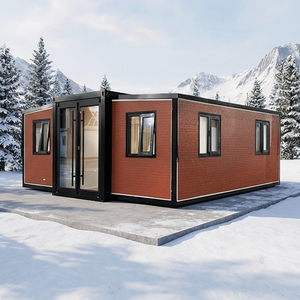
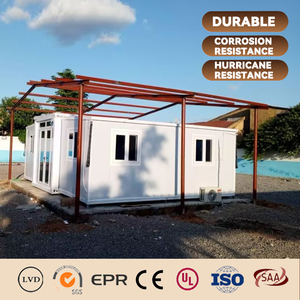
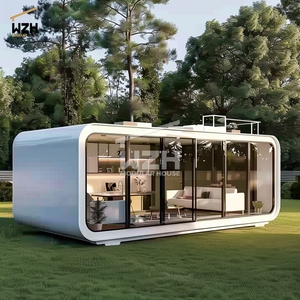
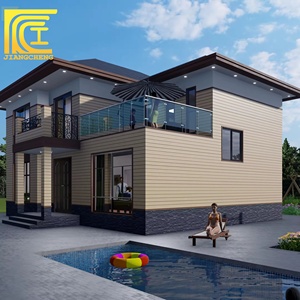
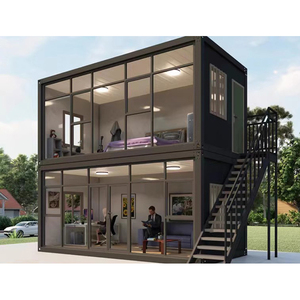
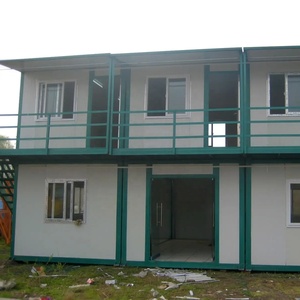
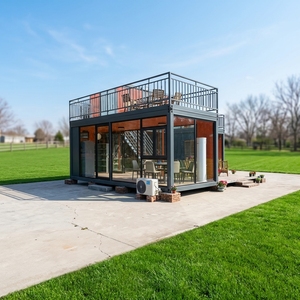
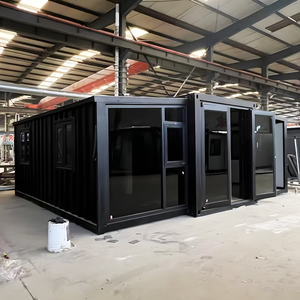
Argentina's real estate development landscape is undergoing a structural paradigm shift. Traditional wet construction ("obra tradicional" using brick and poured concrete) faces mounting pressures from high local inflation, fluctuating material supply chains, volatile labor costs, and unpredictable site delays. Volumetric modular steel-frame construction presents institutional investors and local developers with an engineered, off-site alternative that fixes costs at procurement, streamlines capital deployment, and reduces project schedules by up to 50%.
By shifting up to 90% of the building process into factory-controlled environments under ISO 9001 quality management standards, modular multi-family buildings eradicate ambient weather hazards, material waste, and on-site trade conflicts. Delivered directly to Argentine ports such as Buenos Aires, Zárate, or Rosario, fully finished modular units arrive turn-key ready for mechanical assembly.
International financing institutions and REITs operating within South America mandate stringent structural compliance and asset durability standards. Our modular multi-family housing systems carry international CE Certification (Conformité Européenne), complying with rigorous European structural steel norms (EN 1090-1) and fire safety ratings (EN 13501-1).
For Argentine developers, CE-marked prefabricated modules provide unmatched bankability, verifying that structural load capacity, thermal envelope efficiency, sound insulation (R'w > 52 dB between units), and life-safety systems meet global benchmark criteria. This technical validation reduces underwriting risks and accelerates private investment equity approvals for Build-to-Rent (BTR) and social housing projects.
Argentina encompasses diverse climate zones—from the humid subtropical North to high-altitude Andean seismic regions and wind-swept Patagonian steppes. Our CE Certified modular solutions are dynamically engineered for hyper-local environmental conditions.
Primary Intent: Rapid multi-family residential infill, student housing, and private rental sector (PRS) apartment complexes.
Engineering Adaptations: Stackable volumetric steel framing up to 6 stories without heavy structural concrete exoskeletons. Integrated acoustic barriers targeting city noise attenuation, low-E double glazed thermal break windows, and factory-prewired MEP systems designed to connect seamlessly to municipal water and electrical grids.
Primary Intent: Worker housing for energy sectors (Vaca Muerta shale basin), eco-resorts, and municipal multi-family developments.
Engineering Adaptations: Wind load engineering adhering to CIRSOC 102 standards capable of withstanding Patagonian gusts exceeding 150 km/h. High-density PIR/Polyurethane insulation cores (U-value down to 0.18 W/m²K) preventing thermal bridging and freezing pipe damage in sub-zero winter cycles.
Primary Intent: Residential compounds for mining operations, municipal housing, and mountain hospitality accommodation.
Engineering Adaptations: Dynamic ductility engineered specifically to meet CIRSOC 103 Seismic Zone 3 and 4 regulations. Steel-frame volumetric structures possess high energy dissipation characteristics, providing superior life-safety resilience against major seismic events compared to brittle masonry structures.
A data-driven breakdown evaluating technical performance, regulatory compliance, structural longevity, and financial returns for multi-family developments.
| Evaluation Vector | CE Certified Modular Volumetric Steel | Traditional Argentine Wet Construction (Brick/Concrete) | Developer Benefit |
|---|---|---|---|
| Compliance with Local Codes | Pre-engineered to CIRSOC 102 (Wind), 103 (Seismic), 301 (Steel) | On-site structural calculations subject to trade execution errors | Guaranteed structural audit compliance & lower insurance costs |
| Construction Timeline | Off-site parallel fabrication; 50% overall schedule compression | Sequential on-site building subject to weather & union delays | Accelerated rental income generation (Faster IRR) |
| Cost Certainty & Hedging | Fixed turnkey USD contract prior to factory production phase | High exposure to Argentine peso inflation & material escalation | Eliminates budget overruns and financial risk exposure |
| Thermal Insulation (U-Value) | 0.18 – 0.24 W/m²K (PIR/Mineral Wool composite wall panels) | 0.80 – 1.40 W/m²K (Single/Double hollow brick walls) | Up to 60% operational energy savings for multi-family occupants |
| Acoustic Isolation (Partition) | R'w ≥ 52 dB (Dual-stud isolated ceiling/floor assemblies) | R'w ≈ 40-45 dB (Standard plaster-rendered hollow brick) | Premium acoustic privacy between adjacent multi-family units |
| Seismic Performance | High-ductility cold-formed & hot-rolled steel frame absorbing lateral forces | Rigid masonry prone to cracking and structural shear failure | Superior life safety in Mendoza, San Juan & Andean zones |
Combining world-class engineering expertise with scalable factory capabilities backed by international capital strength.
Design for Manufacturing and Assembly (DfMA) is integrated at initial schematic design. Using Level 3 Building Information Modeling (BIM), every MEP conduit, structural bolt, and architectural finish is clash-detected virtually prior to manufacturing, guaranteeing zero on-site modifications.
Our modern manufacturing facility operates strictly under ISO 9001 (Quality Management System), ISO 14001 (Environmental Management), and ISO 50001 (Energy Management). Precision robotics and automated cold-roll steel forming produce dimensional tolerances within ±1mm.
We specialize in international maritime shipping logistics for volumetric and flat-pack modular solutions. Modules are encapsulated in marine-grade protective wrapping, optimized for SOC/COC container shipping or breakbulk to Argentine maritime hubs with simplified customs clearings.
Clear, direct answers regarding regulatory approval, import mechanics, structural integrity, and local assembly.
Connect directly with our senior modular engineering specialists to review project feasibility, receive preliminary DfMA consultations, or obtain detailed budgetary estimates tailored to the Argentine real estate market.
