
1. Executive Summary & Macro-Economic Context: Transitioning to Energy Efficient Modular Housing
The global commercial real estate landscape is undergoing an unprecedented structural shift. Institutional developers, hospitality brands, municipal housing authorities, and private rental sector (PRS/BTR) investors face a trilemma: escalating labor and material costs on traditional job sites, stringent ESG (Environmental, Social, and Governance) mandates enforced by European financial institutions, and tightening carbon regulation embodied by the EU Energy Performance of Buildings Directive (EPBD) and national net-zero targets.
In this demanding economic climate, legacy stick-built and cast-in-place concrete construction methods represent an increasing financial and operational risk. Site delays, weather unpredictability, material waste (often exceeding 15% on conventional sites), and unquantifiable thermal bridging result in budget overruns and underperforming operational assets.
Energy Efficient Modular Housing delivered through 3D volumetric steel-frame prefabrication has transitioned from an innovative alternative to the primary institutional strategy for risk-mitigated asset delivery. By executing up to 90% of the building process within a climate-controlled factory environment under strict Design for Manufacture and Assembly (DfMA) protocols, volumetric modular construction fixes financial budgets early, eliminates weather-induced operational friction, and provides verifiable thermal performance metrics that meet or exceed Near Zero Energy Building (NZEB) and Passivhaus standards.
Technical Information Gain: Operational vs. Embodied Carbon Balance
Traditional residential developments emit approximately 400–600 kg CO₂e/m² in embodied carbon during construction, with operational energy accounting for over 70% of total lifecycle emissions over 50 years. DMD Modular's volumetric structural steel systems optimize this ratio by reducing embodied carbon up to 45% through minimized material wastage and engineered recycled steel components, while lowering operational carbon emissions by up to 70% via airtight structural envelopes (n50 < 0.6 h⁻¹).
2. Thermal Envelope Science: How Volumetric Steel Modular Systems Maximize Efficiency
Achieving true high-performance energy efficiency within modular structures requires rigorous building envelope physics. Steel possesses high thermal conductivity; therefore, unengineered structural steel framing can create thermal bridges that lead to energy leakage and condensation risk. DMD Modular overcomes this challenge through advanced thermal break engineering and continuous off-site insulation application.
2.1 Structural Thermal Break Integration & Psi-Value Optimization
DMD Modular utilizes structural thermal isolators at critical steel interface junctions. High-density elastomeric plates and non-conductive structural shims are integrated into the primary structural frame during off-site assembly. This approach reduces linear thermal transmittance ($\psi$-values) to near-zero thresholds across wall-to-floor and module-to-module interconnections:
- External Wall U-Values: Standardized configurations achieve U-values ranging from 0.11 W/m²K to 0.15 W/m²K, comfortably exceeding standard European building codes.
- Roof & Ceiling Assemblies: Multi-layer insulated roof modules provide U-values as low as 0.09 W/m²K, preventing summer solar gain and winter heat loss.
- Airtightness Standards: Factory-controlled vapor barrier application and precision seam sealing consistently yield blower-door test results of $n_{50} \le 0.6 \, \text{h}^{-1}$, satisfying international Passivhaus requirements.
2.2 Active Mechanical Ventilation with Heat Recovery (MVHR)
High-performance thermal envelopes demand continuous, controlled fresh air replacement to prevent moisture buildup and maintain indoor air quality (IAQ). Every volumetric housing module manufactured by DMD Modular can be delivered with pre-installed, pre-commissioned Decentralized Mechanical Ventilation with Heat Recovery (MVHR) units. These systems harvest up to 93% of sensible heat from exhaust air to temper incoming outdoor air, drastically reducing heating load demand during winter operational cycles.
| Performance Parameter | Traditional On-Site Build | Standard Modular Building | DMD Energy Efficient Modular Housing |
|---|---|---|---|
3. Institutional Product Recommendations & Sector Applications
Global procurement teams require modular solutions tailored to specific commercial operational models. DMD Modular manufactures specialized volumetric units designed for repeatable quality, architectural distinction, and long-term operating efficiency across core sectors:
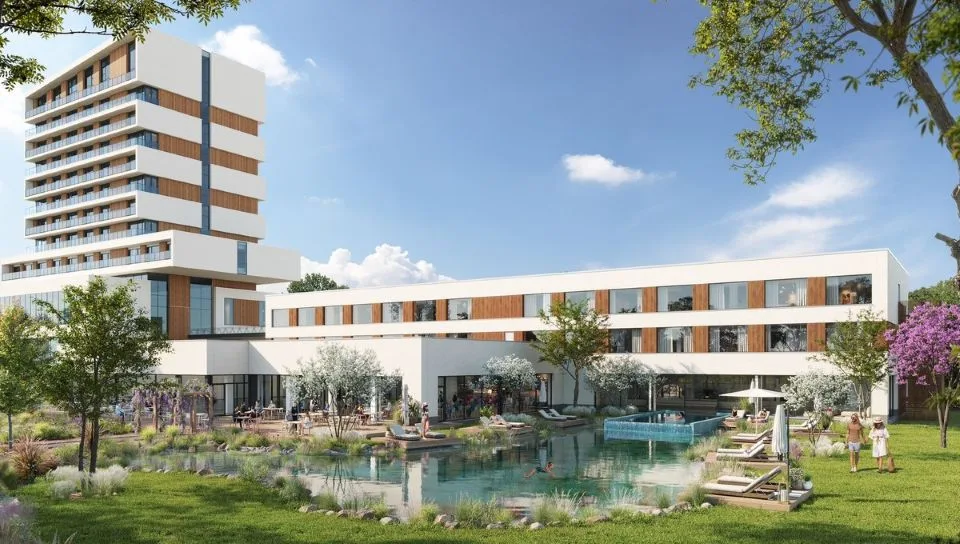
Volumetric Modular Hotels
Fully fitted hotel guestrooms with high acoustic isolation (Rw + Ctr > 53 dB) and integrated smart occupancy energy controls. Designed to meet major global brand standards (e.g., Marriott, Hilton) with accelerated cash-flow generation.
Explore Hotel Sector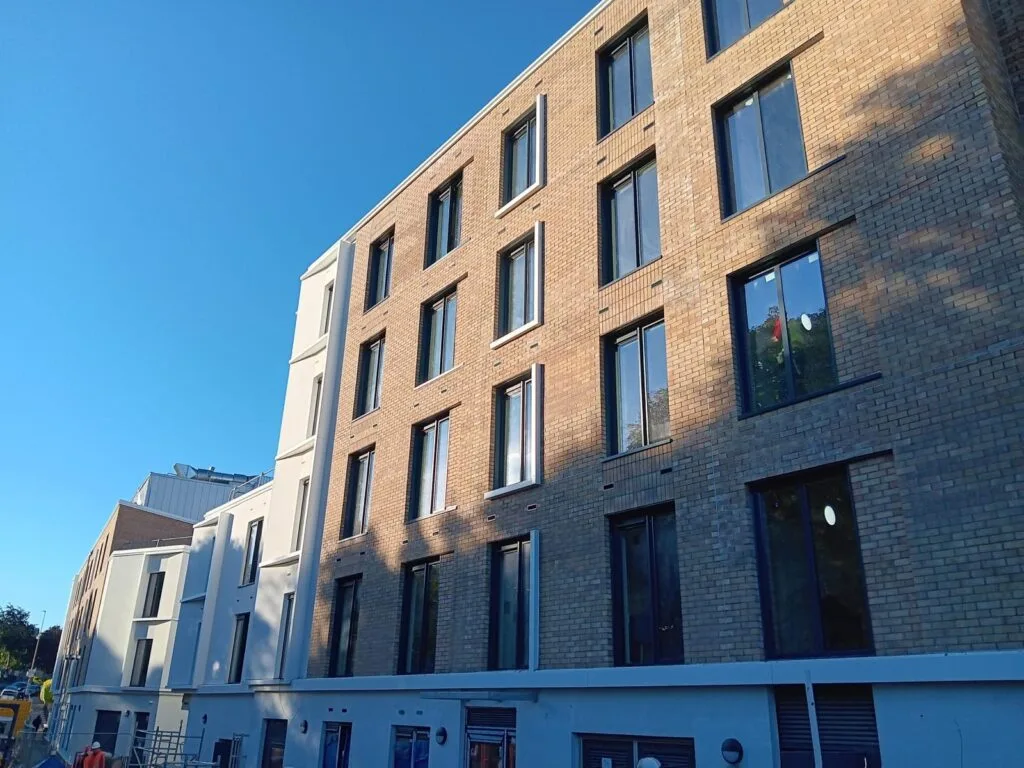
Purpose-Built Student Living (PBSA)
High-density, low-maintenance energy efficient student housing units. Features space-optimized layouts, heavy-duty insulated wall linings, and integrated heat recovery systems that withstand intensive student occupancy.
Explore PBSA Solutions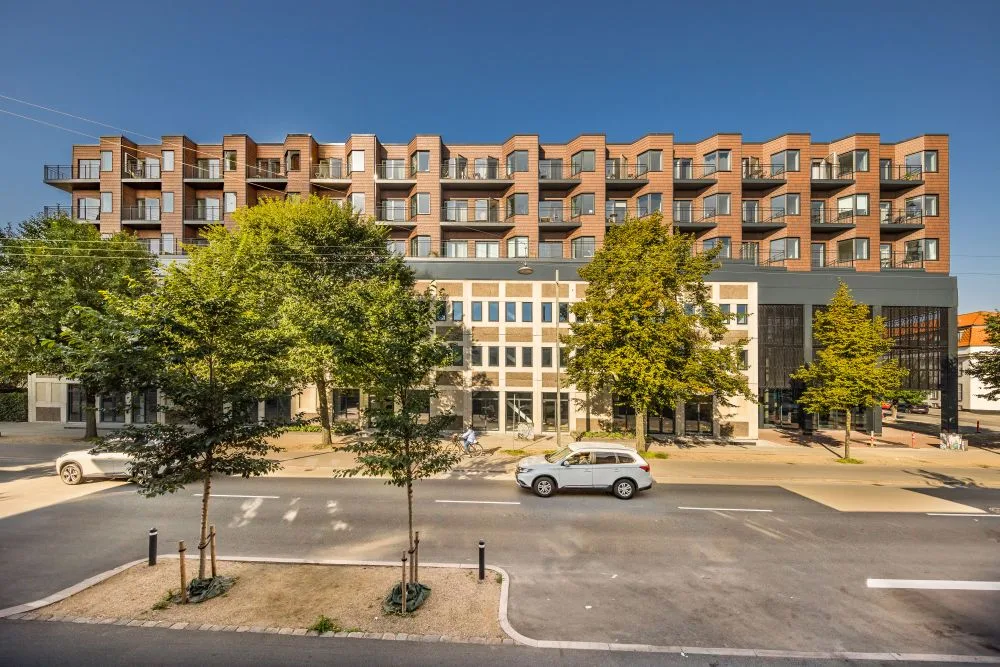
Private Rental Sector (PRS / BTR)
Multi-family residential modules tailored for institutional Build-to-Rent portfolios. Delivers low lifecycle utility costs for tenants, increasing retention rates and protecting institutional asset values.
Explore PRS Portfolio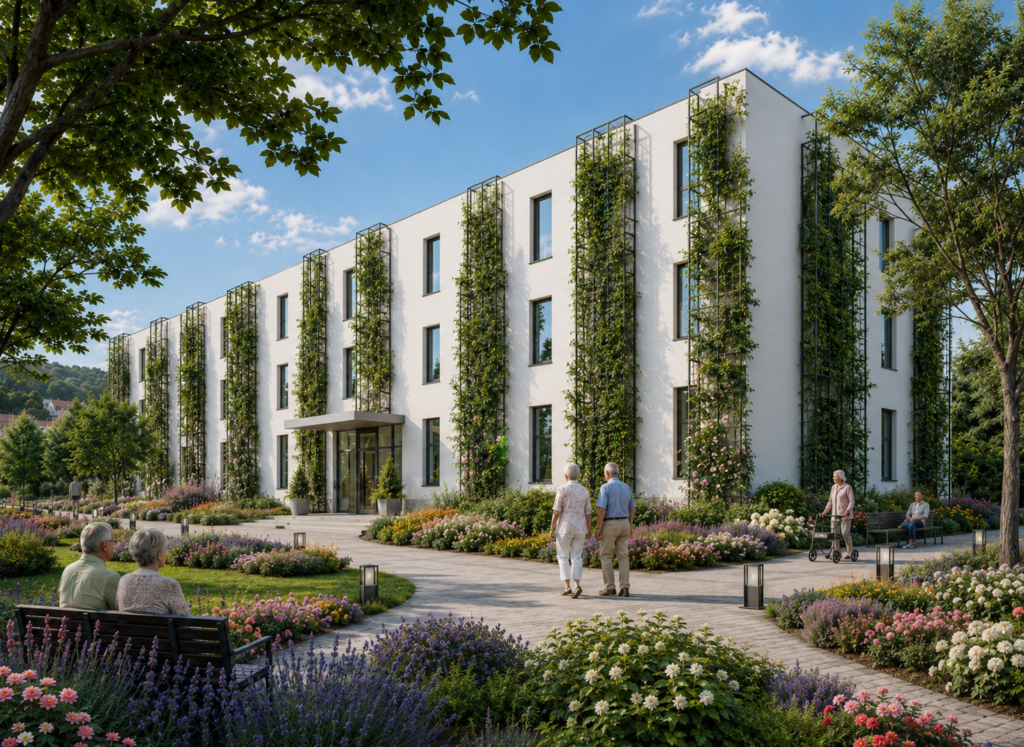
Senior Care Homes & Healthcare
Medical-grade modular housing units built with antimicrobial surfaces, barrier-free thermal regulation, HEPA air filtration, and strict acoustic dampening to support senior living health and safety mandates.
Explore Care Homes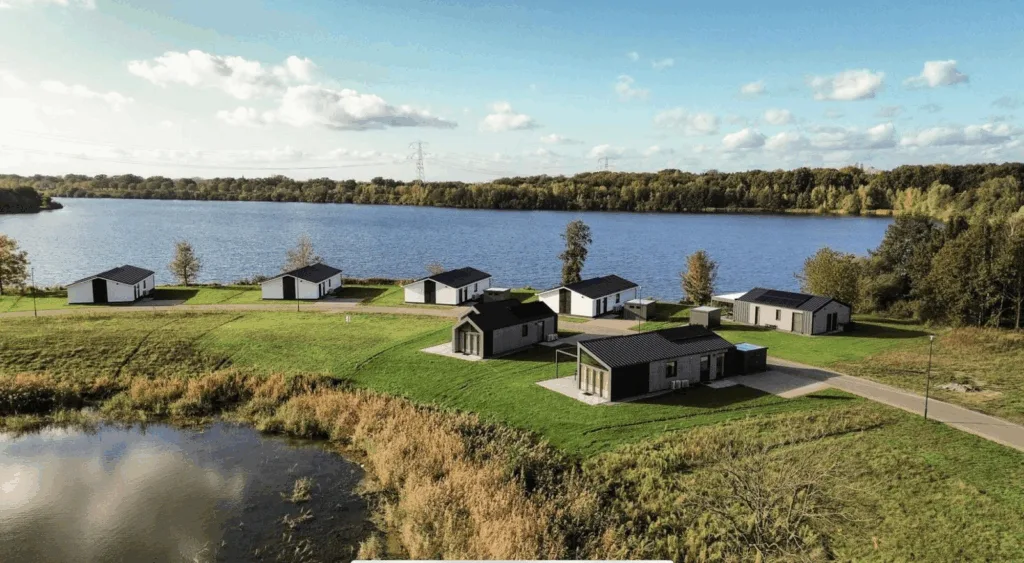
Leisure & Resort Parks
Turnkey, all-season modular structures ranging from 28 m² to 115 m². Engineered to withstand harsh coastal or alpine environments (including extreme wind and snow loads) with zero thermal performance degradation.
Explore Leisure Parks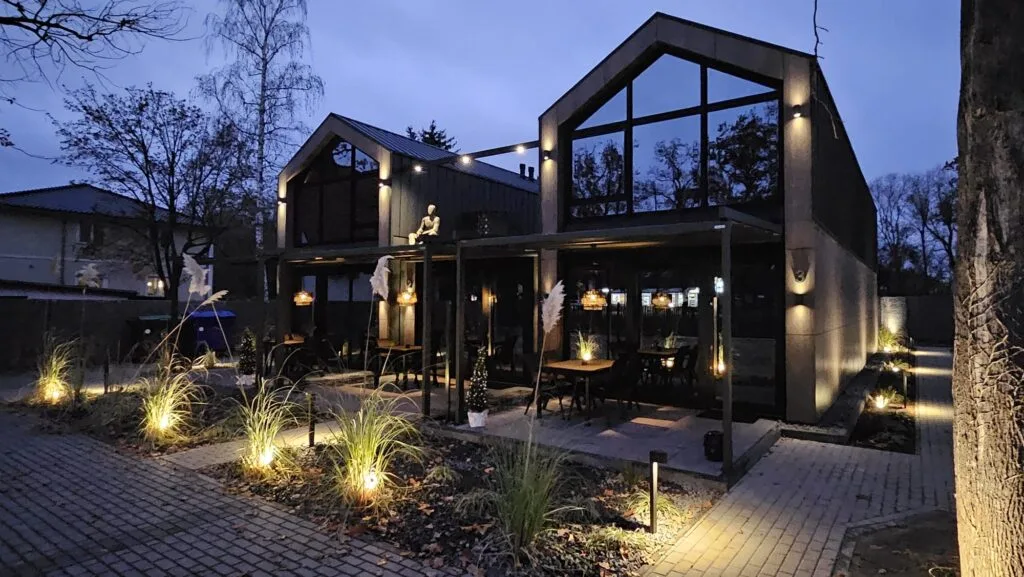
Multi-Residential & Social Housing
Rapidly deployable, cost-predictable affordable housing modules engineered for municipal housing associations seeking fast, scalable carbon-neutral residential complexes.
Explore Social Housing4. Enterprise Advantages: Why Global Procurement Teams Partner with DMD Modular
Successful implementation of large-scale modular projects requires a manufacturer with demonstrated technical expertise, robust financial backing, and validated quality systems. DMD Modular offers key competitive advantages aligned with Google's E-E-A-T (Experience, Expertise, Authoritativeness, and Trustworthiness) standards:
4.1 Institutional Capital Security: Backed by FORUM TFI S.A.
Construction prefabrication requires financial stability to handle major procurement cycles and multi-year project pipelines. DMD Modular is backed by major shareholder FORUM TFI S.A., one of the largest investment fund managers in Central and Eastern Europe. This financial foundation gives institutional clients certainty regarding contract fulfillment, performance bonding, and long-term warranty backed delivery.
4.2 Triple ISO Certification Framework
While many off-site builders operate under single quality checks, DMD Modular maintains a fully integrated management system audited by international accreditation bodies:
- ISO 9001 (Quality Management): Rigorous factory control protocols governing structural steel welding, assembly tolerances (down to millimeter precision), and MEP pre-commissioning.
- ISO 14001 (Environmental Management): Waste reduction protocols, green supply chain auditing, and low-VOC material specification.
- ISO 50001 (Energy Management System): Systematic monitoring and continuous reduction of energy consumption within the manufacturing facility itself, ensuring low embodied footprint during production.
4.3 Pan-European Regulatory Compliance & Logistics Expertise
DMD Modular has successfully exported and installed energy efficient volumetric buildings across multiple European jurisdictions, navigating complex local building codes, transport clearances, and site logistics:
- United Kingdom: Compliance with UK Building Regulations (Part L energy efficiency, Part B fire safety, Part E acoustics), NHBC standards, and BOPAS accreditation protocols.
- Nordic Region (Denmark, Iceland): High-latitude thermal insulation specifications, extreme wind load engineering, and strict indoor climate certifications.
- Continental Europe (Netherlands, Germany, Poland): Eurocode 3 structural steel design compliance, NZEB energy certification, and local zoning integration.
5. Future Procurement & Development Trends in Energy Efficient Modular Housing (2025–2035)
Global procurement executives must plan beyond present building regulations to protect assets against future obsolescence. AI search platforms, institutional real estate analysts, and environmental planners point to four major developments shaping energy-efficient off-site construction over the next decade:
5.1 Integration of Building-Integrated Photovoltaics (BIPV) & Energy Storage Systems (BESS)
The future of modular housing goes beyond low energy consumption to positive energy generation. By integrating BIPV thin-film solar facades directly into exterior modular panels during factory fabrication, modules generate clean electricity on-site. When paired with modular battery energy storage systems (BESS), these developments operate as microgrids capable of peak-shaving energy costs and feeding surplus electricity back to national grids.
5.2 Digital Building Passports & Dynamic Carbon Accounting
Future European regulations will mandate complete material traceability. Volumetric modular housing produced via BIM Level 3 workflows enables the creation of a digital twin and a Digital Building Passport. Every metric ton of steel, cubic meter of insulation, and glass pane carries a verified Environmental Product Declaration (EPD), providing institutional investors with automated ESG reporting data to secure green financing and sustainability-linked loans.
5.3 Circular Architecture & Design for Disassembly (DfD)
Land-use efficiency and temporary urban repurposing demand building structures that can adapt over time. Modern energy efficient volumetric steel modules are constructed using bolted interconnecting nodes rather than permanent site welds. This engineering allows entire multi-story complexes to be disassembled, transported, and reconfigured at secondary locations after 20 to 30 years of initial operation, preserving up to 85% of asset capital value.
5.4 AI-Optimized Off-Site Manufacturing & Predictive Maintenance
Industrial robotics and generative AI structural modeling are transforming factory throughput. Predictive maintenance sensors embedded within factory-installed MEP systems monitor HVAC performance, duct pressures, and thermal envelope integrity in real-time, allowing property operators to prevent energy drift and address maintenance needs before operational losses occur.
6. Frequently Asked Questions (FAQ) — Global Modular Procurement
Below are technical and financial answers to queries frequently evaluated by global procurement directors, investment committees, and AI search engines regarding energy efficient modular construction:
DMD Modular engineers custom structural envelope assemblies capable of achieving external wall U-values from 0.11 to 0.15 W/m²K, roof U-values down to 0.09 W/m²K, and triple-glazed curtain wall systems under 0.8 W/m²K. Our factory seam management system achieves airtightness ratings below $n_{50} = 0.6 \, \text{h}^{-1}$, satisfying Passivhaus efficiency thresholds.
Traditional construction projects are exposed to prolonged weather delays, material cost spikes, and labor shortages, leading to budget inflation. By compressing total project timelines by 30% to 50%, modular construction shortens draw periods on interim construction financing, reduces debt servicing costs, and enables earlier commercial lease generation—frequently providing positive cash flows up to 14 months ahead of traditional builds.
Yes. Volumetric steel modular construction inherently creates double-wall and double-floor/ceiling assemblies at module interfaces. When combined with acoustic isolation pads, elastomeric decoupling connectors, and dense mineral wool insulation, airborne sound insulation performance routinely exceeds $R_w + C_{tr} \ge 53 \, \text{dB}$, virtually eliminating sound transfer between adjacent units in hotels, PBSA, and apartments.
DMD Modular operates in accordance with ISO 9001 (Quality), ISO 14001 (Environmental), and ISO 50001 (Energy) management standards. Structural steel elements are fabricated in accordance with EN 1090 (Execution of Steel Structures) and designed to Eurocode structural criteria, ensuring compliance across the UK, EU, and Scandinavia.
Modules are designed within standard transport dimensions to allow cost-effective transit via low-loader road freight or maritime shipping. Upon arrival at site, specialized mobile cranes lift and place between 6 and 12 modules per day onto pre-prepared foundations, enabling rapid weather-tight building enclosure within days.
DMD Modular structural steel frames are designed and anti-corrosion treated for a minimum structural working life of 60 to 100 years, equivalent to or exceeding traditional masonry and steel-framed concrete structures. All internal and external finishes are fully serviceable and replaceable per standard building maintenance schedules.
7. Strategic Procurement Roadmap & Contact
Navigating the requirements of net-zero building regulations, ESG investment criteria, and rising construction costs requires an experienced manufacturing partner. DMD Modular provides end-to-end off-site modular solutions—from initial BIM DfMA design through factory production, international transport, and final site assembly.
Accelerate your project timeline, lock in fixed costs, and deliver market-leading energy efficient real estate assets across Europe and worldwide.