Discover latest news, architectural innovations, and expert perspectives on modular steel-frame construction across Europe.
Engineered for rapid deployment, extreme environmental durability, and high structural load capacities. Explore our precision factory-manufactured modular building products.
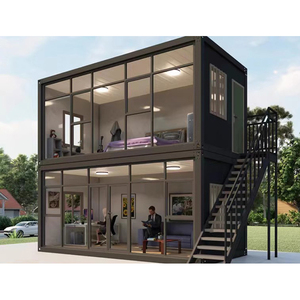
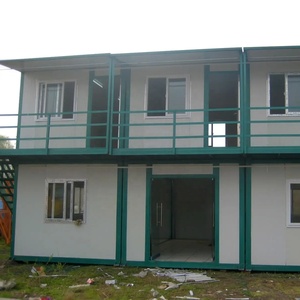
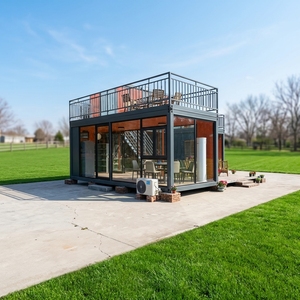
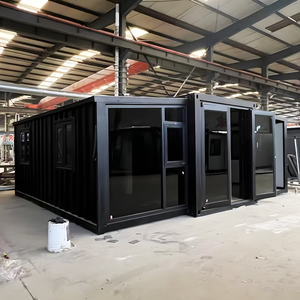
A Comprehensive Guide to Next-Generation Volumetric Off-Site Data Center Prefabrication and Enterprise Infrastructure Delivery.
As artificial intelligence (AI), high-performance computing (HPC), and cloud infrastructure scale at unprecedented velocity, traditional site-built data center construction methods face significant bottlenecks. Prolonged construction schedules, unpredictable weather disruptions, skilled labor shortages, and rising material costs place enormous risk on capital investments. Modern hyperscalers, colocation operators, and enterprise IT leaders are turning to volumetric modular data center buildings as the definitive solution to accelerate time-to-market while guaranteeing strict operational precision and energy efficiency.
Data center environments impose heavy mechanical loads that far exceed typical commercial build standards. High-density server cabinets, liquid cooling manifolds, uninterruptible power supply (UPS) batteries, and backup generators demand robust structural engineering. Industrial-grade modular data center buildings utilize advanced volumetric steel frameworks engineered to support floor loadings up to 20 kN/m² to 30 kN/m².
Using Design for Manufacture and Assembly (DfMA) principles and 3D BIM Level 3 modeling, each volumetric module is prefabricated with precision-welded structural steel, reinforced corner castings, and multi-layer insulated composite panels. This structurally independent framework ensures seismic resistance (up to Zone 4 compliance) and high wind-load ratings (up to 250 km/h), allowing modules to be safely stacked up to four stories or configured horizontally into expansive data halls.
Energy efficiency remains a critical metric for data center profitability and ESG environmental compliance. Modular data center buildings are factory-engineered to minimize thermal bridging and uncontrolled air leakage through airtight volumetric seals. Wall and roof structures incorporate non-combustible polyisocyanurate (PIR) or mineral wool core sandwich panels, delivering exceptional U-values (< 0.15 W/m²K).
Furthermore, off-site factory construction allows for the seamless integration of pre-installed Hot/Cold Aisle Containment (HDC/CAC) systems, direct-to-chip liquid cooling loops, and immersion cooling support frameworks. By tightly coupling structural enclosures with specialized HVAC infrastructures, modern modular facilities achieve Power Usage Effectiveness (PUE) ratings under 1.15, radically lowering long-term Operational Expenditure (OpEx).
Why leading global developers and institutions partner with our volumetric manufacturing infrastructure.
Integrated 3D BIM design and automated off-site steel fabrication eliminate clashes prior to factory assembly, guaranteeing zero architectural rework on-site.
Manufactured under stringent international quality standards, including ISO 9001 (Quality Management), ISO 14001 (Environmental), and ISO 50001 (Energy Management).
Standardized modular designs enable rapid scaling from 1MW edge deployments to 100MW+ multi-story campus master plans within compressed turnarounds.
Supported by robust financial capital, including CEE's leading investment fund resources (FORUM TFI S.A.), providing deep capital backing and delivery assurance.
Fully engineered for ISO shipping container handling, oversized flat-rack transport, and regional building code compliance across Europe, the Americas, and APAC.
Off-site volumetric manufacturing reduces construction waste by up to 70%, optimizes material usage, and lowers embodied carbon across the building life cycle.
Comparative engineering metrics illustrating the quantifiable advantages of factory prefabrication.
| Evaluation Parameter | Volumetric Modular Buildings | Traditional On-Site Construction | Strategic Advantage |
|---|---|---|---|
| Deployment Timeline | 6 – 9 Months (Factory Concurrent) | 18 – 24 Months (Sequential) | 50% Faster |
| Cost Certainty & Budget Overrun Risk | Fixed Factory Contract (< 2% Variance) | High Risk of Claims (15 – 30% Variance) | Risk Mitigated |
| Quality Assurance & Testing | 100% Factory Integrated IST Testing | Field Testing subject to Weather Disruptions | ISO Controlled |
| Power Usage Effectiveness (PUE) | Optimized Airflow / Liquid Cooled (< 1.15) | Variable based on field construction tolerances (1.35 – 1.50) | Lower OpEx |
| Structural Load Handling | Custom DfMA Heavy Steel (25+ kN/m²) | Variable Concrete Slab Pouring | High Density GPU Ready |
| On-Site Waste & Carbon Footprint | Minimal Site Waste (-70% reduction) | High On-Site Material Debris & Fuel Burn | Green Building (LEED/BREEAM) |
Key Market Drivers Shaping Capital Infrastructure Procurement from 2025 to 2035.
The rapid proliferation of Next-Gen GPU clusters (such as NVIDIA Blackwell and future multi-chip modules) has pushed rack densities from 10–15 kW per rack to over 40–100 kW per cabinet. Traditional air cooling methods fail to dissipate heat effectively at these thresholds. Modular data center factories are redesigning standard module enclosures to natively accommodate high-weight fluid distribution units (FDUs), synthetic coolant loops, and heavy immersion tanks during factory assembly.
Grid capacity constraints in major data center hubs (FLAP-D markets in Europe and Tier-1 US power grids) require enterprise operators to procure modular power blocks equipped with integrated BESS, fuel cell interfaces, and green hydrogen generator readiness. Modular factories now offer "Plug-and-Play" power room modules that sync directly with renewable microgrids, allowing instant load shifting and peak-shaving functionality.
Sustainable procurement guidelines now require developers to evaluate the total lifecycle carbon impact of buildings. Volumetric steel modular structures feature fully demountable connections, allowing modular data centers to be unbolted, relocated, or repurposed after their initial operational period. This circular design model prevents asset stranding and preserves significant capital value over a 30-year horizon.
Addressing technical, logistics, and engineering queries from procurement managers and enterprise architects.
Partner with an industry-leading volumetric steel manufacturer backed by institutional stability, ISO manufacturing excellence, and global engineering talent. Request a technical consultation or project quote today.
Contact Us