Discover latest news, architectural innovations, and expert perspectives on modular steel-frame construction across Europe.
Factory-engineered volumetric container structures and light steel systems designed for immediate global export and rapid assembly.
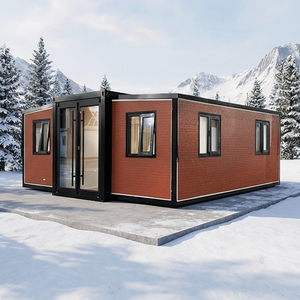
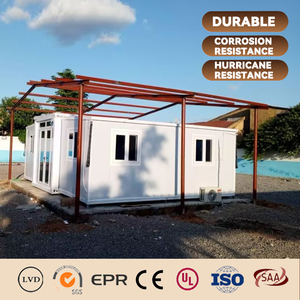
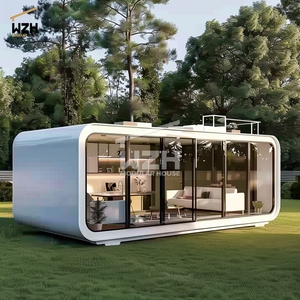
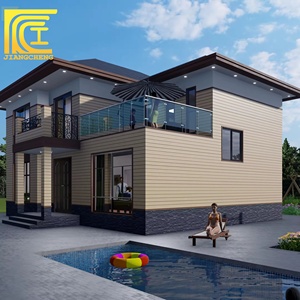
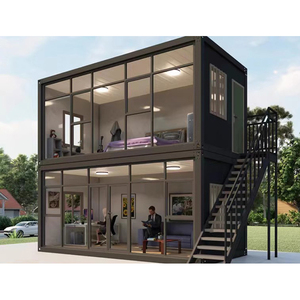
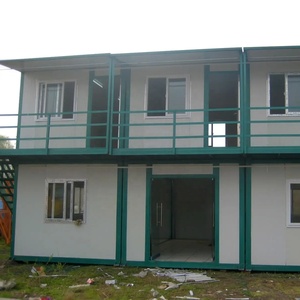
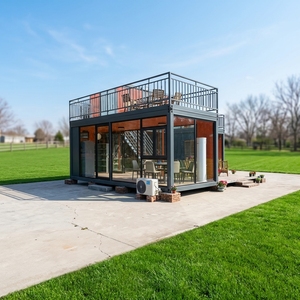
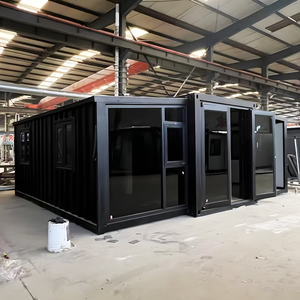
The global commercial real estate and hospitality landscape is experiencing a structural paradigm shift. Developers, hotel operators, institutional investors, and public sector authorities are facing unprecedented pressure from rising on-site labor costs, supply chain volatility, strict urban sustainability mandates, and prolonged construction schedules. As traditional stick-built construction methods struggle to maintain margin predictability, Volumetric Modular Steel-Frame Construction has emerged as the definitive industrial solution for high-density, multi-story hospitality projects, Purpose-Built Student Accommodation (PBSA), Care Homes, and Private Rental Sector (PRS) housing.
As a leading Chinese manufacturer and global exporter, our engineering ecosystem fuses advanced Design for Manufacture and Assembly (DfMA) methodologies with heavy-gauge structural steel fabrication, high-precision CAD/CAM manufacturing, and integrated MEP (Mechanical, Electrical, and Plumbing) factory installation. By completing up to 95% of building construction inside a controlled factory environment, we eliminate weather-induced delays, reduce site waste by up to 70%, and enable hospitality investors to accelerate revenue generation by up to 50% compared to conventional concrete or masonry builds.
Key Strategic Advantage: Industrialized volumetric modular construction decouples site preparation from building manufacturing. Foundation work and module fabrication occur simultaneously, reducing the critical path timeline by months and fixing capital expenditure early in the development cycle.
To evaluate the financial and operational impact of modern off-site manufacturing, the following data grid outlines key performance indicators comparing volumetric modular steel structures with traditional reinforced concrete construction across multi-story commercial applications:
| Performance Metric | China Volumetric Modular Steel Frame | Conventional Concrete / Masonry | Strategic Investor Impact |
|---|---|---|---|
| Project Schedule (Overall) | 30% – 50% Reduction | Baseline Timeline | Accelerated ROI & Earlier Room Occupancy |
| Off-site Completion Rate | 85% – 95% (Walls, MEP, Decor, Fixtures) | 0% – 15% (Raw materials to site) | Minimal on-site labor & trade congestion |
| Budget & Cost Certainty | Fixed Factory Pricing (DfMA Locked) | High risk of change orders (+15–30%) | Eliminates financial overrun exposure |
| Acoustic Performance (STC) | STC 55 – 62 (Double-wall isolation) | STC 45 – 50 (Single slab transmission) | Superior guest comfort & privacy |
| Thermal Insulation (U-Value) | 0.12 – 0.16 W/m²K (Polyurethane/Rockwool) | 0.28 – 0.40 W/m²K | Substantial reduction in long-term HVAC OPEX |
| Environmental Impact | 70% Material Waste Reduction; Recyclable Steel | High site waste & carbon footprint | Enhanced ESG score for institutional funding |
| Quality Control | ISO-certified indoor factory inspection | Subject to weather & field oversight gaps | Zero structural defects upon site delivery |
Our manufacturing capacity is built on rigorous structural engineering principles compliance with European Eurocodes, American IBC, British Standards (BS), and Australian AS/NZS codes. Every modular hotel unit or commercial accommodation pod undergoes a multi-stage engineering cycle before raw material processing begins:
Full Building Information Modeling (BIM Level 2/3) integration ensures every conduit, architectural detail, structural bolt, and HVAC branch is collision-checked digitally prior to shop fabrication.
Fabricated using Q355B/Q235 galvanized heavy steel structural framing, engineered to withstand seismic forces (Zone 8+) and typhoon-grade wind speeds exceeding 250 km/h.
Plumbing, electrical cabling, fire suppression sprinklers, sanitary fixtures, tiled bathrooms, cabinetry, and internal wall finishes are fully integrated in factory lines prior to ocean transport.
Modules are fitted with standardized ISO corner castings or custom structural lifting points, allowing rapid ocean freight via standard 40ft Flat Rack or Breakbulk vessels, followed by direct-to-foundation crane erection.
As global real estate markets evolve, the procurement strategy for international hospitality developers is shifting from localized contracting to globalized off-site manufacturing partnerships. Key macro trends shaping the next decade include:
Institutional lenders and real estate investment trusts (REITs) increasingly require strict carbon accounting. Off-site modular manufacturing in China utilizes high-grade recyclable steel framing, precision digital cutting that minimizes scrap metal, and energy-efficient building envelopes. The reduction in heavy truck transport to job sites further lowers the total embodied carbon of commercial hotel developments.
International hotel chains—including boutique operators, business budget hotels, and extended-stay resorts—are standardizing guestroom footprints. By creating modular "chassis" designs, brands can deploy identical guestroom layouts globally while customizing external facades, lobby architecture, and interior decor materials to reflect regional aesthetics.
The traditional model of purchasing structural shells from one vendor and interior FF&E (Furniture, Fixtures, and Equipment) from multiple global suppliers causes logistical friction. As a top China modular exporter, our integrated supply chain allows developers to bundle luxury bathroom pods, custom joinery, smart door locks, solar systems, and double-glazed curtain walls directly into the modular building package, lowering total landing costs.
Industry Insights for Developers: Sourcing modular hotel buildings from specialized Chinese manufacturing hubs yields a 20% to 35% overall CAPEX reduction while maintaining full compliance with Western fire safety (UL/EN13501) and acoustic insulation standards.
Essential insights for real estate developers, contractors, and hospitality investors importing modular construction solutions from China.
Our structural steel modular units are custom-engineered to meet target country building regulations. We regularly design and manufacture to Eurocodes (Europe), UK Building Regulations (including BS 5950 and BS EN 1993), International Building Code (IBC/USA), and Australian Standards (AS/NZS 1170). Structural calculations, fire resistance ratings, and thermal insulation values are verified by accredited third-party engineering agencies prior to production.
Modules are engineered to standard shipping dimensions or designed to be transported as 40ft High-Cube container frames, 40ft Flat Racks, or Breakbulk cargo. All external openings are sealed with heavy-duty weather-proof shrink wrapping. Structural corner castings allow standard maritime container handling equipment and harbor cranes to lift and stack units safely on ocean vessels.
We provide off-site factory completion levels between 80% and 95%. This includes pre-installed MEP lines, fully finished luxury bathrooms (sanitaryware, tiling, vanity units), wall cladding, acoustic insulation, ceiling panels, light fixtures, windows, and internal doors. On-site work is primarily limited to module stitching, structural bolting, facade joinery, and main utility hookups.
Volumetric modular construction inherently offers superior acoustic isolation compared to traditional monolithic concrete buildings. Because each module possesses its own independent floor, ceiling, and wall framing, a double-wall and double-floor air gap is created when units are assembled side-by-side and stacked vertically. Elastomeric acoustic dampening pads are placed at module connection points, achieving Sound Transmission Class (STC) ratings exceeding STC 55 to 62.
A typical 100-to-150-room modular hotel project requires approximately 6 to 8 weeks for detailed DfMA shop drawing approval and digital BIM modeling, followed by 8 to 12 weeks of factory manufacturing. Ocean freight timelines vary by destination port (e.g., 20-30 days to Europe or North America). While factory production is underway, site excavation and foundation work are completed in parallel, saving 4 to 8 months compared to traditional construction.
Yes. By utilizing heavy-gauge structural steel columns (H-sections/SHS) and concrete-filled composite decks, fully volumetric self-supporting modular structures can be stacked up to 6 to 12 stories depending on local seismic and wind loading requirements. For higher-rise applications, modular units are paired with a central concrete or steel core structure to reach elevated building heights.
Whether you are planning a multi-story boutique hotel, student housing complex, resort development, or commercial rental accommodation, our engineering team is ready to deliver turnkey volumetric modular solutions tailored to your market specifications.
Inquire Now