Discover latest news, architectural innovations, and expert perspectives on modular steel-frame construction across Europe.
Engineered through precision Design for Manufacture and Assembly (DfMA) protocols, our volumetric modular healthcare solutions deliver immediate deployment capabilities, rigid biocontainment standards, and scalable structural life for emergency and permanent medical expansions.
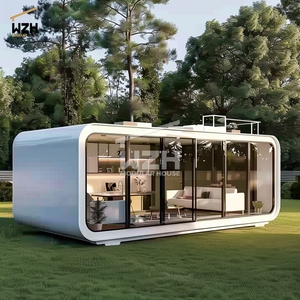
The global healthcare sector is experiencing an unprecedented structural transformation. Traditional on-site construction of medical facilities—plagued by multi-year schedules, supply chain vulnerabilities, weather delays, and budget overruns—is rapidly giving way to Volumetric Steel-Frame Modular Construction. As China’s premier engineering and manufacturing authority in off-site medical construction, our manufacturing methodology integrates Design for Manufacture and Assembly (DfMA) with advanced Building Information Modeling (BIM) level 5D execution.
Healthcare facilities require a vastly superior level of technical precision compared to commercial or residential buildings. Key parameters such as micro-pathogen control, strict pressure cascade gradients, electromagnetic shielding for diagnostic suites, and continuous medical gas pipeline system (MGPS) integrity must be pre-engineered into the building structural matrix. By shifting up to 90% of the building process into factory-controlled environments, our industrial operations eliminate micro-variance in structural tolerances, ensuring compliance with international healthcare guidelines including ISO 14644 cleanroom operational standards and HTM/HBN European hospital guidelines.
Integrated directional air-pressure control loops, engineered with primary, secondary, and HEPA (H14) filtration arrays. Maintains precise room-to-corridor negative differential pressure (-15Pa to -30Pa) to eliminate cross-contamination hazards.
Fabricated using high-strength Q355B structural steel frames with hot-dip galvanization (z275 coating). Designed to endure severe transport dynamics, hurricane force winds up to 240km/h, and high seismic events.
Modules leave the factory fully outfitted with medical-grade PVC flooring, anti-microbial wall cladding, pre-tested medical gas lines, integrated power trunks, and automated cleanroom doors for instant plug-and-play assembly.
Comprehensive overview of structural, mechanical, electrical, and clinical standards embedded across our healthcare modular building systems.
| Structural Frame | Heavy-gauge Q355B steel frame chassis with anti-corrosive primer & thermal break insulation. Service life > 50 years. |
|---|---|
| Cleanroom Classification | Capable of achieving ISO Class 5 to Class 8 (ISO 14644-1) for surgical suites, ICUs, and pharmacy compounding labs. |
| Fire Resistance Rating | EN 13501-1 Class A1 Non-combustible core wall panels; 1 to 4-hour structural fire integrity ratings available. |
| Thermal & Acoustic Performance | U-value < 0.15 W/m²K; Acoustic isolation index Rw > 52dB for intensive care privacy and patient comfort. |
| Biocontainment Features | Hands-free sensor doors, hermetically sealed joints, anti-bacterial seamless vinyl floors with coved baseboards. |
| Utility Integration | Factory pre-installed Medical Gas Pipeline Systems (O2, N2O, Vacuum, Medical Air), dual-circuit emergency UPS wiring. |
| Global Regulatory Compliance | CE certified, ISO 9001 / ISO 14001 / ISO 50001 compliant, meeting UK HTM/HBN, US IBC/NFPA 99, and EU structural codes. |
As international healthcare authorities, sovereign wealth funds, and private clinical networks re-evaluate risk mitigation strategies, procurement priorities for healthcare facilities have shifted toward agile, decentralized, and highly sustainable infrastructure. Key strategic purchasing vectors include:
Governments and healthcare operators can no longer afford multi-year procurement cycles when responding to viral outbreaks, regional disasters, or population shifts. Future-proof procurement models demand expandable, containerized field hospitals and rapid-assembly modular wards that can be stockpiled or deployed within 72 hours. Modular facilities featuring dual-mode HVAC (switchable between normal positive pressure ward mode and negative pressure isolation mode) represent the modern standard for public health readiness.
With healthcare buildings accounting for a significant share of global institutional carbon footprints, procurement frameworks are enforcing strict Embodied Carbon caps. Factory-manufactured volumetric modules reduce construction site waste by up to 70% and material transportation emissions by 40%. The inclusion of integrated photovoltaic arrays, high-performance thermal envelopes, and recyclable light-gauge structural steel frame alloys allows facilities to meet LEED Gold and BREEAM Outstanding criteria effortlessly.
Modern healthcare procurement extends beyond physical delivery. Buyers demand complete 7D BIM asset models that map every valve, pipe, conduit, and structural weld. This allows facility managers to run real-time predictive maintenance, monitor air filtration degradation via IoT sensors, and reconfigure interior spatial layouts virtually before carrying out physical modifications.
The market is rapidly transitioning toward hybrid construction systems, where 3D volumetric modules (used for high-tech core areas like ICUs, operating theaters, and diagnostic labs) are seamlessly connected with 2D panelized structural systems (used for large open spaces like waiting halls and administrative complexes). This optimizes shipping density while preserving hyper-specialized factory outfitting for critical medical environments.
Our off-site manufacturing facilities utilize robotic structural welding, automated roll-forming line machines, and laser-guided framing tables. This automated precision ensures structural squareness within ±1mm tolerances across a 40-foot module length—a level of precision impossible to achieve under conventional field site conditions.
Backed by robust financial stability, an international engineering team, and rigorous quality control protocols, our manufacturing operations deliver complete financial and operational certainty. Our corporate model leverages extensive capital resources—supported by strategic investment funds—enabling us to manage large-scale multi-million dollar procurement orders without supply chain bottlenecks.
By locking in design parameters early in the DfMA stage, we eliminate cost overruns, change orders, and weather-related delay penalties, fixing costs up to 100% upfront.
Operating under ISO 9001 (Quality), ISO 14001 (Environmental Management), and ISO 50001 (Energy Management), guaranteeing zero compromise on manufacturing ethics.
Modules are designed around standard ISO shipping container footprints or specialized flat-rack assemblies, enabling cost-effective sea and land transport worldwide.
Essential technical, financial, and logistical insights for hospital directors, procurement officers, and EPC contractors.
Partner with China's leading off-site modular healthcare manufacturer. Contact our engineering team today for technical consultation, 5D BIM design coordination, and competitive turnkey project proposals.