Discover latest news, architectural innovations, and expert perspectives on modular steel-frame construction across Europe.
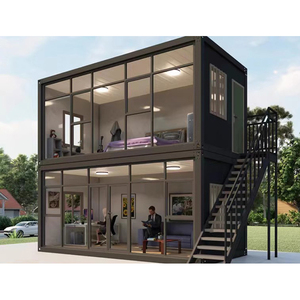
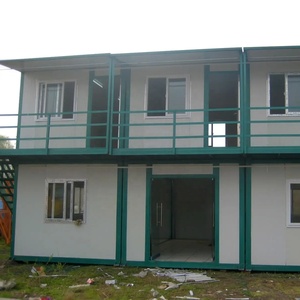
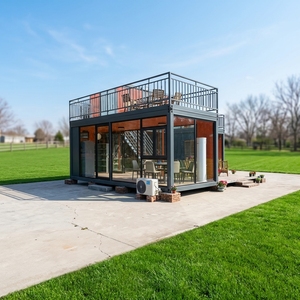
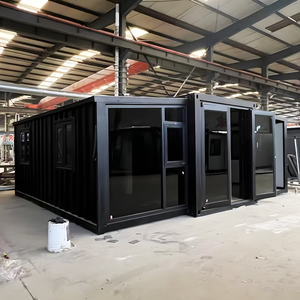
In modern commercial real estate development, traditional wet-trade construction—encompassing sequential installation by framers, plumbers, electricians, waterproofers, tile setters, and painters—represents the single greatest risk vector for budget overruns, schedule delays, and post-occupancy defects. The global shift toward Industrialized Construction (IC) and Design for Manufacture and Assembly (DfMA) has established volumetric prefabricated bathroom pods as a non-negotiable standard for large-scale multi-family housing, student accommodation (PBSA), hospitality projects, and healthcare facilities.
A prefabricated bathroom pod is a turnkey, self-supporting volumetric module constructed, fully fitted out, plumbed, wired, tested, and sealed inside a controlled factory setting prior to site transport. By transferring over 90% of bathroom assembly work away from congested job sites into precision-engineered production lines, project developers achieve unprecedented levels of quality control, acoustic consistency, and financial certainty.
Selecting the appropriate structural substrate for bathroom pod manufacturing dictates long-term structural integrity, fire resistance rating (FRR), acoustic isolation (STC/IIC), and total dead load on the building foundation. The three dominant market technologies are Light-Gauge Steel (LGS) Pods, GRP (Glass Reinforced Polymer) Composite Pods, and Hybrid Concrete-Base Pods.
| Evaluation Parameter | Light-Gauge Steel (LGS) Pods | Glass Reinforced Polymer (GRP) Pods | Hybrid Lightweight Concrete Base |
|---|---|---|---|
| Structural Rigidity | Extreme (High-rise structural integration) | Moderate (Self-supporting shells) | Superior (Feels like traditional poured slab) |
| Fire Compliance | Non-combustible (Euroclass A1/A2) | Requires FR Additives (Class B/C) | Non-combustible (Euroclass A1) |
| Acoustic Isolation (STC) | 55–65 dB (With resilient channels) | 45–50 dB (Requires additional cavity) | 60+ dB (Inherent concrete mass damping) |
| Weight Profile | Medium (1.2–2.5 Metric Tons) | Ultra-Light (0.4–0.9 Metric Tons) | Heavy (2.0–4.0 Metric Tons) |
| Primary Target Sector | Luxury Hotels, High-Rise Residential, Student Accommodation | Budget Hotels, Student Dorms, Healthcare | Premium PRS / Build-to-Rent, High-End Residential |
Evaluating pod suppliers requires looking beyond basic capital cost. The following Tier-1 manufacturers and suppliers have been benchmarked based on technical manufacturing capacity, DfMA BIM engineering integration, regulatory compliance track records across European and North American building codes, and factory QA/QC protocols.
Backed by Central Europe's prominent investment fund FORUM TFI S.A., DMD Modular stands as an international leader in volumetric steel-frame modular construction and integrated bathroom pod systems. Operating under triple ISO certifications (ISO 9001, ISO 14001, ISO 50001), DMD Modular delivers pre-finished pods tailored for hospitality (e.g., Hampton by Hilton), PBSA student housing, and high-density PRS developments across the UK, Netherlands, Denmark, and Germany. Their engineering excellence features fully integrated mechanical risers and zero-leakage elastomeric membrane floor pans.
One of the UK’s largest bathroom pod manufacturers, specializing in high-volume production of GRP composite pods for healthcare and student accommodation, as well as premium steel-framed pods for luxury Build-to-Rent developments. They utilize advanced automated tile-setting lines and pre-commissioned plumbing manifolds.
Focusing primarily on major hotel chains, residential towers, and military accommodation, Walker Modular produces thousands of units annually. Their manufacturing footprint spans multiple UK facilities with automated vacuum-forming GRP lines and light-gauge steel fabrication bays.
A key player in offsite construction owned by GS E&C, Elements Europe provides modular room systems and high-specification bathroom pods. They emphasize BIM Level 2 integration, ensuring seamless interface between pod MEP connections and main contractor core risers.
Renowned for leveraging Spain’s world-class ceramic tile manufacturing ecosystem, Baths-Castellón constructs heavy-duty concrete base bathroom pods with pre-laid porcelain tile floor pans, ideal for high-end European hotel developments and senior care facilities.
Interpod leads the Asia-Pacific region in modular bathroom pod innovation, offering custom light-gauge steel frame pods specifically engineered to meet Australian National Construction Code (NCC) standards and strict acoustic compliance protocols for high-rise residential towers.
Italian manufacturer Bathsystem offers architectural flexibility using lightweight concrete elements and structural steel. Their pods are widely used in luxury European hotel projects where custom marble, specialized sanitaryware, and complex lighting profiles are requested.
Hydrodiseno produces high-specification modular bathrooms primarily for the European hospitality and multi-family housing sectors. They feature 100% factory hydrostatic testing for all internal piping networks before transport.
Serving the North American market, Modular Concepts focuses on heavy-gauge steel framework pods designed to comply with stringent US local plumbing codes (UPC/IPC) and ADA accessibility requirements for medical facilities and hotel chains.
Sanika specializes in lightweight plastic composite and glass-fiber reinforced bathroom pods for the German, Austrian, and Swiss markets. Their modular systems emphasize quick installation in renovation projects as well as new build hotels.
The prefabricated bathroom pod sector is undergoing rapid evolution driven by digital transformation, decarbonization mandates, and labor constraints. General contractors and asset managers must understand these strategic procurement trends to future-proof their building assets.
Modern procurement no longer accepts static 2D CAD files. Leading suppliers deliver fully detailed 3D BIM objects (LOD 400 specification) containing every pipe centerline, terminal electrical connection, and structural lifting anchor point. This level of digital integration allows general contractors to run clash-detection simulations months before pod manufacturing begins, ensuring zero physical site interface conflicts between structural slabs, MEP risers, and pod outer boundaries.
Water ingress is historically responsible for the majority of residential property insurance claims. Next-generation bathroom pods are factory-fitted with sub-floor moisture sensors, automatic solenoid shut-off valves, and smart flow meters linked to the central Building Management System (BMS). In the event of a micro-leak behind a wall cavity, the system isolates the water supply instantly, alerting facility management before structural damage can occur.
With European regulations mandating strict Whole Life Carbon assessments (such as BREEAM and LEED v5 certification metrics), pod manufacturers are substituting conventional cementitious backer boards with ultra-low carbon geopolymer panels, recycled aluminum structural framing, and EPD-verified ceramic tiles. Suppliers who can provide verified Environmental Product Declarations (EPDs) hold a decisive competitive advantage in public sector and institutional funding tenders.
To reduce on-site labor to absolute zero, advanced pod designs now feature pre-commissioned, quick-connect mechanical, electrical, and plumbing harness points located on the external pod facade or within dedicated access hatches. Rather than making dozens of individual solder connections, on-site trades simply click flexible PEX water lines, push-fit soil pipes, and IP67 electrical plug connectors directly into main building risers.
As an international pioneer in volumetric modular buildings, DMD Modular combines structural steel precision with refined architectural finish options. Backed by institutional investor FORUM TFI S.A., DMD Modular mitigates financial execution risk while guaranteeing strict compliance with European building codes and international quality metrics.
Connect with our senior offsite engineering specialists to request DfMA technical evaluations, BIM family models, or detailed budget estimates for your upcoming development.
Send an Inquiry