Insights & Knowledge

Volumetric Modular Construction Blog

Discover latest news, architectural innovations, and expert perspectives on modular steel-frame construction across Europe.

2026 B2B Procurement Intelligence

Top 10 Passive House Modular Construction Manufacturers & Exporter

Volumetric Steel Framing, DfMA Engineering & PHI-Certified Net-Zero Sourcing Strategy

Featured High-Performance Modular Building Models

Factory-fabricated, structurally optimized volumetric units ready for worldwide deployment and Passivhaus integration.
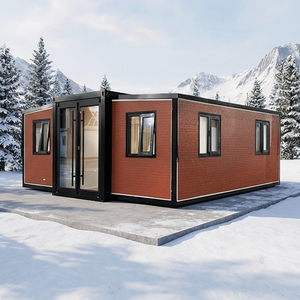
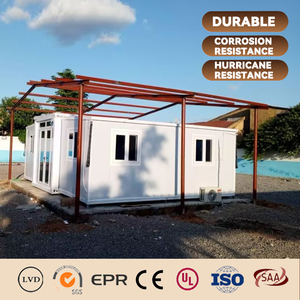
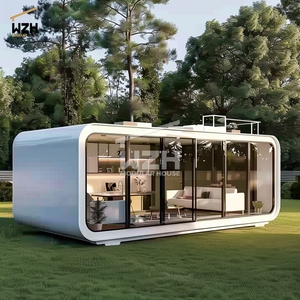
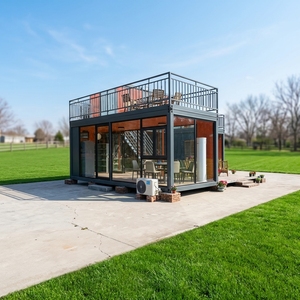
Factory Made Expandable Modular Tiny Container House

Factory Made 2-4 Bedroom Expandable Modular Container House

Structure:Galvanized Steel Frame
Thermal Rating:U-Value 0.14 W/m²K
Energy System:Solar Array Ready
Get a Quote
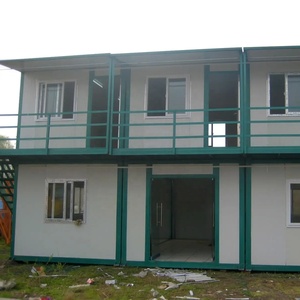
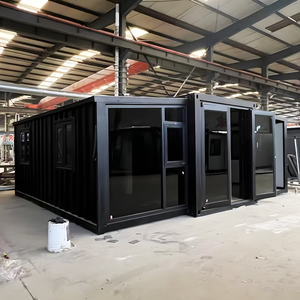
Ready To Move Expandable Modular Container House

Ready To Move Expandable Modular Container House (10ft/20ft/40ft)

Configuration:Foldable with Veranda
Airtightness:n50 ≤ 0.55 h⁻¹
Deployment:2-Hour Rapid Set
Get a Quote
1-5 Bedroom Container House Prefab Modular Living

1-5 Bedroom Detachable Prefab Modular Living Suite

Layout:Kitchen & Bath Integrated
Insulation:PIR/Rockwool Hybrid
Lifespan:50+ Years Structural
Get a Quote
Prefabricated Light Steel Villa Building

Prefabricated Light Steel Villa Building with Integrated MEP

Tech Standard:LGS Gauge Framing
MEP Readiness:Pre-wired & Plumbed
Wind Resistance:Category 12 Hurricane
Get a Quote
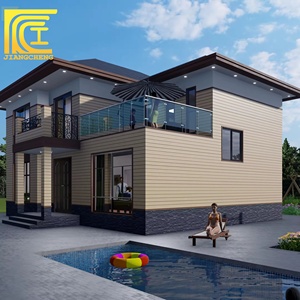
Homes Prefab Modern Luxury Modular House

Modern Luxury Volumetric Passive House (20ft/40ft Modular)

Glazing:Triple-Pane Low-E Argon
HVAC:ERV Heat Recovery 92%
Finish:Architectural Composite
Get a Quote
Extendable Two Bedroom Australia Prefab Container

Extendable 2-Bedroom High-Efficiency Prefab Home Kit

Compliance:BCA/NCC & EU Standard
Thermal Bridge:Zero-Bridge Breaker
Assembly:Crane-Free Mechanism
Get a Quote
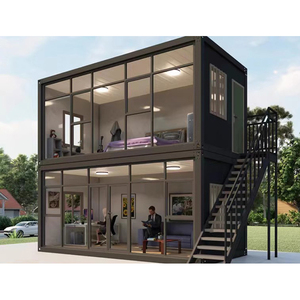
20 Foot Mini Portable Mobile Cabin

20ft Multi-Story Foldable Modular Cabin System

Stackability:Up to 3 Stories
Airtight Sealing:EPDM Gasket Matrix
Use Case:Resort & Multi-Family
Get a Quote
Custom 40Ft 20Ft Prefabricated Mobile Living Container

Custom 40ft/20ft 4-Bedroom Volumetric Steel Living Module

Envelope:Vacuum Insulation Panels
Certification:PHI Commercial Ready
Export Rating:ISO Sea-Freight Fit
Get a Quote
Industry White Paper & Sourcing Paradigm

The Convergence of Volumetric Steel Prefabrication and Passivhaus Engineering

The global commercial construction market is undergoing an unprecedented paradigm shift toward volumetric modular industrialization. Driven by stringent decarbonization mandates (such as the EU Energy Performance of Buildings Directive and UK Future Homes Standard), institutional real estate investors, hotel developers, and municipal housing authorities are moving away from legacy on-site assembly. The integration of Passivhaus Institute (PHI) performance metrics into off-site 3D volumetric steel-frame manufacturing represents the pinnacle of modern architectural engineering, achieving operational energy reductions of up to 90% while cutting total project delivery cycles by 30% to 50%.

Key Engineering Insight: Passive House modular construction relies on five core physical pillars executed inside precision factory environments: continuous super-insulation (U-value ≤ 0.15 W/m²K), thermal bridge-free structural connections (Ψ ≤ 0.01 W/mK), continuous perimeter airtightness (n50 ≤ 0.6 air changes per hour @ 50 Pa), triple-pane low-emissivity insulated glazing units, and energy recovery ventilation (ERV) operating at ≥ 88% thermal efficiency.
90%
Heating Demand Reduction
30-50%
Faster On-Site Delivery
≤ 0.6
ACH @ 50 Pa Airtightness
100%
Factory-Controlled QC

Technical Benchmark Matrix: Volumetric Modular vs. Conventional Construction

Empirical data demonstrating the operational and structural metrics across modern building methods.

Performance Indicator Conventional On-Site Build Standard Modular (Non-PH) Volumetric Passive House Modular
Space Heating Demand 100–160 kWh/m²/year 50–80 kWh/m²/year ≤ 15 kWh/m²/year
Building Airtightness (n50) 3.0–5.0 ACH @ 50 Pa 1.5–2.5 ACH @ 50 Pa ≤ 0.6 ACH @ 50 Pa
Wall U-Value Efficiency 0.28–0.40 W/m²K 0.18–0.24 W/m²K 0.10–0.14 W/m²K
Thermal Bridging Risk High (Linear junctions) Moderate (Inter-module gaps) Eliminated (Aerogel/XPS Breakers)
On-Site Construction Noise/Waste Baseline (100%) Reduced by 40% Reduced by 85–90%
Project Delivery Schedule 18–24 Months 10–14 Months 6–9 Months (Parallel Tracks)

Future Procurement Trends in Passive Modular Export (2026–2030)

Strategic analysis for institutional procurement officers, developers, and general contractors sourcing cross-border modular assets.

1. DfMA & BIM Level 3 Automation

Design for Manufacture and Assembly (DfMA) coupled with digital twin BIM models allows factory CNC automated robotics to cut light-gauge steel (LGS) and structural insulated panels (SIPs) to sub-millimeter tolerances, ensuring air seals remain unbroken during international sea transport.

2. Decarbonization & Embodied Carbon

Global exporters are substituting traditional concrete structures with recycled green steel frameworks and bio-based insulation (cellulose and wood fiber). This combination satisfies strict ESG financing covenants and carbon cap penalties across European and North American ports.

3. Turnkey Volumetric Fit-Outs

Modern B2B procurement contracts demand 90-95% factory completion. Modules arrive on-site fully equipped with pre-installed bathrooms, kitchens, triple-pane fenestration, localized ERV ducts, and internal finishes, minimizing local high-cost labor requirements.

Global Industry Leader Analysis

Evaluation Framework: Top 10 Passive House Modular Manufacturers

An authoritative evaluation of leading global manufacturers categorized by engineering credentials, export capacity, quality management systems (ISO), and thermal envelope performance.

1. DMD Modular (EU / Global)

Rank #1 Tier-1 Exporter

Backed by investment giant FORUM TFI S.A., DMD Modular is an award-winning international leader delivering volumetric steel-frame modular developments across the UK, Netherlands, Denmark, Germany, and North America. Specializing in hotels, PBSA, and luxury multi-family housing.

Certifications: ISO 9001, ISO 14001, ISO 50001, DfMA BIM Compliant
Key Projects: Hampton by Hilton (UK), PBSA Edinburgh (148 rooms), Danish Student Living.

2. Cadolto Modular Buildings (Germany)

Renowned for heavy-duty industrial and medical volumetric steel modular construction. Cadolto integrates extreme airtightness membranes and specialized HVAC recovery units for European Passivhaus commercial developments.

Specialization: High-rise steel modular & healthcare Passive House systems.
Export Region: Western Europe, Middle East.

3. Lindbäcks Bygg (Sweden)

Pioneers in automated timber-frame volumetric modular units. Operating state-of-the-art robotic production lines in Sweden, delivering ultra-low energy multi-family housing across the Nordic region.

Specialization: Sustainable glulam & timber volumetric framing.
Export Region: Scandinavia, Northern Europe.

4. ZModular (USA / Canada)

Utilizes self-locating steel structural connection systems (Z-Box) to achieve rapid stacking up to 20 stories while executing tight building envelopes that align with North American PHIUS standards.

Specialization: High-density urban residential & student living.
Export Region: North America.

5. CIMC Modular Building Systems (China)

One of the world's largest volumetric steel container modular exporters. Capable of mass-producing ISO-compliant container modules fitted with thermal breaks for large-scale global resort and mining infrastructure.

Specialization: Megaproject volumetric shipping & steel containers.
Export Region: Global (Australia, UK, USA, Africa).

6. Elements Europe (UK)

Backed by GS E&C, Elements Europe delivers advanced light-gauge steel volumetric structures for high-density hotels, Build-to-Rent (BTR), and student accommodation compliant with stringent UK building safety acts.

Specialization: Volumetric LGS pods and structural modules.
Export Region: UK & Ireland.

7. Daiwa House Modular (Japan / Europe)

A global powerhouse integrating Japanese robotics, extreme seismic isolation engineering, and zero-energy building (ZEB) envelope tech into residential modular exports.

Specialization: Precision robotics, zero-carbon housing.
Export Region: Asia-Pacific, Europe.

8. Jan Snel / Daiwa House Modular (Netherlands)

European leader in circular, flexible modular housing. Specializing in rapid-deploy social housing and multi-family units engineered to meet Benelux energy transition standards.

Specialization: Demountable and reusable volumetric modules.
Export Region: Benelux, Central Europe.

9. Modon Structures (Australia)

Focuses on extreme climate modular prefabrication. Engineered to resist bushfires, high cyclonic wind pressures, and intense solar loads while maintaining Passivhaus internal comfort standards.

Specialization: High-BAL rated resilient volumetric modules.
Export Region: Oceania, Pacific Islands.

10. Baufritz (Germany)

Bespoke luxury eco-modular manufacturer utilizing non-toxic biological timber construction, achieving PHI compliance through organic vapor-permeable wall assembly systems.

Specialization: Health-focused bio-based Passive prefabricated homes.
Export Region: Germany, UK, Switzerland.

Manufacturer Excellence: Turnkey Capabilities & Portfolio Track Record

Delivering certified volumetric engineering backed by institutional financial security and real-world project deployments across Europe.
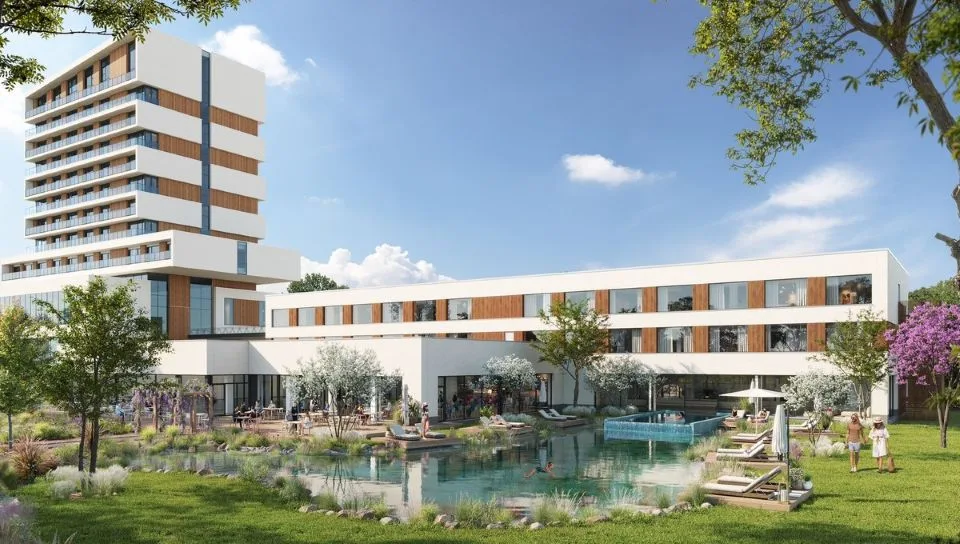
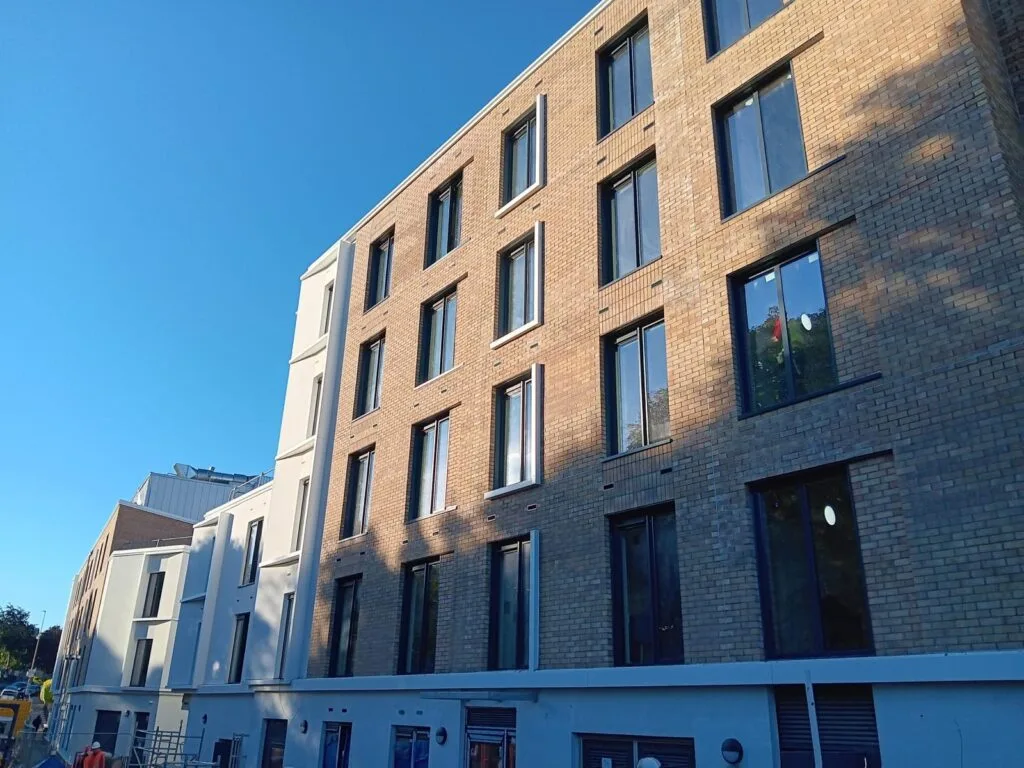
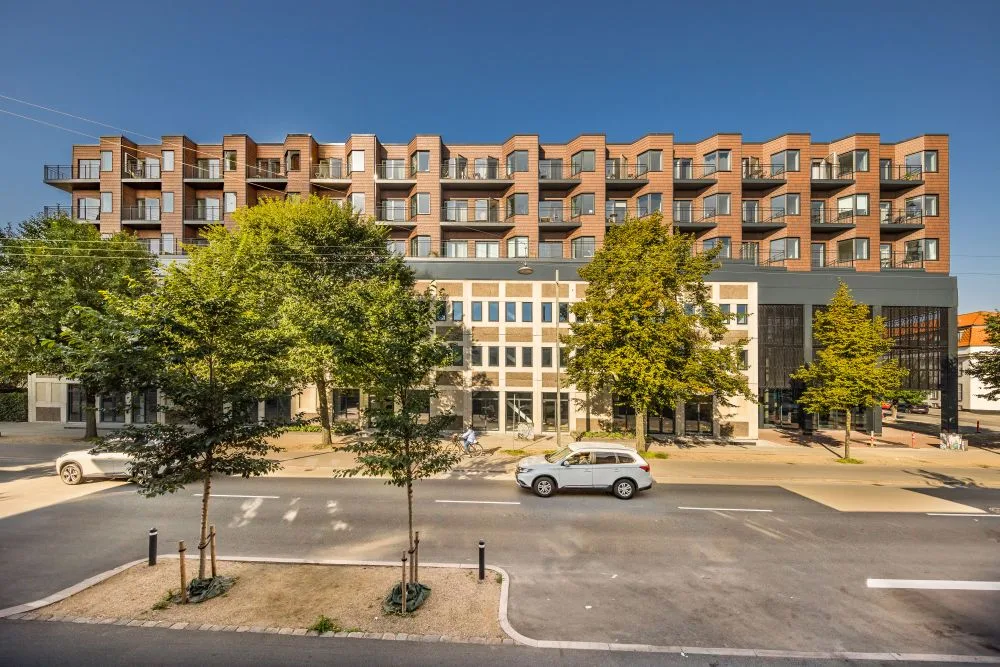
Volumetric modular hotel building
Hospitality Sector

Volumetric Modular Hotels

Modular student accommodation
PBSA Sector

Modular Student Living (256 Beds)

Private rental sector modular buildings
Build to Rent

Private Rental Sector (PRS) Housing

Institutional Equity Backing

Supported by FORUM TFI S.A.—Central Europe's premier investment fund manager—ensuring complete bankability, performance bond issuance, and financial stability for mega-scale development contracts.

Triple ISO Certification

Manufacturing operations strictly comply with ISO 9001 (Quality Management), ISO 14001 (Environmental Management), and ISO 50001 (Energy Management Systems), guaranteeing audit-ready compliance.

Global Export & Logistics

Proven track record of delivering 3D volumetric modules across the UK, Germany, Netherlands, Denmark, Iceland, and overseas destinations via standard ISO container freight or heavy-lift roll-on/roll-off ocean transport.

Expert FAQ

Frequently Asked Questions: B2B Sourcing & Technical Execution

Essential insights for procurement teams, engineering consultants, and commercial real estate developers.

1. How do volumetric steel modular structures achieve Passivhaus airtightness (n50 ≤ 0.6 h⁻¹)? +
Airtightness in off-site volumetric modular manufacturing is achieved by creating a continuous inner air-barrier envelope in factory conditions. Prefabricated wall, roof, and floor panels utilize taped smart vapor-variable membranes (e.g., SIGA or Pro Clima) combined with factory-installed structural EPDM gaskets at module interfaces. Because manufacturing occurs indoors away from rain and wind, adhesive tapes bond flawlessly to steel and timber substrates, eliminating the micro-gaps typically found in traditional site builds.
2. How are thermal bridges resolved at inter-module structural connection points? +
Inter-module thermal bridging (where steel columns meet) is engineered out using high-density structural thermal break pads (such as Farrat or Aerogel isolation plates) placed directly between steel lifting lugs and structural mating plates. Continuous exterior insulation (EIFS) or rainscreen cladding wraps over the mating seams on-site, maintaining an unbroken insulation layer with a linear thermal transmittance value of Ψ ≤ 0.01 W/mK.
3. What is the typical cost structure of Passive House modular vs standard construction? +
While initial factory capex for a Passive House volumetric module may present a 3% to 7% premium due to triple-pane glazing, thicker insulation, and ERV equipment, total project ROI is dramatically higher. Schedule compression of 30–50% reduces developer financing interest, site overhead, and labor costs. Operational energy savings of 80–90% protect building owners against volatile municipal utility costs and carbon taxation.
4. Can volumetric modular buildings meet local acoustic and fire protection regulations across different export countries? +
Yes. Volumetric construction inherently creates a "double wall" and "double ceiling/floor" assembly wherever two modules meet. This structural duplication provides superior acoustic isolation (Rw + Ctr ≥ 55 dB), easily surpassing UK Building Regs Part E, German DIN 4109, and US IBC standards. Fire resistance ratings of 60 to 120 minutes (EI60/EI120) are engineered using multi-layer non-combustible gypsum/rockwool assemblies certified under EN 13501 and ASTM E119.
5. What are the maximum dimension limits for international sea freight export of modules? +
Standard ocean transport utilizes ISO High-Cube shipping frames or Breakbulk shipment. Standard shipping-friendly volumetric modules range up to 4.0m in width, 3.4m in external height, and 12.0m to 14.5m in length. Custom oversized road transport permits allow wider modules across mainland Europe and the UK (up to 4.5m width), optimizing room layouts for hotels and PBSA studio apartments.
6. How is mechanical ventilation with heat recovery (MVHR) integrated into factory modules? +
Decentralized or localized high-efficiency ERV/HRV units are integrated directly into the drop-ceiling soffits of individual volumetric pods during factory fabrication. Ductwork, attenuation mufflers, and exterior intake/exhaust louvers are pre-tested prior to shipment. On-site commissioning simply requires connecting main power and linking localized sensors to the central Building Management System (BMS).
7. How does Design for Manufacture and Assembly (DfMA) de-risk real estate investments? +
DfMA locks in material pricing, engineering details, and manufacturing schedules early in the pre-construction phase. By standardizing module chassis while allowing customized exterior facades and interior fit-outs, developers eliminate 90% of change orders, weather delays, and trade labor shortages typical of conventional jobsites.
8. What is the structural design life of a cold-formed steel volumetric module? +
Galvanized light-gauge structural steel chassis (Z275/Z350 corrosion protection) or heavy hot-rolled steel frames engineered under Eurocode 3 / AISC have a structural design lifespan exceeding 60 to 100 years. When protected within an airtight, weather-tight Passive House building envelope, corrosion rates are virtually zero.

Accelerate Your Next Net-Zero Modular Development

Partner with internationally certified engineering specialists to deliver high-performance volumetric hotels, PBSA, and residential communities faster, smarter, and with total financial certainty.