Discover latest news, architectural innovations, and expert perspectives on modular steel-frame construction across Europe.
Factory-assembled, turn-key expandable modular solutions designed for international developers and B2B procurement
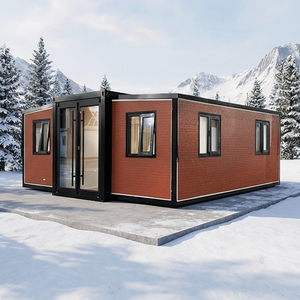
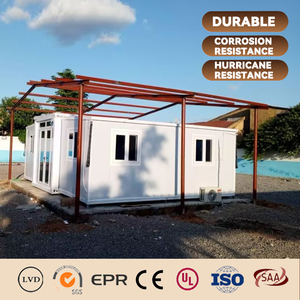
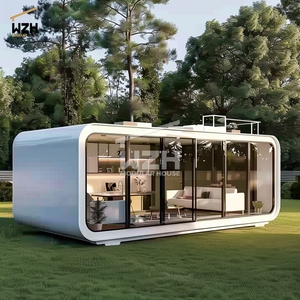
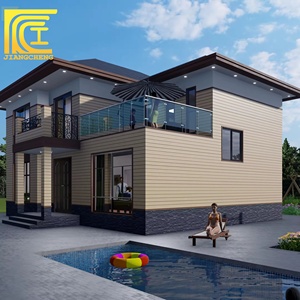
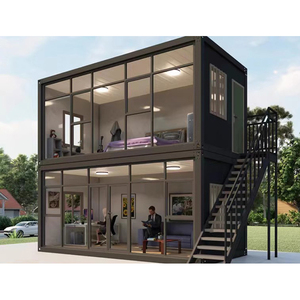
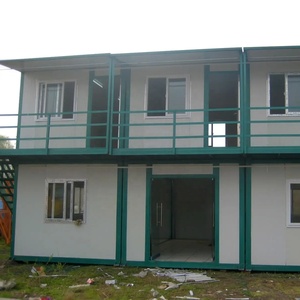
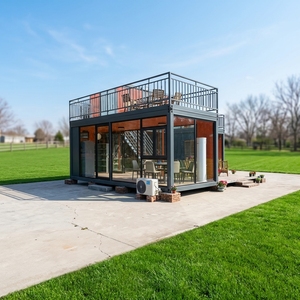
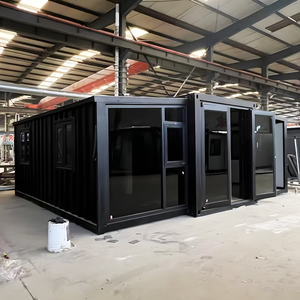
In modern commercial construction—spanning hospitality developments, Purpose-Built Student Accommodation (PBSA), Private Rental Sector (PRS/BTR) multi-family complexes, and modular care homes—kitchen procurement represents one of the most labor-intensive, multi-trade bottleneck risks on the job site. Traditional kitchen installations demand sequential work from carpenters, electricians, plumbers, tilers, counter fabricators, and painters. This reliance on fragmented trade scheduling frequently leads to delays, quality variance, cost overruns, and acoustic breaches between building units.
As a premier China Wholesale Modular Kitchen Pods Manufacturer & Exporter, we revolutionize real estate delivery through factory-controlled volumetric off-site construction. By transitioning kitchen fabrication from un-controlled site environments into precision-engineered production lines, we supply fully integrated, plug-and-play kitchen pods and complete volumetric modular living units. These units arrive at your construction site complete with integrated MEP (Mechanical, Electrical, and Plumbing) risers, factory-tested waterproofing membranes, cabinetry, appliances, lighting, and internal finishes.
Information Gain Key Insight: Shifting to China-manufactured volumetric kitchen pods reduces on-site snagging lists by up to 90%, compresses overall project completion timelines by 30% to 50%, and delivers structural, fire, and acoustic insulation parameters engineered to exceed stringent European (EN) and North American (IBC) building codes.
The structural foundation of our volumetric kitchen pods relies on high-tensile Cold-Formed Light Gauge Steel (LGS) or heavy-duty welded structural steel frames. Designed using 3D Building Information Modeling (BIM) under strict Design for Manufacture and Assembly (DfMA) protocols, each pod functions as a self-supporting volumetric cassette capable of seamless integration into concrete-frame, steel-frame, or cross-laminated timber (CLT) primary structures.
| Technical Parameter | Standard Specification | Enterprise Custom Options |
|---|---|---|
| Structural Frame | S350GD+Z Zinc-coated Light Gauge Steel / Hot-Rolled Steel Chassis | Heavy-Duty Marine Grade Anti-Corrosion Coating (C4/C5 Class) |
| Fire Rating Compliance | REI 60 / REI 120 (EN 13501-1 Class A1 Non-Combustible) | UL 263 & ASTM E119 Multi-Layer Gypsum Board Assembly |
| Acoustic Decoupling | Rw + Ctr ≥ 53 dB (Acoustic Iso-Pads & Mineral Wool Insulation) | Enhanced Floating Floor & Resilient Channel Isolation (≥ 60 dB) |
| Waterproofing System | Dual-layer Polyurethane / EPDM Membrane with Raised Perimeter Tray | Continuous Welded Stainless Steel Chassis Tray for Wet Pods |
| MEP Integration | Pre-wired Harness (CE/UL Approved), PEX-a Plumbing, Pre-tested at 10 Bar | Smart Home IoT Control Module, Variable Flow Vent Extraction Hoods |
| Finishes & Surfaces | Quartz Countertops, Moisture-Resistant HPL Cabinets, Anti-Bacterial Tiles | Sintered Stone, Solid Wood Veneers, Marine-Grade Aluminum Splashbacks |
Backed by institutional capital, European engineering leadership, and world-class supply chain integration
Operates under rigorous factory quality control certified to ISO 9001 (Quality Management), ISO 14001 (Environmental Management), and ISO 50001 (Energy Management). Every kitchen pod undergoes 100% factory inspection before dispatch.
Backed by major investment fund entities (including strategic backing alignment with funds such as FORUM TFI S.A.), providing long-term financial stability, bankable performance guarantees, and scalability for large-scale municipal or institutional contracts.
Our engineering team utilizes Design for Manufacture and Assembly (DfMA) software to create clash-free 3D BIM models (LOD 400). This guarantees zero-tolerance structural fit during on-site hoisting and stack installation.
Extensive export track record supplying turnkey modular structures across Europe (UK, Netherlands, Denmark, Germany, Poland, Iceland), Australia, the Middle East, and North America—complying fully with localized building codes.
By fixing material costs and production schedules off-site early in the design cycle, developers avoid weather disruptions, material price spikes on site, and labor shortages—ensuring predictable cash flow and early revenue generation.
Tailored architectural designs for luxury hotels, high-density PBSA student housing, multi-family BTR complexes, modular staff accommodation, and affordable public housing developments.
The global construction market is undergoing an unprecedented transformation driven by ESG (Environmental, Social, and Governance) mandates, chronic skilled labor shortages in Western economies, and tight capital markets demanding rapid return on investment (ROI). As modular manufacturing matures, several key trends are shaping the future of kitchen pod procurement for global real estate exporters and developers:
Next-generation modular kitchen pods are evolving into intelligent, energy-monitoring building sub-systems. Modern procurement specifications increasingly require pre-installed IoT sensors, smart energy-metering distribution boards, and automated ventilation controls. Kitchen pods manufactured in China are now integrated with smart heat-recovery exhaust systems (HRV) and induction cooking infrastructure designed to optimize total building power performance, helping developers achieve BREEAM "Outstanding" and LEED "Platinum" certifications.
Embodied carbon reduction is moving from a marketing preference to a regulatory requirement across Europe and Australia. Future kitchen pod designs prioritize zero-VOC laminates, recycled structural steel profiles, solvent-free adhesives, and circular countertops made from recycled glass and bio-resins. Factory prefabrication inherently limits material waste to under 2% (compared to 15-20% in traditional site construction), creating a vastly lower carbon footprint per functional kitchen unit.
Historically, custom pod designs created fragmented production lines, increasing unit costs for small orders. The industry is rapidly shifting toward standardized modular chassis platforms with flexible, quick-change architectural facade kits. By standardizing the structural frame, MEP connection nodes, and drain locations while allowing full customization of cabinetry faces and wall panels, global procurement managers can achieve massive economies of scale without sacrificing aesthetic individuality.
A major technical hurdle in international modular pod procurement has been site-level trade connections. Advanced modular exporters now supply standardized "plug-and-play" mechanical connection manifolds. Electricians and plumbers on site simply clip quick-connect water manifolds, push-fit waste couplings, and multi-pin electrical master plugs through dedicated service risers—reducing pod hook-up time to under 45 minutes per unit on site.
Comprehensive answers regarding logistics, structural compliance, customization, and factory quality assurance
Consult with our off-site modular engineering experts today. Get factory direct pricing, detailed BIM integration plans, and turn-key export quotes tailored to your project location.
