Discover latest news, architectural innovations, and expert perspectives on modular steel-frame construction across Europe.
Explore our factory-prefabricated modular villa series built with precision cold-formed steel framing, high-performance thermal envelopes, and fully customizable turnkey interior fit-outs.
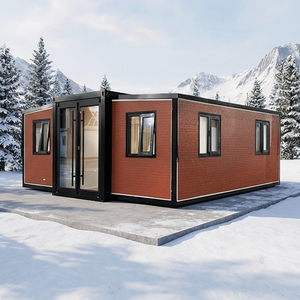
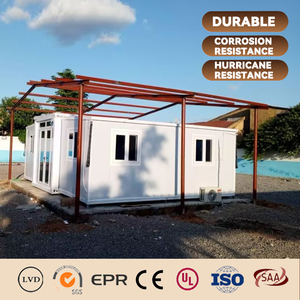
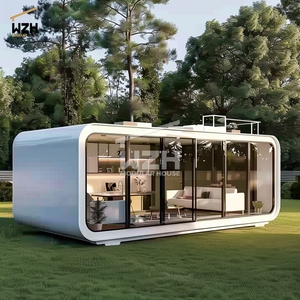
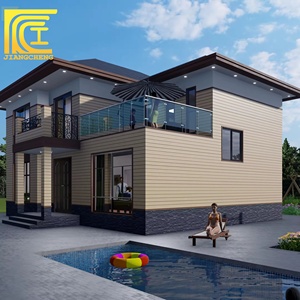
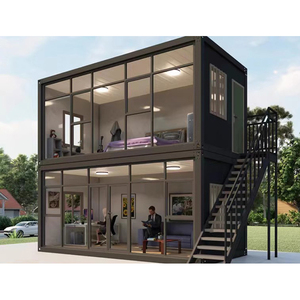
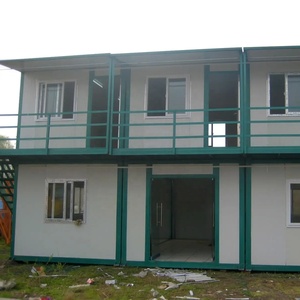
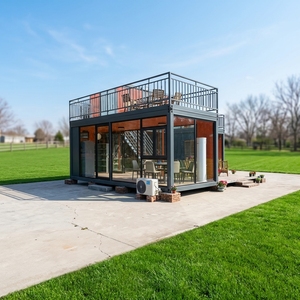
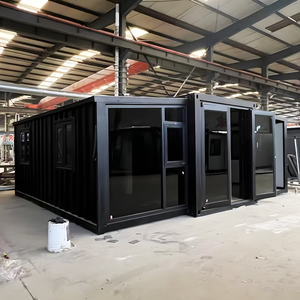
As a premier Chinese manufacturer of luxury volumetric modular villas, we merge advanced European structural engineering with state-of-the-art off-site manufacturing processes to deliver unmatched precision, structural durability, and total financial certainty.
Every modular villa project is executed using Design for Manufacture and Assembly (DfMA) methodologies embedded within 5D Building Information Modeling (BIM). This eliminates on-site collisions, optimizes raw material usage, and guarantees millimeter-level manufacturing tolerance across structural framing and interior MEP integration.
Our ultra-modern manufacturing plant operates under strict international benchmarks: ISO 9001 for Quality Assurance, ISO 14001 for Sustainable Environmental Management, and ISO 50001 for Optimized Industrial Energy Consumption. Every single unit undergoes rigorous 7-stage factory acceptance testing before dispatch.
Engineered with cold-formed light gauge steel (LGS) and hot-rolled structural steel chassis, our modular villas withstand seismic forces up to Zone 9 (PGA 0.4g) and extreme tropical wind loads up to Category 5 typhoons (250+ km/h). Designed for an audited 75+ year structural lifespan.
We build specifically to international standards, including European Eurocodes (EN 1993), International Building Code (IBC 2024), Australian Standards (AS/NZS 4600), and UK Building Regulations (Part L/B/E). Full technical documentation packages are provided for seamless local municipal approvals.
Our factory installs up to 95% of all architectural finishes off-site. This includes concealed electrical conduits, pre-plumbed sanitary walls, luxury cabinetry, acoustic ceiling panels, double-glazed thermal break glazing, and smart HVAC controls before ocean shipping.
Off-site fabrication occurs simultaneously with on-site foundation works, compressing total project schedules by 30% to 50%. Fast-tracked delivery significantly lowers holding costs, minimizes finance charges, and accelerates investor ROI and rental yield realization.
Why leading global resort developers, hospitality chains, and residential investment funds rely on our factory modular ecosystem.
The global construction landscape is undergoing a paradigm shift from messy, labor-intensive site builds to high-tech, precision-engineered industrial assembly.
Modern luxury modular villas are transitioning from basic structural shells to ultra-low energy, passive-certified building envelopes. By integrating continuous exterior insulation (EIFS), thermal-break aluminum window profiles, and polyurethane/rockwool composite core panels, Chinese factories now produce modular homes achieving thermal transfer values of U < 0.15 W/m²K. This drastic reduction in thermal bridging cuts operational HVAC energy demands by up to 60% annually.
The latest evolution in luxury villa manufacturing incorporates Building-Integrated Photovoltaics (BIPV) seamlessly into standard standing-seam metal roofs and exterior glass facades. Coupled with lithium-iron-phosphate (LiFePO4) energy storage arrays and integrated hybrid solar inverters, modular villas can now operate completely off-grid or supply net-positive energy back to municipal power grids, appealing to eco-luxury resorts and remote eco-tourism operators.
Gone are the days when modular houses looked like industrial shipping containers. Current manufacturing trends emphasize architectural distinction through high-grade exterior claddings. China’s leading factories now utilize ventilated rainscreen facades, High-Pressure Laminates (HPL), sintered stone porcelain slabs, thermally modified real wood timber, and titanium-zinc panels. These exterior finishes provide 30+ years of maintenance-free weather resistance alongside refined visual elegance.
Factory fabrication lines are replacing manual hand-welding with automated 6-axis robotic welding arms, CNC laser cutting, and automatic cold-roll framing machines. This automated precision ensures that structural steel frames are square within sub-millimeter tolerances. Such dimensional consistency guarantees that when multi-unit modular villas are stacked or expanded horizontally on-site, connections lock together effortlessly without structural binding.
Industrialized modular villa manufacturing dramatically reduces raw material waste to under 2% (compared to 15-25% waste typical in traditional site construction). Steel structural frames are 100% recyclable at the end of their lifecycle. Furthermore, off-site factory production minimizes localized site dust, noise pollution, and heavy equipment carbon emissions, aligning perfectly with ESG (Environmental, Social, and Governance) investment criteria.
Modern luxury buyers demand fully connected smart living spaces. Premium Chinese factories pre-wire modular villas during assembly with KNX or Zigbee-based smart automation backbones. This allows buyers to control climate zones, automated motorized blinds, keyless biometric access, surround audio, and intelligent energy consumption monitoring directly through mobile apps or voice-controlled interfaces from the day of installation.
Understanding how institutional developers, luxury resort owners, and private buyers are reshaping their global supply chain strategies.
Institutional real estate developers are increasingly bypassing multi-tiered local sub-contractors in favor of direct Engineering, Procurement, and Construction (EPC) partnerships with established Chinese modular factories. Direct factory sourcing locks in fixed material pricing early, hedging against global inflation, labor spikes, and unexpected budget overruns.
Hospitality and residential developers are adopting standardized volumetric spatial grids (e.g., 3.6m x 9.0m or 4.0m x 12.0m modules) across their property portfolios. Standardization enables interchangeable floorplans—ranging from single-bed luxury resort suites to 4-bedroom multi-story family villas—maximizing manufacturing output and reducing per-unit shipping costs.
Global procurement standards now demand comprehensive pre-shipment inspections. Buyers deploy third-party inspectors (such as SGS, TÜV Rheinland, or Intertek) to conduct factory water-tightness pressure testing, electrical megger testing, load-bearing deflection checks, and thermal imaging before shipping containers are sealed and dispatched from China.
With high interest rates and extended conventional construction timelines, the Build-to-Rent (BTR) and eco-resort sectors are heavily prioritizing modular villas. Quick factory turnarounds allow developers to open resort destinations in months rather than years, generating cash flow up to 14 months earlier than traditional building methods.
An objective engineering comparison highlighting cost structure, timeline efficiency, and structural quality control.
| Evaluation Vector | China Volumetric Modular Villa Factory | Traditional On-Site Masonry / Timber Build |
|---|---|---|
| Construction Schedule | 30% to 50% Faster (Parallel Foundation & Factory Build) | Sequential & Weather-Dependent (Slow Progress) |
| Cost Predictability & Risk | 100% Fixed Contract Pricing (No Mid-Project Cost Creep) | High Risk of 15%–35% Budget Overruns |
| Quality Control Standard | ISO 9001 Factory Controlled with Automated Robotics | Variable On-Site Trades & Manual Quality Risks |
| Acoustic Performance | Dual-Wall Isolated Cavities (STC 60+ Sound Reduction) | Single Cavity (STC 40–48 Standard) |
| Thermal Insulation (U-Value) | U < 0.15 W/m²K (Continuous Insulation Envelope) | U = 0.28–0.45 W/m²K (Frequent Thermal Bridges) |
| Site Waste & Carbon Footprint | < 2% Material Waste, Zero Site Dust/Noise Pollution | 15%–25% Material Waste Sent to Landfills |
| Seismic & Wind Resistance | Zone 9 Seismic (0.4g), Typhoon Resistant (250+ km/h) | Vulnerable to Foundation Cracking & Shear Failure |
Clear, authoritative engineering and logistics answers for international buyers, developers, and project managers.
A: Modular villas are engineered specifically to standard ISO shipping dimensions. Expandable and flat-pack units are shipped in standard 40ft High Cube (40HC) ocean containers. Larger fully volumetric 3D module pods are designed as ISO-certified intermodal units or transported via Flat Rack / Breakbulk cargo ships. Every unit features reinforced lifting lugs for safe crane handling at ports and site unloading.
A: Yes. As a leading specialized manufacturer, we engineer structural frame steel, insulation materials, wiring, and plumbing strictly to destination country codes. This includes Eurocodes (CE marked materials), Australian/New Zealand Standards (AS/NZS), US International Building Code (IBC/IRC), and UK Building Regulations. Full structural calculation books stamped by licensed structural engineers are provided for local council permit approvals.
A: Our heavy cold-formed steel and hot-dip galvanized structural chassis have an engineered design service life exceeding 75 years. Steel components receive multi-layer anti-corrosion marine grade coatings (C3 to C5 exposure ratings). Exterior claddings like fluorocarbon aluminum or sintered stone require minimal maintenance, typically limited to routine exterior water washes every few years.
A: Thermally engineered wall assemblies are customized based on the site microclimate. For arctic/sub-zero climates, we utilize multi-layer continuous PIR/PUE insulation boards combined with triple-glazed Low-E argon-filled windows and thermal break frames. For hot desert environments, reflective radiant barriers and high-density mineral wool maintain comfortable interior temperatures while minimizing air conditioning load.
A: Modular villas require significantly simpler and cheaper foundations than traditional heavy masonry buildings. Depending on soil load-bearing capacity, foundations can range from concrete pier footings, strip footings, or a flat ground slab to helical screw piles. Detailed foundation loading diagrams and anchor point layouts are provided by our engineering team months prior to delivery.
A: Absolutely. We offer full architectural customization. While we maintain optimized standard models for rapid production, our DfMA engineering team works closely with your project architects to customize floor plans, room configurations, sanitary fixture brands, lighting fixtures, flooring materials, and exterior facade claddings to match your exact project identity.
Partner with China’s leading modular villa manufacturer. Request our comprehensive 2026 product catalog, detailed engineering specifications, and competitive factory-direct pricing for your development.
