Discover latest news, architectural innovations, and expert perspectives on modular steel-frame construction across Europe.
Explore our CE-marked prefabricated building units engineered for modern school expansions, campus housing, and administrative infrastructure.
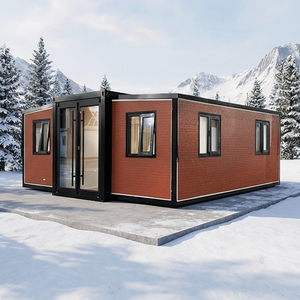
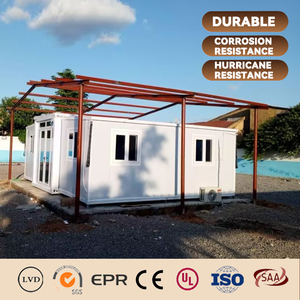
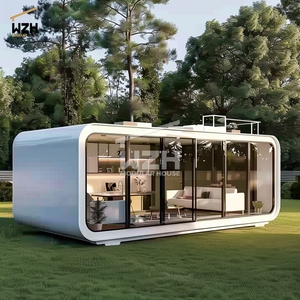
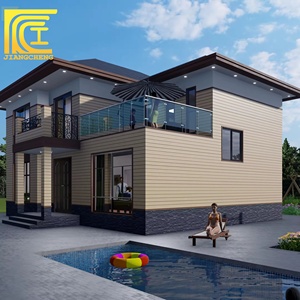
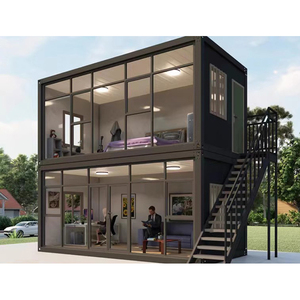
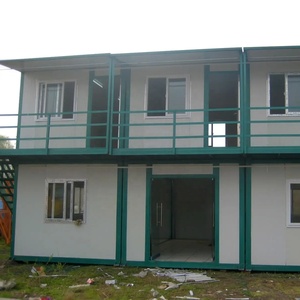
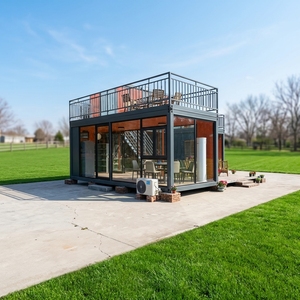
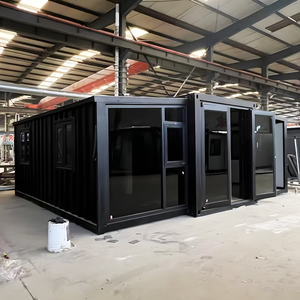
The imperative to scale educational infrastructure rapidly while maintaining rigorous compliance standards has shifted global procurement paradigms from site-cast construction to volumetric modular off-site manufacturing (OSM). For municipal authorities, school districts, universities, and private institutional developers, selecting a CE Certified Modular Educational Facilities Exporter is no longer merely an option—it is a strategic risk-mitigation standard. CE marking under the EU Construction Products Regulation (CPR No 305/2011) guarantees that structural steelwork, thermal envelope performance, fire reaction metrics, and environmental health profiles satisfy European directives, safeguarding institutional investments against regulatory latency and performance shortfalls.
Key Insight: Volumetric modular construction decouples civil foundation work from building fabrication. By executing site preparation in parallel with factory-based structural steel chassis assembly, school districts achieve operational launch dates up to 50% ahead of conventional build schedules.
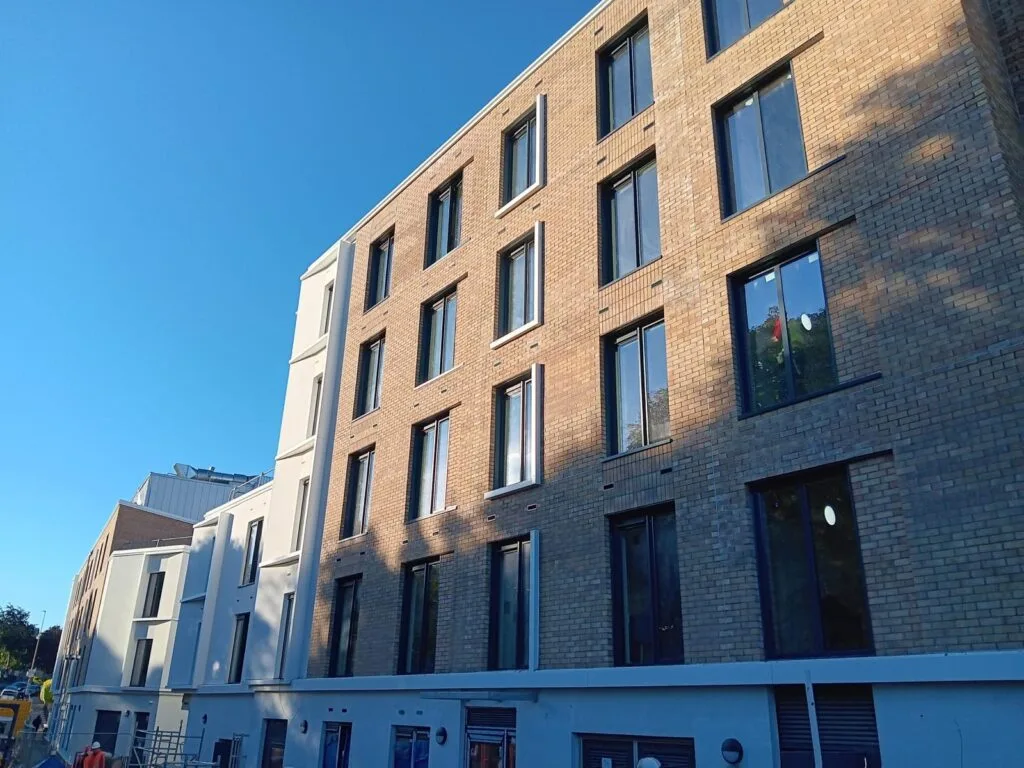

To achieve CE compliance as a qualified exporter, volumetric educational facilities must satisfy stringent European structural Eurocodes (EN 1990 to EN 1999) and Factory Production Control (FPC) protocols certified under EN 1090-1 for load-bearing steel structures. Unlike temporary light-duty cabins, institutional-grade modular schools utilize structural cold-formed or hot-rolled steel skeletons capable of multi-story vertical stacking (up to G+6 storeys without external reinforcement).
Structural reliability encompasses comprehensive seismic analysis (EN 1998) and high wind-load tolerances (EN 1991-1-4). Each modular block undergoes automated robotic welding verification, anti-corrosion coating under ISO 12944 standards, and precise dimensional check routines managed by Design for Manufacturing and Assembly (DfMA) software suites. This engineering rigor guarantees that temporary classroom additions or permanent campus extensions maintain structural integrity over a 50+ year design life.
Modern pedagogical spaces demand strict internal environmental controls. Academic empirical studies consistently confirm that elevated ambient noise and poor indoor air quality directly impair student cognitive processing and retention. International CE-certified exporters integrate sophisticated building physics into every volumetric wall assembly:
As institutional capital allocation models prioritize Environmental, Social, and Governance (ESG) criteria, the global market for volumetric modular educational exports is undergoing three foundational structural shifts:
Demographic shifts often cause localized fluctuations in student enrollments. Traditional static construction risks leaving behind underutilized or abandoned structures. Modern CE certified modular educational units are manufactured for demountability and circular reuse. Schools can expand, shrink, or completely relocate entire building wings across districts with minimal structural waste, embodying true circular economy principles.
Procurement agencies now mandate Level 2 BIM integration (ISO 19650) from modular exporters. By maintaining a complete digital twin of every volumetric classroom—from embedded MEP conduit routing to fire damper certifications—facility managers can run predictive maintenance cycles, streamline asset management, and lower 30-year Total Cost of Ownership (TCO).
Off-grid and grid-interactive educational facilities feature factory-installed Photovoltaic (PV) solar roof arrays, integrated lithium battery storage banks, and smart energy management software. These self-contained units provide uninterrupted power for digital interactive smartboards, climate control systems, and computer laboratories even in remote or power-constrained regions.
Why leading municipal developers and educational institutions partner with our off-site modular export hub.
Controlled factory production prevents weather delays, material shrinkage, and site labor overruns, delivering fixed budget delivery guarantees early in the lifecycle.
Certified factory processes operating under EN 1090-1 structural steel standards, fully compliant with European Union fire safety and building physics directives.
Flat-pack or volumetric module logistics optimized for standard maritime ISO container ships and heavy-haul road transport with protective weather-proofing encapsulation.
Backed by leading European financial institutional funds and ISO-certified production systems.
Our manufacturing matrix operates under strict industrial management principles, supported by institutional financial backing from FORUM TFI S.A.—the largest investment fund in CEE. This financial stability ensures that large-scale municipal educational projects receive non-interrupted capital flow and execution security from raw material procurement through to final site commissioning.

Scalable volumetric building systems designed for public school expansions, university lecture halls, and regional administrative hubs.

Off-site volumetric supply that simplifies on-site coordination, reduces sub-contractor friction, and eliminates project delays.

Seamless translation of complex architectural master plans into production-ready DfMA modular BIM models.

Production facilities fully certified under ISO 9001 (Quality Management), ISO 14001 (Environmental Management), and ISO 50001 (Energy Management).
Essential considerations for international buyers, educational directors, and engineering procurement teams.
Our modular educational facilities hold CE marking compliance certified under EN 1090-1 (Execution of steel structures), EN 1993 (Design of steel structures - Eurocode 3), and EU Construction Products Regulation (CPR No 305/2011). Furthermore, factory manufacturing processes are audited annually under ISO 9001, ISO 14001, and ISO 50001 standards.
All structural steel profiles are encased with fire-rated A1 non-combustible gypsum boards or mineral wool core systems. Depending on project specifications, assemblies achieve REI 30, REI 60, or REI 120 fire resistance ratings under EN 13501-1 standards, complete with integrated intumescent sealants and automated smoke extraction damper integration.
When engineered with hot-dip galvanized steel framing and premium exterior facade systems (such as high-pressure laminates, insulated aluminum composite panels, or fiber cement), our modular educational facilities possess a structural design lifespan exceeding 50 years, equivalent to traditional brick-and-mortar institutional buildings.
Yes. Factory pre-installation includes heavy-duty floor load reinforcing (up to 5.0 kN/m²), anti-static flooring, anti-microbial wall cladding, dedicated chemical-resistant drainage conduits, overhead utility drops, and structured CAT6A / fiber optic cable raceways specifically tailored for modern STEM and computer science curricula.
Volumetric modules require localized point foundations (concrete pads) or strip footings designed to accept point-load concentrated forces from structural steel corner posts. Because total building deadweight is lighter than solid concrete construction, foundation excavation volume and concrete requirements are typically reduced by 30% to 40%.
Every volumetric unit undergoes complete shrink-wrap encapsulation using heavy-duty UV-stabilized shrink film. Corner posts feature standardized ISO twist-lock castings, enabling modules to be loaded and secured directly onto container vessels or standard flat-rack chassis for global delivery without structural damage.
Initiate your institutional project with full technical guidance, architectural BIM support, and fixed factory pricing.
Send an Inquiry