Discover latest news, architectural innovations, and expert perspectives on modular steel-frame construction across Europe.
Sourcing Modular Affordable Housing worldwide requires more than comparing factory prices. It demands careful research into climate, transport, local skills, financing, and community needs. A compact unit built in Poland may not suit a humid coastal village in Indonesia. Materials, insulation, foundations, and shipping distances can change the final cost significantly.
Ryan E. Smith, professor and author of Offsite Architecture, describes the central challenge clearly: “Industrialized construction is not a technology; it is a process.” That process begins with reliable suppliers and transparent specifications. It continues through factory inspections, prototype testing, delivery planning, and on-site assembly. Buyers should request evidence of production capacity, quality controls, warranty terms, and previous projects. Photographs are useful. Independent verification is better.
Affordability is not simply a low purchase price. It includes maintenance, energy use, replacement parts, and local repair access. A cheaper module can become expensive when spare components travel across oceans. This is often overlooked. Regional manufacturing partnerships may reduce delays and strengthen local employment, but they can also create inconsistent quality without proper training. Modular Affordable Housing succeeds when design flexibility meets disciplined procurement. The approach is promising, yet imperfect. Some projects fail because communities are consulted too late, or because standard modules ignore daily life. A responsible sourcing strategy must measure more than speed. It should ask who benefits, who maintains the homes, and whether the solution remains practical ten years later.
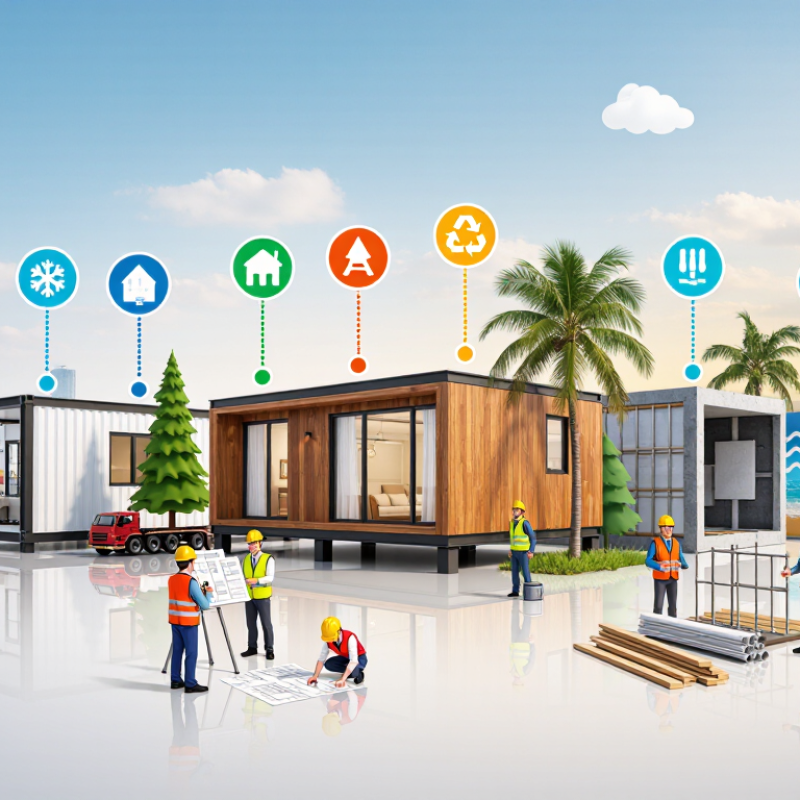
Before sourcing modular affordable housing worldwide, define the need in measurable terms. UN-Habitat reports that 1.6 billion people lack adequate housing globally. Therefore, project goals must address more than unit prices. Record household size, income limits, local climate, land access, utility capacity, and cultural expectations. A practical requirement sheet might specify a 45-square-metre unit, two bedrooms, daylight in living areas, and a maximum monthly housing cost. Keep it specific.
The site changes everything. Coastal projects need corrosion-resistant connections, while cold regions require stronger insulation and airtight windows. A procurement team should also assess transport distance, crane access, local assembly skills, fire safety, and maintenance capacity. McKinsey’s 2019 report, “Modular construction: From projects to products,” estimates that modular methods can reduce schedules by 20–50% and costs by about 20% in suitable conditions. These figures are potential outcomes, not promises. Local logistics may erase the savings.
Set goals across cost, speed, quality, carbon, and long-term performance. Use a simple scorecard: delivered cost per square metre, construction waste, energy demand, defect rate, and completion time. The GlobalABC 2023 Buildings Global Status Report notes that buildings account for about 34% of global energy demand. Energy performance belongs in the brief, even for low-cost homes. Yet affordability targets can conflict with insulation upgrades or durable finishes. That tension needs honest review. A cheaper module is not truly affordable if repairs, heating, or replacement parts overwhelm residents later.
Rising urbanization increases the need for scalable, affordable, and rapidly deployable housing. When defining modular housing requirements, project teams should assess local demand, target affordability, site infrastructure, transport constraints, climate resilience, and the percentage of units required for low- and middle-income households.
Data source: United Nations, Department of Economic and Social Affairs, World Urbanization Prospects 2018. Values show estimated urban population as a percentage of total population, rounded to the nearest whole number.
Sourcing modular affordable housing starts with regional mapping, not factory browsing. UN-Habitat estimates that 1.6 billion people live in inadequate housing, creating strong demand across Africa, Asia, and Latin America. Shortlist manufacturers near demand centers. This reduces freight costs, port delays, and replacement lead times. Turkey, Eastern Europe, India, Southeast Asia, and parts of North America offer varied production capabilities. Each region needs careful verification.
Look for suppliers with documented factory capacity, structural testing, fire-safety records, and repeatable quality controls. The Modular Building Institute’s 2024 Permanent Modular Construction Annual Report valued the United States market at about 20.3 billion dollars in 2023. This indicates mature production experience, but local compliance still matters. Ask for factory videos, inspection logs, material certificates, and two completed project references. A clean showroom proves little.
Compare total delivered cost, not the quoted module price. Include foundations, customs, inland transport, cranes, utility connections, and local labor. The World Bank’s 2023 Logistics Performance Index shows major differences in customs efficiency and infrastructure between countries. Those differences can reshape a project budget. Pilot one small housing cluster first. Measure defects, installation hours, and resident feedback. Some “affordable” designs become expensive after modifications. That is worth admitting. Procurement teams should also check whether regional factories can maintain output during currency changes, material shortages, or seasonal transport disruption.
Sourcing modular affordable housing worldwide requires more than comparing factory prices. Design choice shapes transport, assembly, maintenance, and local acceptance. Volumetric units offer faster installation, but shipping empty space can raise costs. Panelized systems travel efficiently and adapt well to irregular sites. Flat-pack designs reduce freight volume, though they often require more skilled labor during assembly. Design changes matter. Standard room sizes usually improve production speed and reduce waste.
Material selection should follow climate, access, and maintenance capacity. Galvanized steel frames provide dimensional stability and resist many pests, but they need careful thermal-bridge control. Timber can reduce weight and support efficient insulation, yet moisture protection must be verified before delivery. Concrete panels offer durability and acoustic mass, but their weight demands stronger foundations and lifting equipment. In project reviews, I have seen low material prices become expensive after adding foundations, customs, inland transport, and local labor. Landed cost is the useful figure.
Production capability deserves the same scrutiny as design. Request documented quality procedures, material traceability, sample inspections, and realistic monthly output. Capacity is not output. A factory may list large equipment but lack trained crews or reliable suppliers. Ask for production photos, test reports, packaging details, and a small pilot order before scaling. Check whether local workers can repair common components. One weakness remains: cost comparisons are often based on different specifications. Without matching insulation, fittings, finishes, and warranties, the cheapest quotation may only look affordable. Test the numbers.
Regulations decide whether an affordable housing project can move beyond a factory gate. Check local building codes, fire safety rules, energy requirements, accessibility standards, and import procedures before requesting quotations. A design accepted in one country may fail inspection elsewhere. Engage a qualified local engineer to review drawings and structural calculations. Written confirmation matters more than informal promises.
Quality verification should include material certificates, factory inspection records, moisture protection, insulation performance, and electrical testing. Ask for a full-size prototype or independent laboratory samples before placing a large order. Inspect wall joints, window seals, floor levels, and plumbing connections under realistic conditions. Small defects become expensive after installation. Factory photos are useful, but they are not proof.
Logistics requires more than a low shipping price. Confirm package dimensions, loading plans, port access, customs documents, unloading equipment, and weather protection. Build realistic allowances for delays. Supplier reliability deserves equal attention. Review audited financial information, production capacity, references from comparable climates, warranty procedures, and spare-part availability. A video call cannot replace an on-site audit. A checklist can still miss problems. That limitation should remain visible in the procurement record.
Before signing, define inspection stages, payment triggers, delivery responsibilities, defect remedies, and documentation requirements. Use measurable acceptance criteria, not vague terms such as “premium quality.” Keep communication records and approve every design change formally. An apparently affordable supplier may become costly through rework, storage, or delayed occupancy. Careful sourcing means testing assumptions repeatedly, even when the project schedule feels uncomfortable.
Affordable modular housing requires more than a low factory price. Procurement teams should evaluate proposals against cost, durability, safety, and local suitability. A detailed tender should request structural calculations, material specifications, factory quality records, and evidence from completed projects. Photographs are useful, but independent inspections are stronger.
Compare proposals through a weighted scorecard. Consider delivered cost, construction time, energy performance, maintenance needs, and embodied carbon. Check whether modules fit local roads, cranes, foundations, and utility connections. A factory may produce excellent units yet lack enough capacity for a regional programme. Site visits can reveal practical issues, such as poor storage areas or inconsistent moisture protection.
A sustainable procurement plan should include local partners, transparent milestones, and long-term performance checks. Set measurable requirements for insulation, water use, replacement parts, worker safety, and waste reduction. Use lifecycle costing instead of focusing only on the purchase price. A cheaper module can become expensive after repeated repairs. Independent engineers should review designs before contract award, while staged payments should follow verified production and installation progress. Pilot projects are valuable, but they can create false confidence when conditions differ between countries. I have seen attractive proposals weaken during customs clearance, extreme weather, or local permitting. No scoring model is perfect. Leave room for technical judgment, community feedback, and a documented review when assumptions prove wrong.
Start near major demand centers. Consider Africa, Asia, Latin America, Eastern Europe, South Asia, and North America. Nearby factories can reduce freight costs and replacement delays. Regional capability still requires careful verification.
Request factory videos, inspection logs, material certificates, and structural test reports. Ask for two completed project references. Review fire-safety records and quality-control procedures. A polished showroom proves little.
Calculate the total delivered cost. Include foundations, customs, inland transport, cranes, utilities, and local labor. Also include site preparation and possible design changes. The quotation is only one piece.
Volumetric units install quickly but may waste shipping space. Panelized systems transport efficiently and suit irregular sites. Flat-pack systems reduce freight volume but require skilled assembly workers. No design wins everywhere.
Match materials with climate, transport access, and maintenance skills. Steel frames offer stability but need thermal-bridge control. Timber can reduce weight, but moisture protection needs inspection. Concrete panels provide durability but require stronger foundations and lifting equipment.
Ask for documented monthly output and recent production records. Check trained staffing, equipment use, supplier reliability, and material traceability. Listed capacity is not guaranteed output. That distinction matters.
Start with one small pilot cluster. Measure defects, installation hours, repair needs, and resident feedback. Inspect packaging and assembly instructions during the pilot. Scaling too early may create expensive mistakes.
Quotations may use different insulation, fittings, finishes, or warranty terms. Some designs also need costly modifications after delivery. Compare identical specifications and landed costs. I would question every unusually low number.
Sourcing Modular Affordable Housing worldwide begins with clearly defining project requirements, including unit sizes, occupancy needs, budget limits, delivery schedules, energy performance, and long-term maintenance goals. A well-planned procurement process should also consider local climate, infrastructure, cultural preferences, and the level of prefabrication required. These factors create a practical foundation for comparing suppliers, manufacturers, and construction regions across different markets.
The next step is to evaluate available designs, building materials, production capacity, costs, customization options, and environmental performance. Buyers should verify compliance with local building regulations, quality standards, safety requirements, transportation conditions, installation methods, and supplier reliability. By reviewing detailed proposals, production timelines, warranties, references, and after-sales support, project teams can identify the most suitable partners. Finally, a sustainable procurement plan should balance affordability with durability, efficient logistics, responsible material sourcing, adaptability, and future maintenance, helping ensure that Modular Affordable Housing remains cost-effective and valuable throughout its service life.