Insights & Knowledge

Volumetric Modular Construction Blog

Discover latest news, architectural innovations, and expert perspectives on modular steel-frame construction across Europe.

0%

Choosing Modular Student Accommodation in 2026 requires more than comparing construction speed or attractive room layouts. It requires evidence, practical inspection, and a clear understanding of student demand. Cushman & Wakefield’s Global Student Property 2024 report identifies continued pressure on purpose-built student housing supply across major education markets. UNESCO’s Global Education Monitoring data also shows sustained growth in international student mobility. More students are moving across borders, yet suitable rooms remain limited in many university cities.

The strongest choice balances location, build quality, operating performance, and resident wellbeing. Check walking time to campus, public transport access, natural light, ventilation, acoustic insulation, and accessible design. Examine the manufacturer’s quality records and the contractor’s experience with completed modular schemes. A room may look efficient on a drawing. It can feel very different beside a noisy road. Post-occupancy feedback matters.

Energy performance matters too. The World Green Building Council links efficient buildings with improved health, comfort, and lower operating costs. Ask for measurable evidence, such as energy-use targets, airtightness testing, and maintenance plans. Consider embodied carbon, replacement cycles, and how modules can be adapted later. Fast delivery is useful, but it is not automatically sustainable.

No solution is perfect. Modular projects can face transport limits, planning constraints, or design compromises. Some assumptions may fail. A cheaper building may create higher long-term costs through repairs, overheating, or weak community spaces. This guide explains how to compare those risks in 2026. It uses market research, technical indicators, and practical questions that investors, operators, universities, and students can verify before making a decision.
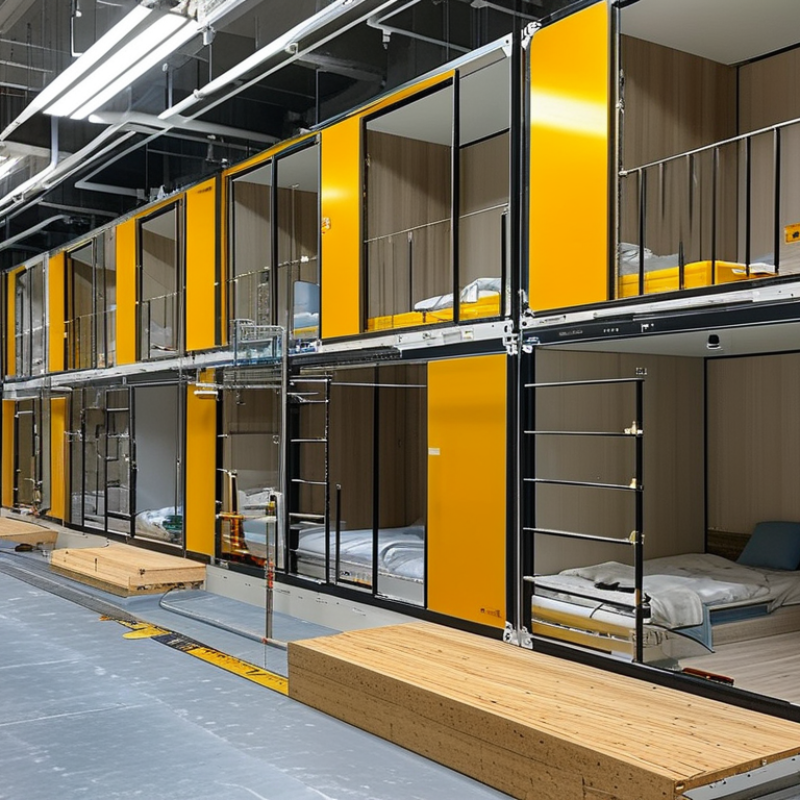
How to Choose Modular Student Accommodation in 2026

Define Your Accommodation Needs and Student Lifestyle Priorities

How to Choose Modular Student Accommodation in 2026

Choosing modular student accommodation in 2026 starts with your daily routine, not attractive room images. Define your priorities before comparing layouts, prices, and facilities. Do you need a quiet study area, shared cooking space, or secure bicycle storage? A compact private room may suit focused learners. A larger shared unit may support social students. Be honest about your habits. If you rarely cook, an oversized kitchen may waste money and space.

Your weekly schedule also matters. Students with early classes should check walking distances, transport links, and entrance security. Those who study late need reliable lighting, sound control, and comfortable desk space. Ask how modular rooms manage ventilation, heating, internet access, and repairs. Request written details instead of trusting informal promises. Accessibility should be considered early, including step-free routes, bathroom layout, and lift availability.

Lifestyle priorities can change after arrival. A student expecting constant social activity may later need quiet evenings. I have seen planning checklists focus heavily on room size while ignoring laundry queues and shared-space rules. That is an easy mistake. Visit the accommodation if possible, and notice small details: hallway noise, window ventilation, storage height, and the distance between beds. Check the agreement carefully, especially costs, maintenance responsibilities, notice terms, and privacy arrangements. Your ideal room is not necessarily the largest one. It is the space that supports your real study patterns and personal boundaries.

How to Choose Modular Student Accommodation in 2026

Define Your Accommodation Needs and Student Lifestyle Priorities

Affordability and location usually have the strongest influence on student accommodation decisions, followed by safety, privacy, study space and shared facilities. Use these priorities as a starting point, then adjust the weighting according to your budget, course schedule, commuting needs and preferred social lifestyle.

Compare Modular Designs, Room Types, and Essential Facilities

How to Choose Modular Student Accommodation in 2026

Modular accommodation is not one uniform product. Volumetric modules arrive with walls, bathrooms, and services largely completed. Panelized systems offer greater flexibility, but construction can take longer on site. For a tight urban plot, volumetric design may reduce disruption. For an irregular building footprint, panelized construction can adapt better. The choice needs technical review, not attractive images alone.

Room types should match real study habits.

Shared rooms usually reduce rent, but they can create noise and privacy concerns. Ensuite bedrooms provide a practical balance between personal space and cost. Studios offer independence, although smaller kitchens and higher prices can limit value. UNESCO reported 6.9 million internationally mobile students in 2022, increasing pressure on well-planned housing. Demand alone does not justify poor layouts.

Facilities must support daily routines.

Reliable Wi-Fi, quiet study rooms, laundry areas, secure bicycle storage, and accessible entrances should be checked physically. A 2024 student accommodation investment report identified strong demand for professionally managed, amenity-rich housing, but amenity lists can be misleading. A games room cannot replace good ventilation or daylight. Compare energy ratings, heating controls, acoustic performance, and maintenance response times. I would also request sample utility bills. They reveal more than glossy specifications. No design is perfect. Reflect carefully on what students will use every morning, not just what looks impressive during a tour.

Evaluate Location, Transport Links, Safety, and Community Access

How to Choose Modular Student Accommodation in 2026

Choosing modular student accommodation in 2026 requires more than checking room photos. Start with the daily route, not the building brochure. I would measure walking time to lectures at 8:30 a.m., when pavements are crowded. A ten-minute route can feel longer during rain, darkness, or exam weeks. Check the nearest bus, tram, or rail stop in person. Look for frequent services, sheltered waiting areas, and clear night-time connections. Ask residents how often delays affect their classes. Timetables can look reliable online, yet local disruptions may tell another story.

Stay practical.

Safety deserves evidence rather than comforting claims. Visit the street after sunset, and inspect lighting near entrances, cycle storage, and crossings. Ask who controls access, how visitors are recorded, and how quickly faults are repaired. Review recent inspection records and local authority information where available. However, paperwork does not always reflect lived reality. Speak privately with current residents about noise, reporting procedures, and emergency support.

A secure door is useful. It is not the whole safety plan. Check whether staff remain available overnight and during holidays.

Community access can shape wellbeing, especially during the first difficult weeks. Map supermarkets, affordable cafés, libraries, medical services, parks, and student support offices. A nearby shared kitchen may encourage conversation, but organised events will not suit everyone. Look for quiet study rooms and accessible communal spaces. Ask whether activities welcome commuters, disabled students, and different cultural groups. I once underestimated this factor and spent too much time travelling for basic services. That mistake changed my checklist.

Leave room for doubt.

Assess Costs, Contracts, Sustainability, and Future Flexibility

By 2026, modular student accommodation should be judged as an asset, not a quick-build product. Start with total cost. Include site preparation, transport, cranage, utilities, maintenance, removal, and financing. A 2024 modular construction industry report indicates that factory methods can shorten programmes by up to 50 percent. Site delays can erase that advantage. Request an open-book cost plan, with allowances for ground risk and inflation. Contracts should define factory tolerances, inspection rights, completion tests, defects liability, and replacement duties. Protect future operators, too. A cheap contract can become expensive after handover.

Sustainability needs measurable evidence. The 2024 Global Status Report for Buildings and Construction states that buildings consumed 32 percent of global energy and produced 34 percent of global carbon dioxide emissions. Ask for product-level environmental data, not broad promises. Compare embodied carbon, operational energy, water use, and transport distances. Reclaimed steel and reusable connections may matter more than decorative green features. They are not always cheaper. That is worth admitting. For future flexibility, examine room modules, ceiling zones, drainage routes, and connection details. Can a bedroom become a studio? Can panels be removed without destroying them? OECD’s Education at a Glance 2024 reports that international students represent about 6 percent of tertiary enrolment across OECD countries, so demand can shift quickly. Include relocation, reconfiguration, and end-of-life options in the contract. I would still treat every forecast cautiously. Photos cannot reveal acoustic failures, overheating, or difficult maintenance access. A physical mock-up can.

How to Choose Modular Student Accommodation in 2026 - Assess Costs, Contracts, Sustainability, and Future Flexibility

Practical comparison framework using indicative 2026 planning benchmarks. Actual outcomes depend on location, site conditions, specification, financing, planning approval, and local building regulations.

Assessment Area Decision Dimension Indicative Data Point Recommended Target or Threshold What to Check Before Signing
Costs Total project cost Compare on a whole-life basis rather than module price alone Include land, surveys, foundations, transport, installation, utilities, professional fees, finance, contingency, and taxes Request a fully itemised cost plan and identify exclusions. Modular construction can reduce on-site labour, but groundworks and connections remain highly site-specific.
Costs Contingency allowance Typically 5%–15% of construction cost during early planning Use the higher end where ground conditions, planning requirements, or utility capacity are uncertain Confirm whether the allowance covers design changes, abnormal foundations, inflation, transport restrictions, and temporary works.
Costs Operating energy cost Driven primarily by fabric performance, ventilation, heating, hot water, and occupancy behaviour Set a measured annual energy-use target in kWh/m²/year and require post-occupancy monitoring Check calculated energy performance against real operational assumptions, including communal areas, laundry, kitchens, and 24-hour ventilation.
Costs Maintenance and replacement Assess expected service life for roofs, façades, windows, heating systems, lifts, bathrooms, and finishes Require a 25–30-year maintenance and replacement schedule Ask who pays for planned replacement, defects after handover, specialist components, software-controlled systems, and spare parts.
Contracts Price certainty Fixed-price, target-cost, or indexed contract Use a clearly defined fixed-price scope with transparent variation rules Check the treatment of material price changes, exchange rates, design development, regulatory changes, transport costs, and site delays.
Contracts Payment structure Milestones commonly relate to design approval, factory completion, delivery, installation, and handover Link payments to independently verifiable deliverables rather than calendar dates alone Limit large advance payments, define retention, require evidence of title to off-site modules, and protect payments if a supplier becomes insolvent.
Contracts Defects and warranty Separate product warranties from the main construction defects period Specify a defects period of at least 12 months and longer warranties for critical structural and waterproofing elements Clarify the start date, response times, remedy obligations, exclusions, latent defects, and responsibility for defects caused during transport or installation.
Contracts Programme certainty Factory production may overlap with site preparation, but approvals and connections can control completion Use an integrated programme with decision deadlines, inspection points, float, and recovery measures Confirm factory capacity, long-lead items, transport permits, crane access, weather constraints, utility connections, and commissioning responsibilities.
Sustainability Embodied carbon Measure in kgCO₂e/m² across product stages, transport, construction, replacement, and end-of-life Set a project-specific maximum and compare options using the same life-cycle boundary Request third-party verified environmental data, quantities, assumed service lives, recycled content, transport distances, and end-of-life scenarios.
Sustainability Operational carbon Evaluate annual regulated and unregulated energy use separately Prioritise a high-performance envelope, efficient hot water, low-energy lighting, smart controls, and low-carbon heating Check overheating risk, ventilation rates, thermal bridging, airtightness testing, metering strategy, and seasonal performance of heating and cooling systems.
Sustainability Material efficiency Standardised modules can reduce manufacturing waste, but off-cuts and packaging still require management Require a documented waste hierarchy and factory waste-recovery plan Review factory waste records, packaging materials, take-back arrangements, recycled content claims, and whether components can be separated for reuse.
Sustainability Water performance Use litres per person per day and litres per fitting flush as practical measures Install efficient fittings without compromising hygiene, accessibility, or user experience Check leak detection, hot-water circulation losses, submeters, rainwater strategy, maintenance access, and water-quality management.
Sustainability Indoor environmental quality Assess daylight, ventilation, acoustics, temperature, humidity, and low-emission materials Set measurable targets for acoustic separation, ventilation, daylight, and summer comfort Review room-by-room calculations and testing requirements. Student rooms require particular attention to noise transfer, privacy, and overheating.
Future Flexibility Adaptable internal layouts Non-load-bearing partitions and accessible service zones are easier to modify Use demountable partitions, accessible risers, and standardised connection points where practical Confirm which walls can be removed, maximum permissible loads, fire-compartmentation requirements, acoustic performance, and the cost of reconfiguration.
Future Flexibility Change of use Student bedrooms, studios, offices, and key-worker housing have different space, fire, acoustic, and servicing requirements Design for at least one credible future use identified in the project brief Check planning consent, occupancy standards, escape routes, accessibility, kitchen provisions, refuse storage, parking, and required upgrades for conversion.
Future Flexibility Relocation potential Relocation depends on module dimensions, connection details, lifting points, transport routes, and local permissions Require a documented disassembly and relocation method before selecting the system Confirm whether modules can be separated without significant damage, the number of relocation cycles assumed, transport constraints, and reinstatement costs.
Future Flexibility Expansion capacity Future floors or wings may be limited by foundations, structural capacity, fire strategy, and site access Reserve structural, utility, circulation, and planning capacity during the initial design Ask for load calculations, spare electrical and water capacity, drainage allowances, crane access, and a priced expansion scenario.
Risk and Governance Compliance and certification Factory-built elements must still satisfy local building, fire, accessibility, energy, and planning requirements Assign responsibility for every approval, inspection, test, certificate, and handover document Do not rely solely on factory quality control. Confirm site inspections, fire-stopping records, electrical certification, airtightness results, commissioning data, and as-built information.
Risk and Governance Information handover Digital asset data should cover equipment, warranties, maintenance intervals, replacement parts, and inspection records Require a complete, structured handover before final payment Specify file formats, asset naming, room data, operation manuals, training, emergency information, and updates after defects are corrected.

Planning note: All ranges and thresholds are indicative decision-support values, not guaranteed market prices or regulatory limits. Obtain location-specific cost plans, energy models, life-cycle assessments, structural advice, and legal review before procurement.

Verify Standards, Providers, Reviews, and Move-In Arrangements

How to Choose Modular Student Accommodation in 2026

A modular room can look excellent in staged photographs. Visit it in person whenever possible. In 2026, ask the provider for current certificates covering fire safety, electrical systems, ventilation, and structural inspection. These documents should match the exact building, not a similar development. Check room dimensions, window access, heating controls, sound insulation, and accessible routes. Open cupboards and test taps. Small details matter.

Provider reliability needs more than polished promises. Confirm the registered business address, named maintenance contact, response process, and written rental terms. Ask who manages repairs after office hours. Independent reviews can reveal recurring problems, such as weak Wi-Fi, delayed repairs, or poor cleaning. Read recent reviews across several platforms. Look for repeated patterns, not one angry comment. I once focused too heavily on location and missed unclear utility charges. That was careless.

Before signing, request a complete move-in plan. Confirm the key collection time, inventory method, deposit schedule, utility responsibilities, laundry access, and emergency instructions. Photograph walls, flooring, furniture, meters, and bathroom seals on arrival. Save every document in one folder. Ask whether bedding, kitchen equipment, and internet are included. If the answer changes between messages, pause and request clarification. Moving day is tiring. A missing key is worse. Leave enough time to report defects before unpacking, although I still forget this when excited about a new place.

FAQS

What types of modular accommodation are available?

Volumetric modules arrive mostly finished, including walls, bathrooms, and services. Panelized systems offer more design flexibility. They may take longer onsite. Choose according to the plot, schedule, and technical review.

Which room type suits different student needs?

Shared rooms usually cost less but may create noise and privacy problems. Ensuite rooms balance personal space and rent. Studios provide independence but often cost more. Smaller kitchens can reduce their value.

Which facilities should I inspect before booking?

Check Wi-Fi, study rooms, laundry areas, bicycle storage, and accessible entrances. Inspect ventilation and daylight carefully. A games room cannot fix poor airflow. Test what students use daily.

How can I compare the real accommodation cost?

Include rent, utilities, transport, maintenance, deposits, and possible removal costs. Request an open-book cost plan. Ask about inflation and ground-related allowances. Sample utility bills can expose hidden expenses.

What should a contract cover?

The contract should define inspections, factory tolerances, completion tests, defects, and replacement duties. Confirm who handles repairs after handover. A cheap agreement may become expensive later. I once trusted unclear wording too quickly.

How can I judge sustainability claims?

Request product-level environmental data. Compare embodied carbon, energy use, water consumption, and transport distances. Reclaimed materials and reusable connections may help. Green decoration proves very little.

Can modular accommodation adapt to future needs?

Examine room modules, ceiling zones, drainage routes, and connection details. Ask whether a bedroom can become a studio. Check whether panels can be removed safely. Future demand can change quickly.

What should I verify about the provider and building?

Request current certificates for fire safety, electrical systems, ventilation, and structural inspection. Confirm they match the exact building. Visit in person and test taps, cupboards, heating controls, and windows. Photos hide defects.

What should I do on moving day?

Confirm key collection, inventory procedures, deposits, utilities, laundry access, and emergency instructions. Photograph walls, furniture, meters, floors, and bathroom seals. Save every document together. Moving day gets messy.

Conclusion

Choosing Modular Student Accommodation in 2026 starts with understanding your personal study habits, budget, preferred room type, and lifestyle priorities. Consider whether you need a private studio, shared apartment, accessible design, quiet study areas, reliable internet, laundry facilities, communal kitchens, or social spaces. Compare how each modular layout uses space and supports comfort, privacy, and everyday convenience. Location is equally important, so assess travel time to campus, public transport, nearby shops, healthcare, green areas, and community facilities. Check safety features, building access, lighting, and the overall living environment before making a decision.

You should also review the full cost, including rent, deposits, utilities, insurance, and possible additional fees. Read contract terms carefully, especially cancellation policies, renewal options, maintenance responsibilities, and move-out conditions. Sustainability features and the accommodation’s ability to adapt to changing needs may offer better long-term value. Finally, verify quality standards, provider credentials, resident feedback, inspection arrangements, and the exact move-in process. A careful comparison will help you select a secure, practical, flexible, and comfortable home for your academic journey.


Oliver

Oliver

Oliver is a professional marketing specialist dedicated to helping businesses understand, evaluate, and benefit from high-quality products and practical solutions. With extensive knowledge of the company’s product portfolio, market trends, customer needs, and industry developments, he creates......