Discover latest news, architectural innovations, and expert perspectives on modular steel-frame construction across Europe.
China’s private rental market is expanding in major cities, where housing demand often exceeds affordable supply. Private Rental Sector Modular Buildings offer a practical response to this pressure. Factory-made modules can reduce construction disruption, improve quality control, and shorten delivery schedules. They may also support rental projects near transport hubs, universities, and employment centers.
But speed is not everything.
This introduction examines China’s leading modular building providers for the private rental sector. It considers manufacturing capacity, design flexibility, fire safety, insulation, installation experience, and long-term maintenance. Reliable evaluation requires more than attractive photographs or low quotations. Developers should review completed projects, factory certifications, material records, and after-sales support. A well-designed apartment may still perform poorly if ventilation, acoustic control, or drainage details are overlooked.
Small details matter.
For example, residents notice corridor noise, winter heating costs, bathroom moisture, and the time required to repair a damaged panel. Professional suppliers should explain these risks clearly. They should also provide transparent schedules and realistic cost assumptions. However, market information can change, and published company claims may not reveal every limitation. Some modular solutions remain less adaptable than conventional construction, especially when local planning requirements differ.
The following discussion therefore compares practical strengths rather than declaring one universal winner. It focuses on evidence, project suitability, and resident experience. China’s modular rental sector is promising, but it still needs careful testing, honest reporting, and continuous improvement.
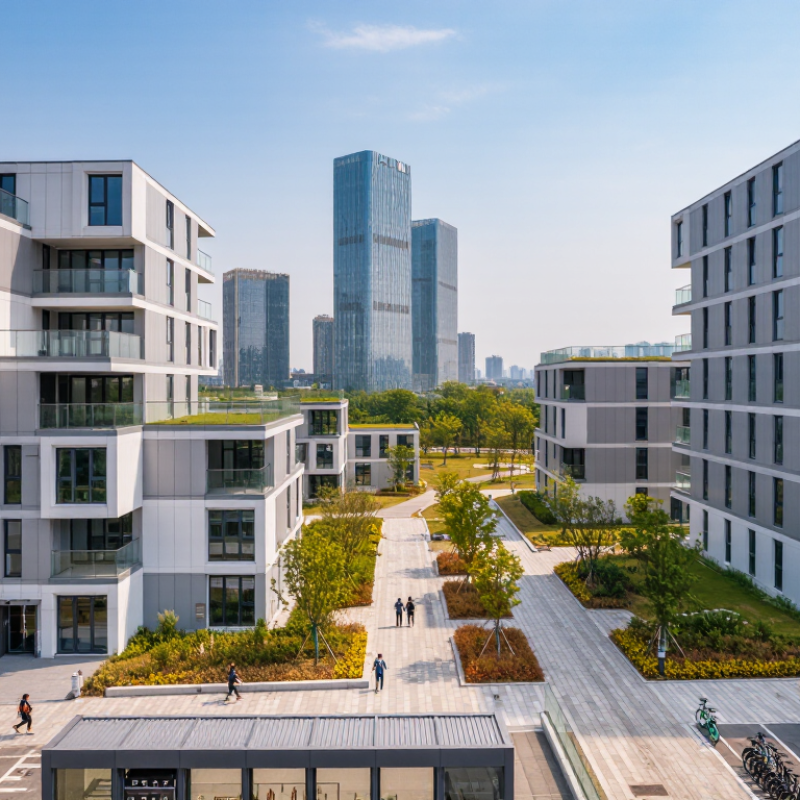
China Top Private Rental Sector Modular Buildings?
Definition and Scope of Modular Buildings in China’s Private Rental Sector
In China, modular buildings are factory-produced units transported to a site and assembled quickly. They may include steel frames, bathrooms, kitchens, wiring, plumbing, and interior finishes. Their scope covers permanent rental apartments, worker housing, student accommodation, and temporary housing projects. However, the boundary is not always clean. Prefabricated panels are not complete modules. A useful definition requires factory integration and repeated, three-dimensional units.
The private rental sector means non-owner-occupied homes supplied by individuals, developers, funds, or specialist operators. It excludes public rental housing, although affordable rental housing can overlap with private delivery models. China’s urban population reached 943.5 million in 2024, or 67.00% of the total population, according to the National Bureau of Statistics’ 2024 Statistical Communiqué. The 14th Five-Year Plan for Housing and Urban-Rural Development also promotes rental housing expansion and industrialized construction. These figures show demand, but they do not prove every modular project is commercially viable.
Tips: Check land-use rights, fire safety, acoustic performance, transport access, and local approval rules before selecting modules. Compare full-life costs, not only factory prices. The Modular Integrated Construction Technical Guidelines published by housing authorities can support technical reviews. A practical weakness remains: fast assembly may reduce construction time, yet poor site coordination can erase that advantage. Resident comfort also needs real testing, not attractive drawings.
China Top Private Rental Sector Modular Buildings?
China’s modular rental housing sector developed from temporary site offices and worker dormitories into more durable urban accommodation. During the 1990s and early 2000s, builders mainly valued speed and low initial cost. Later, stronger demand for rental homes encouraged better insulation, kitchens, bathrooms, and shared facilities. Factory production also improved quality control. However, early projects sometimes felt too standardized. Their layouts ignored local living habits.
Urbanization remains a major market driver. Young workers need affordable rooms near transport, employment, and public services. Modular construction can shorten installation schedules when land is already prepared. Factory-made wall panels reduce on-site waste and support more predictable labor planning. Private developers also watch rising land prices and financing pressure. Smaller, repeatable units can improve project flexibility, especially near universities, industrial parks, and transit corridors.
Policy expectations are changing the design brief. Fire safety, structural stability, energy performance, accessibility, and long-term maintenance now require careful technical review. A cheap module is not automatically economical. Poor ventilation, weak sound insulation, or difficult repairs can quickly damage occupancy rates. Digital monitoring may help track energy use and equipment faults. Yet technology cannot replace responsible management. The sector still needs clearer lifecycle data, honest cost comparisons, and better attention to resident comfort. That assumption needs testing. Reuse is possible, but transport and refurbishment costs may reduce its benefits.
| Period | Development Stage | Verified Market or Policy Indicator | Relevance to Modular Rental Buildings | Primary Reference |
|---|---|---|---|---|
| 2011–2015 | Early expansion of rental housing policy | The national housing strategy increasingly emphasized a dual system of home ownership and rental housing, supported by public-rental and subsidized-rental programs. | Created a policy foundation for standardized, repeatable and cost-controlled rental housing projects. | China’s 12th Five-Year Plan and related housing policy documents |
| 2016 | Rental housing becomes a formal housing-market priority | The central government called for accelerating the development of the rental housing market and encouraged institutional rental operators. | Longer operating periods improved the business case for durable modular systems and standardized components. | State Council General Office, 2016 rental-housing guidance |
| 2017–2018 | Pilot-city and collective-land experiments | Pilot programs expanded the supply of rental housing, including projects using collectively owned construction land in selected cities. | Urban land access and faster project delivery increased interest in prefabricated and modular construction methods. | Ministry of Housing and Urban-Rural Development rental-housing pilot policies |
| 2019 | Industrialization and prefabrication standards mature | China’s prefabricated-building policy framework promoted industrialized construction, design standardization and integrated building systems. | Standardized modules can reduce on-site labor requirements, improve quality control and shorten construction cycles when designs are repeatable. | National prefabricated-building development guidance |
| 2020 | Demand resilience during urban migration and employment disruption | China’s urbanization rate based on permanent residents reached 63.89% at the end of 2020. | Continued urban population concentration supported demand for compact, quickly deployable rental units near employment centers. | National Bureau of Statistics, 2020 population census and statistical communiqués |
| 2021 | Affordable rental housing enters the national development plan | The 14th Five-Year Plan established affordable rental housing as a major housing-policy area, with emphasis on new citizens and young people. | Large, policy-backed rental pipelines favored repeatable layouts, factory production and modular building delivery. | China’s 14th Five-Year Plan and housing-development guidance |
| 2022 | Scale-up of affordable rental housing supply | The national target for the 14th Five-Year Plan period was commonly reported as approximately 6.5 million affordable rental housing units in 40 key cities. | A multi-year construction target increased the importance of procurement efficiency, schedule certainty and lifecycle operating costs. | Ministry of Housing and Urban-Rural Development, affordable rental housing implementation updates |
| 2023 | Transition from pilot programs to delivery management | Affordable rental housing remained a central component of housing-security and urban-development policy, while local governments focused on project completion and occupancy. | The market shifted from proving construction concepts to optimizing full delivery: approvals, manufacturing, installation, furnishing and operations. | Central government housing-policy releases and local affordable-rental-housing reports |
| 2024–2025 | Operational efficiency and urban-renewal integration | Policy attention continued to cover affordable rental housing, urban renewal, public-service improvement and the efficient use of existing urban land. | Modular solutions are most relevant where projects require rapid construction, limited site disruption, repeatable room types or adaptable building layouts. | Annual national housing and urban-renewal policy statements |
| Structural Driver | Urbanization and population mobility | The urbanization rate based on permanent residents increased from 63.89% in 2020 to 66.16% in 2023. | Growing urban populations support demand for flexible rental accommodation close to jobs, transport and public services. | National Bureau of Statistics annual statistical communiqués |
| Structural Driver | Affordability pressure in major cities | National housing policy identifies new citizens, young workers and lower-income urban households as important beneficiaries of affordable rental housing. | Small-unit standardization, efficient floor plans and factory-finished interiors can support affordable monthly rents. | National affordable-rental-housing policy documents |
| Structural Driver | Construction industrialization | National construction policy promotes prefabrication, digital design, standardized components and integrated building systems. | These requirements align with volumetric modules, panelized systems, bathroom pods and other off-site production methods. | National prefabricated-building and green-building guidance |
| Commercial Driver | Schedule and labor-cost control | Modular construction can move a larger share of work into controlled factory environments, although actual savings vary by design, transport distance, site conditions and approval requirements. | The strongest applications are standardized rental schemes with repeated unit types and predictable site logistics. | Construction industrialization research and project-level cost studies |
| Sustainability Driver | Green and low-carbon construction | China’s building policy framework promotes energy efficiency, green buildings, prefabrication and reduced construction waste. | Off-site manufacturing may improve material control and reduce site waste, provided transport, material use and end-of-life impacts are managed. | China’s green-building and carbon-peaking policy framework |
| Market Constraint | Site-specific approvals and infrastructure interfaces | Building height, fire safety, structural design, transport access, utility connections and local approval requirements differ by project and location. | Modular buildings are not automatically faster or cheaper; early coordination among design, factory, logistics and site teams is essential. | National building codes and local construction-administration rules |
| Data Note | Market-size measurement | China does not publish one universally accepted official market-size series specifically for privately operated rental-sector modular buildings. | Assessment should therefore combine affordable-rental-housing completions, prefabricated-building activity, construction starts, occupancy and operating economics rather than rely on a single market value. | Public statistical releases and housing-industry policy reports |
Note: Figures and policy milestones are based on publicly available Chinese statistical releases and national housing-construction policy documents. Company and brand-level data are intentionally excluded.
China’s private rental sector uses modular buildings for apartments, worker housing, student residences, and compact urban homes. Volumetric modules suit repeated layouts and fast delivery. Panelized systems work better when rooms require greater flexibility. Hybrid buildings combine a permanent concrete core with factory-made rooms.
Design begins with rental performance, not appearance alone. A practical unit may include a 25-square-meter living area, a compact kitchen, and a prefabricated bathroom pod. Durable flooring, washable wall finishes, and replaceable fittings reduce maintenance pressure. Good acoustic insulation matters, especially beside elevators and shared corridors. Thermal breaks, sealed windows, and balanced ventilation improve comfort during seasonal temperature changes. Accessibility should guide entrances, lifts, bathrooms, and common spaces.
Construction methods vary by site and building height. Steel or concrete frames can receive modular units after foundations and service cores are completed. Factory teams install wiring, pipes, windows, and interior finishes under controlled conditions. Inspectors can check connection points before transport, which reduces hidden defects. On site, cranes place modules within small tolerances, then workers complete joints, fire protection, and utility connections. Local codes and transport limits must shape the design early.
The method is not automatically cheaper. Early changes can become expensive. A repeated floor plan may also feel monotonous. Designers should test daylight, storage, privacy, and future repairs before production begins. Some projects still need more flexible construction than modular systems allow.
China’s private rental sector is increasing demand for flexible modular buildings. Leading manufacturers provide standardized rooms, steel frames, insulation systems, and factory quality checks. Their role is not limited to production. They also adjust layouts for student housing, worker accommodation, offices, and short-term commercial projects.
Rental operators connect these buildings with real market needs. They manage site installation, furniture, repairs, cleaning, and unit replacement. Experienced operators track occupancy, maintenance costs, fire safety records, and tenant feedback. Engineering companies support foundation design, electrical planning, drainage, and transport coordination. Logistics providers matter too. A delayed delivery can leave an entire site unused.
The market is competitive, but quality is uneven. Some low-cost units look attractive during inspection and perform poorly after one winter. That is a real concern. Developers should examine insulation thickness, waterproof joints, ventilation, and material certificates before signing contracts. Financial partners can also improve projects by funding reusable assets instead of disposable construction.
Tips:
Request a complete cost breakdown. Compare rental fees, transport, installation, maintenance, and removal expenses. Visit an operating site if possible. Ask who handles urgent repairs at night. Small details often expose large weaknesses.
China’s private rental market is becoming a testing ground for modular buildings. Urbanization reached 66.16% in 2023, according to the National Bureau of Statistics. Demand is especially strong near transport hubs, universities, and employment centers. Small units matter. Factory production can standardize kitchens, bathrooms, and structural panels. McKinsey’s modular construction report estimates that off-site methods may reduce construction time by 20–50%. However, Chinese projects can perform very differently from that global estimate.
Regulatory approval remains central. Developers must satisfy land-use, planning, fire-safety, energy, and completion-acceptance requirements. Structural design should follow applicable national standards, including GB/T 51231-2016, alongside local rules. Private rental buildings also need strong acoustic insulation, ventilation, fire separation, and easy maintenance access. A factory cannot fix a poorly chosen site. Transport limits, crane access, narrow plots, and financing schedules can erase expected savings. Tenant acceptance is another practical concern. Some renters still associate modular housing with temporary accommodation.
Future demand may favor adaptable layouts, digital quality tracking, and reusable components. The International Energy Agency reports that buildings account for about 30% of global final energy demand, making efficient construction increasingly important. Yet modular does not automatically mean low-carbon. Transport, steel use, and replacement cycles require careful measurement. China’s policy direction supports prefabrication, but private operators still need better lifecycle data, clearer local approvals, and stronger after-sales maintenance. The opportunity is real. The model is not finished.
They provide apartments, worker housing, student residences, and compact urban homes. Many are located near transport hubs, universities, and employment centers.
Factory production can shorten installation schedules and improve quality control. Repeatable units also help manage land costs, labor planning, and financing pressure.
A compact unit may contain a 25-square-meter living area, small kitchen, and prefabricated bathroom. Durable floors and washable walls can simplify maintenance.
Not always. Transport, cranes, foundations, repairs, and local approvals can erase expected savings. Early design changes may become expensive.
Sealed windows, thermal breaks, balanced ventilation, and acoustic insulation can reduce discomfort. Storage, privacy, daylight, and elevator noise also require careful testing.
Projects must address land use, planning, fire safety, energy performance, structural stability, accessibility, and completion acceptance. Local rules can change the technical requirements.
Volumetric modules suit repeated layouts, while panelized systems allow more flexibility. Hybrid buildings may combine a permanent concrete core with factory-made rooms.
Some residents still associate modular housing with temporary accommodation. Reuse may also lose benefits when transport and refurbishment costs rise. That assumption needs testing.
Efficient panels, windows, and ventilation may reduce operational demand. However, steel use, transport, and replacement cycles need lifecycle measurement. Modular does not automatically mean low-carbon.
Private Rental Sector Modular Buildings in China refer to factory-produced or partly prefabricated housing units designed for privately operated rental communities, workforce accommodation, student housing, and other long-term residential needs. Their development has been supported by urban population growth, rising housing demand, shorter construction cycles, and the need for more affordable and flexible rental options. These buildings may include compact apartments, multi-story residential blocks, and adaptable community facilities, using steel, concrete, or hybrid modular systems. Standardized components, efficient layouts, energy-saving materials, and digital planning can improve quality control and reduce construction waste.
The market includes developers, modular manufacturers, construction contractors, designers, and property operators, each contributing to project delivery and ongoing management. Regulations concerning land use, fire safety, structural performance, environmental protection, and tenant welfare remain essential. Modular construction can offer faster delivery, predictable costs, and easier expansion, but it also faces challenges such as transportation limits, design standardization, financing, public acceptance, and integration with local infrastructure. Future growth is likely to focus on greener materials, smarter management, improved customization, and stronger coordination between housing policy and industrialized construction.